Author: Abdullah Shoaib | Energy Markets Analyst, 10+ years in the energy industry
Business EV charging in the UK costs between £800 and £2,500 per charger installed, and the government’s Workplace Charging Scheme covers up to 75% of that cost, capped at £500 per socket, for up to 40 sockets.
Most businesses recover their net investment within 18 to 36 months, through a combination of fuel savings, staff retention, and, for customer-facing sites, direct charging revenue.
Because the scheme runs until 31 March 2027, installing now locks in the current subsidy rate before it changes.
What Is Business EV Charging?
Business EV charging covers any charging infrastructure installed at a commercial site, whether for employees, fleet vehicles, or paying customers.
It sits apart from home charging in one key way: it’s funded, owned, and managed by the business, not the individual.
Three groups typically drive demand. Employers running salary sacrifice EV schemes need on-site charging because staff without home charging access are far less likely to switch to an electric car.
Fleet operators need overnight depot charging to keep vans and vehicles moving without relying on public networks. And landlords or retail sites see EV charging as a way to draw in customers with longer dwell times.
A logistics firm we’ve seen through this process installed six chargers at its depot purely to support van drivers overnight, cutting fuel costs by roughly £1,000 per 10,000 miles driven per vehicle.
That’s the kind of return that turns a compliance cost into a business case.
One practical tip: before you spec any hardware, work out who’s actually charging (staff, fleet, or customers) because that decision shapes everything else, from charger speed to grant eligibility.
Next, it helps to understand the different types of business charging available and where each one fits.
Types of Business EV Charging Solutions
Workplace EV charging solutions fall into three categories, and picking the wrong one is the most common costly mistake businesses make.
Workplace charging serves staff and visitors during working hours. It’s typically slow to fast speed (3-22kW) because vehicles are parked for hours, not minutes, so rapid charging isn’t necessary or cost-effective.
Fleet or depot charging serves vans, trucks, or company cars overnight. This usually needs a higher combined power capacity across multiple bays, even if individual chargers stay in the fast tier, because vehicles charge simultaneously.
Public or customer-facing charging, common at retail parks, hotels, and hospitality sites, needs rapid or ultra-rapid speeds (25kW+) because customers won’t wait hours.
This is also the only category with realistic revenue-generation potential through pay-per-use or subscription models.
| Charger type | Speed | Typical use case |
|---|---|---|
| Slow | 3-7kW | Staff overnight or all-day parking |
| Fast | 7-22kW | Workplace bays, fleet depots |
| Rapid | 25-99kW | Customer-facing, short dwell time |
| Ultra-rapid | 100kW+ | Forecourts, high-turnover retail |
A retail park choosing rapid chargers for a car park where customers stay two hours is overspending; a fleet depot choosing slow chargers for vans that need a full charge by 6am is underspending.
Match speed to dwell time first, budget second. With the charger type settled, the next question is what the whole project actually costs.
Business EV Charging Costs Explained
A single workplace charger typically costs £800 to £1,500 fully installed, while rapid chargers for customer-facing sites run £5,000 to £15,000 or more depending on groundworks and power supply upgrades.
Three cost layers make up the total. Hardware varies by speed tier and brand, from roughly £500 for a basic 7kW unit to several thousand for rapid units.
Installation costs hinge on distance from the electrical supply, whether the site needs a power upgrade, and how much groundwork or cabling is required.
Running costs depend on your electricity tariff and how often the chargers are used, typically 20-30p per kWh on a standard business tariff, less on an EV-specific or off-peak tariff.
Here’s a worked example for a 4-socket fast-charging installation:
| Item | Cost |
|---|---|
| Hardware (4 x 7kW chargers) | £4,000 |
| Installation & groundworks | £3,000 |
| Gross total | £7,000 |
| WCS grant (4 x £500) | -£2,000 |
| Net cost after grant | £5,000 |
| Est. annual running cost (moderate use) | £600-£900 |
One tip that saves money later: install cabling capacity for future expansion even if you only fit two chargers now. Retrofitting a second phase almost always costs more than overbuilding once.
The grant is the biggest lever in that table, so it’s worth understanding exactly how it works.
The Workplace Charging Scheme (WCS) Grant: Full Breakdown
The Workplace Charging Scheme covers up to 75% of chargepoint purchase and installation costs, capped at £500 per socket, for up to 40 sockets across all your sites, and it’s been extended for a final year to 31 March 2027.
Eligibility is straightforward but specific. You need off-street parking used only by staff or fleet vehicles, either on-site or a reasonable distance away.
You don’t need existing electric vehicles, but you must demonstrate a genuine current or future need.
Charities, public sector bodies, and small accommodation businesses (hotels, holiday lets, campsites) now qualify alongside standard businesses.
The process is simple: apply through the WCS portal, receive your voucher (if approved), choose an OZEV-authorised installer, share the voucher code, and have the installer complete the work and claim the grant within 180 days.
The most common rejection reason isn’t ineligibility, it’s using an installer who isn’t OZEV-authorised. The grant simply won’t pay out, no matter how good the work is.
Always confirm authorisation status before booking any installer. Getting the grant right is only half the financial picture; the tax treatment matters just as much.
Tax Treatment and Financial Incentives
Businesses installing EV chargepoints can claim a 100% first-year capital allowance, meaning the full cost is deductible against taxable profit in the year of purchase, and employees generally pay no benefit-in-kind tax on workplace charging provided for their personal vehicle.
This combination is what makes workplace charging genuinely attractive on paper, not just environmentally.
The capital allowance reduces your net cost further on top of the WCS grant, and VAT on the installation is generally reclaimable in the same way as other qualifying business expenditure.
Stack these together and the true cost of that 4-socket example above often ends up considerably lower than the £5,000 net figure once tax relief is factored in.
A finance team should confirm exact treatment against current HMRC rules for your specific circumstances, but the direction of travel is consistent:
EV charging infrastructure is currently one of the more tax-efficient capital investments a UK business can make. With the true net cost established, the next step is working out how quickly that investment pays for itself.
ROI and Payback Calculator Section
Most businesses recover the net cost of workplace EV charging within 18 to 36 months, driven by fuel-to-electricity savings, reduced staff turnover, and, for customer-facing sites, direct charging revenue.
The calculation is simple in structure: net installation cost (after grant and tax relief) divided by annual savings equals payback period in years.
Annual savings usually come from three sources. Fuel savings for fleet vehicles average around £1,000 per 10,000 miles driven when switching from diesel to electric.
Staff retention and recruitment value is harder to quantify precisely but shows up consistently in HR data wherever EV charging removes a barrier to salary sacrifice scheme uptake.
Revenue from customer or public charging, where applicable, adds a direct income line that workplace-only chargers don’t have.

Payback tends to be fastest for fleet depots (high, predictable usage) and slowest for low-traffic workplace bays used by only a handful of staff.
If your business installs 4 chargers for £5,000 net and saves £2,000 a year in fleet fuel costs, that’s a 2.5-year payback, well within the useful life of the equipment.
This is where sector matters most, because the right setup looks different depending on what kind of business you run.
Sector-Specific Guidance
The right EV charging setup depends heavily on your sector, and applying a generic approach is the fastest way to overspend or underprovide.
Office and corporate sites typically need moderate socket counts (4-10) at fast speed, since most vehicles are parked all day and don’t need rapid charging.
Retail and hospitality benefit most from rapid chargers in smaller numbers, prioritising short dwell-time customers and, where footfall supports it, exploring pay-per-use revenue.
Logistics and fleet depots need higher combined power capacity across simultaneous overnight charging bays, even at fast rather than rapid speed, because volume matters more than individual charger speed.
Landlords and multi-tenant commercial property face an additional layer: securing tenant or freeholder consent, agreeing cost recovery through service charges, and confirming who’s liable for maintenance before any installation begins.
A hospitality site installing slow chargers because they’re cheaper, when guests are only staying two hours, ends up with unhappy customers and unused infrastructure.
Match your sector’s usage pattern to charger speed and count before comparing supplier quotes. Once the setup type is clear, it’s time to plan the physical installation itself.
Commercial EV Charging Installation Process
Commercial EV charging installation typically takes 4 to 8 weeks from site survey to completion, though this varies with electrical capacity, groundworks complexity, and installer availability.
The process starts with a site survey to assess existing electrical capacity and whether a supply upgrade is needed, often the single biggest cost variable.
Next comes choosing an OZEV-authorised installer, essential not just for grant eligibility but for warranty and safety compliance.
Installation itself includes cabling, groundworks, and charger mounting, followed by testing and commissioning.
Fire safety and insurance shouldn’t be an afterthought. Chargepoints need to meet current wiring regulations and, depending on location, may require a fire risk assessment update.
If you’re a tenant rather than a freeholder, get written landlord consent before committing to any installation, retrofitting after the fact can mean redoing electrical work entirely.
A practical tip: request a site survey from two or three OZEV-authorised installers before committing.
Quotes for the same job can vary significantly based on how they price groundworks and cabling runs. With installation understood, the final piece is choosing who actually does the work.
Choosing a Business EV Charging Supplier
The right supplier depends on whether you want to self-fund and own the infrastructure outright, or use a revenue-share model where a provider funds installation in exchange for a share of usage income.
Self-funded, grant-supported installation gives you full ownership, eligibility for the WCS grant and capital allowances, and control over pricing if you choose to charge customers.
It suits businesses with capital available and a clear usage case. Revenue-share models, offered by some energy suppliers, remove upfront cost entirely but typically involve a long-term contract (often 10 years) and a share of any charging revenue going to the provider rather than the business.
Neither model is universally better. A logistics depot with predictable fleet usage and available capital usually gets better long-term value from self-funding and claiming the grant.
A retail site with uncertain footfall and no capital to spare might prefer a revenue-share arrangement to avoid risk entirely.
Compare hardware cost, contract length, tariff bundling, and billing software across at least two suppliers before deciding, and check whether the quote already accounts for the WCS grant.
This decision naturally connects to the broader market context shaping demand right now.
UK EV Charging Market Outlook 2026
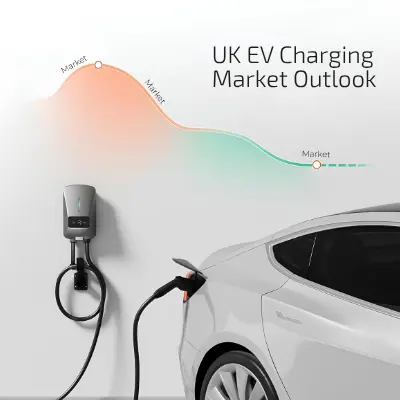
UK business EV charging demand is accelerating through 2026, driven by continued salary sacrifice scheme growth, fleet electrification targets, and the final extended year of the Workplace Charging Scheme before it closes on 31 March 2027.
The scheme’s grant increase to £500 per socket from April 2026 reflects sustained government commitment to workplace infrastructure, even as some adjacent grants (like the EV infrastructure grant for staff and fleets) have closed.
For businesses still weighing whether to install now or wait, the practical case for acting within this final funding year is strong: grant availability isn’t guaranteed to continue beyond March 2027, and installer demand tends to rise as deadlines approach, extending lead times.
FAQs
How much does it cost to install EV chargers at a business?
A standard workplace charger costs £800 to £1,500 fully installed, while rapid chargers for customer-facing sites can run £5,000 to £15,000 depending on power supply requirements and groundworks.
Is my business eligible for the Workplace Charging Scheme grant?
You’re eligible if you have off-street parking for staff or fleet use, a genuine current or future EV charging need, and use an OZEV-authorised installer. Charities, public sector bodies, and small accommodation businesses also qualify.
How long does commercial EV charger installation take?
Most installations take 4 to 8 weeks from initial site survey to completion, though complex electrical upgrades can extend this timeline.
Can I make money from installing public EV chargers at my business?
Yes, customer-facing rapid chargers can generate revenue through pay-per-use or subscription pricing, though this works best at sites with reliable footfall and short average dwell times.
Do employees pay tax on workplace EV charging?
No, employees generally don’t pay benefit-in-kind tax on workplace charging provided for their personal vehicle, making it a tax-efficient perk for employers to offer.
How many chargers does my business need?
As a starting point, plan roughly one charger bay per 8-10 employees for staff charging, adjusting upward for sites with long commutes or limited home charging access among staff.
What happens if the grant runs out mid-application?
Vouchers are valid for 180 days from issue and installations must be completed within that window; if the scheme closes before your voucher expires, work completed and claimed within the voucher period remains eligible.
Ready to Install Business EV Charging?
Business EV charging pays for itself faster than most capital investments once you factor in the WCS grant, capital allowances, and fuel savings, but only if the setup matches your actual usage pattern.
Get a free site survey to confirm eligibility, the right charger count for your business, and your exact net cost after grant and tax relief.