Table of Contents
Author: Abdullah Shoaib | Energy Markets Analyst, 10+ years in the energy industry
Last reviewed: 24 September 2026
The main electricity meter types and arrangements used in the UK include single-rate, two-rate, multi-rate, digital, smart, prepayment, advanced and half-hourly metering. But they are not all separate alternatives.
A smart meter, for example, can also be single-rate, support Economy 7 or operate in prepayment mode. Three-phase describes the electricity supply rather than the tariff. Half-hourly describes how consumption data is recorded and used.
That distinction is important because many electricity-meter guides mix technology, tariffs and supply arrangements together.
Quick answer: There is no single definitive list of mutually exclusive electricity meter types. A UK electricity installation can be described by its meter technology, rate registers, payment method, supply configuration and settlement arrangement. One meter can therefore fit several categories at the same time.
Scope: Most regulatory references in this guide apply to Great Britain: England, Scotland and Wales. Northern Ireland has separate market arrangements.
Electricity Meter Types at a Glance
| Meter or setup | What it describes | Typical use | Multiple rates? | Automatic readings? |
| Single-rate | Rate/register arrangement | Homes and small businesses | No, as configured | Depends on meter |
| Two-rate | Two consumption registers | Economy 7/off-peak tariffs | Yes | Depends |
| Multi-rate | Several rate periods | Time-of-use tariffs | Yes | Often |
| Dial/analogue | Meter technology | Older properties | Can vary | No |
| Digital | Meter technology/display | Homes and businesses | Can vary | Usually no |
| Smart | Meter + communications technology | Homes and smaller businesses | Yes | Yes, in smart mode |
| Prepayment | Payment arrangement | Pay-as-you-go | Can vary | Depends |
| Advanced | Non-domestic metering/data capability | Businesses | Depends | Yes |
| Half-hourly | Interval data/settlement arrangement | Commercial sites | Depends | Yes |
| Three-phase | Electrical supply configuration | Higher-load premises | Depends | Depends |
| RTS | Legacy control arrangement | Older heating/off-peak systems | Usually multi-rate | No |
| Import/export | Direction of electricity flow | Solar/battery sites | Depends | Often |
| Submeter | Internal site measurement | Tenants, equipment, departments | Depends | Depends |
The most important thing to understand is:
A meter can belong to more than one category.
A smart meter could also be:
- single-rate;
- two-rate;
- prepayment;
- three-phase.
Those terms are describing different characteristics of the same installation.
Official UK metrology guidance makes a similar distinction at the technology level, recognising both induction/electromechanical and static/electronic electricity meters. There is no official rule saying Great Britain has exactly six, eight or ten meter types.
How Are Electricity Meters Actually Classified?
A clearer way to understand meter types is to separate them into six groups.
| Classification | Examples | What it actually describes |
| Technology | Dial, digital, smart, advanced | How electricity is measured and communicated |
| Rate registers | Single-rate, two-rate, multi-rate | Whether consumption is separated by time period |
| Payment | Credit, prepayment | How electricity is paid for |
| Supply | Single-phase, three-phase | How electricity reaches the premises |
| Settlement/data | Traditional, half-hourly | How consumption information is recorded and processed |
| Special function | RTS, import/export, submetering | A specific operational purpose |
This is why comparing something like:
“single-rate meter vs three-phase meter”
does not really make sense.
One describes the way consumption is grouped for billing.
The other describes the electrical supply.
A three-phase site could still have a single-rate tariff.
Are Electricity Meters and Electricity Tariffs the Same Thing?
No.
An electricity meter measures and records electricity consumption. A tariff determines how that electricity is priced.
The two are connected because some tariffs need particular metering capabilities.
For example:
- Smart meter: meter technology
- Single-rate: rate arrangement
- Economy 7: tariff arrangement
- Prepayment: payment method
- Three-phase: electrical supply
- Half-hourly: data/settlement arrangement
- MHHS: market settlement programme
Ofgem describes a tariff as the price arrangement agreed with your supplier. Its current guidance distinguishes fixed, standard variable and multi-rate tariffs such as Economy 7.
This sounds technical, but it matters when you’re trying to decide whether changing the meter will actually reduce your bill.
A meter can give you access to another tariff.
It does not create cheaper electricity by itself.
What Is a Single-Rate Electricity Meter?
A single-rate electricity meter records consumption in one main register rather than separating usage into different peak and off-peak periods.
If you’re on a single-rate tariff, you normally pay the same unit price regardless of what time of day the electricity is used.
Ofgem currently describes single-rate electricity as paying the same unit rate throughout the day.
The important distinction is:
The meter records the consumption. The tariff determines what that consumption costs.
A smart meter can therefore still operate on a single-rate tariff.
How Do You Identify a Single-Rate Meter?
Common signs include:
- one main kWh reading;
- only one electricity unit rate on your bill;
- no separate “day”, “night”, “low” or “normal” readings.
Citizens Advice describes a standard single-rate digital electricity meter as displaying one main reading.
But appearance alone is not always enough.
A smart meter may display several screens even when the customer is actually billed on one rate.
If you’re unsure, I would check the bill before trying to interpret the hardware.
Single-Rate Electricity Meter: Advantages and Limitations
| Advantages | Limitations |
| Simple to understand | No separate cheaper off-peak rate |
| Easier tariff comparison | Less useful if you can shift substantial use overnight |
| No need to manage peak/off-peak periods | May not suit some EV or storage-heating patterns |
| Works well for fairly normal usage patterns | Fewer time-of-use opportunities than some smart setups |
One mistake is assuming a single-rate arrangement makes the bill predictable.
It does not.
If your electricity use increases, the bill increases even if the unit rate stays the same.
What Is a Two-Rate Electricity Meter?
A two-rate, or dual-rate, electricity meter records consumption in two separate registers.
One normally records electricity used during a peak or daytime period.
The other records electricity used during a cheaper off-peak period.
Citizens Advice describes traditional two-rate meters as displaying separate “low/night” and “normal/day” readings, although labels and display arrangements vary by meter.
Single-Rate vs Two-Rate Electricity Meter
| Feature | Single-rate | Two-rate |
| Registers | One | Two |
| Price structure | Normally one unit rate | Peak + off-peak |
| Best suited to | Fairly normal usage | Significant off-peak usage |
| Complexity | Lower | Higher |
| Need to shift usage | No | Usually beneficial |
Two-Rate Meter: Advantages and Limitations
Advantages
- Can support cheaper off-peak electricity.
- Useful for electric storage heating.
- Can suit overnight EV charging.
- Separates peak and off-peak consumption.
Limitations
- Peak electricity may cost more.
- Savings depend on when you actually use electricity.
- Tariffs are more complicated to compare.
- Rate 1 and Rate 2 are not always labelled in an obvious way.
This is why I would never recommend a two-rate tariff simply because its night rate looks attractive.
You need to know how much consumption you can genuinely move into that period.
What Is an Economy 7 Meter?
Economy 7 is better understood as a two-rate tariff arrangement, not as a completely separate meter technology.
It provides seven hours of cheaper off-peak electricity and therefore needs a meter capable of recording peak and off-peak consumption separately.
That can be:
- a traditional two-rate meter;
- a compatible smart meter.
Official government smart-meter documentation describes Economy 7 as an electricity tariff with seven hours of cheaper off-peak electricity.
Ofgem likewise groups Economy 7 under multi-rate tariffs rather than treating it as a separate underlying meter technology.
Who Might Benefit From Economy 7?
It can make sense for users with meaningful overnight electricity consumption.
Typical examples include:
- homes with storage heaters;
- electric hot-water heating;
- overnight EV charging;
- appliances that can genuinely run during off-peak periods.
If most of your electricity use happens during peak hours, the cheaper night rate may not compensate for a higher daytime rate.
That is the decision.
Not simply:
“Is Economy 7 cheaper?”
Economy 7 Advantages and Limitations
| Advantages | Limitations |
| Cheaper off-peak electricity | Peak rate can be higher |
| Useful with storage heating | Requires enough overnight use |
| Can suit EV charging | Off-peak timing varies |
| Compatible with smart metering | Not automatically cheaper overall |
What Is a Multi-Rate or Time-of-Use Electricity Meter?
Multi-rate arrangements go beyond a simple one-rate-versus-two-rate comparison.
A compatible meter can support:
- two charging periods;
- several defined periods;
- EV tariffs;
- peak/off-peak tariffs;
- dynamic pricing;
- other smart time-of-use tariffs.
A modern smart meter is particularly useful here because it can record when electricity is consumed in much greater detail.
But again:
meter capability and tariff structure are not the same thing.
A smart meter may be capable of time-of-use billing while the customer remains on a simple single-rate tariff.
Multi-Rate Meter Advantages and Limitations
Advantages
- Greater tariff choice.
- Can reward shifting electricity use.
- Useful for EVs and battery charging.
- Better suited to flexible electricity consumption.
Limitations
- More complicated pricing.
- Requires understanding when rates change.
- High peak use can wipe out off-peak savings.
- Available products vary by supplier.
For a business, this becomes particularly interesting if loads such as EV charging, refrigeration, pumping or production can be shifted without affecting operations.
The tariff should fit the operation.
The operation should not be distorted just to chase a cheap-looking rate.
Traditional, Dial and Digital Electricity Meters
Traditional electricity meters generally refer to meters without modern smart communications.
They can still be perfectly capable of measuring electricity accurately.
The limitation is usually the amount of data and automation they provide.
Dial or Analogue Electricity Meter
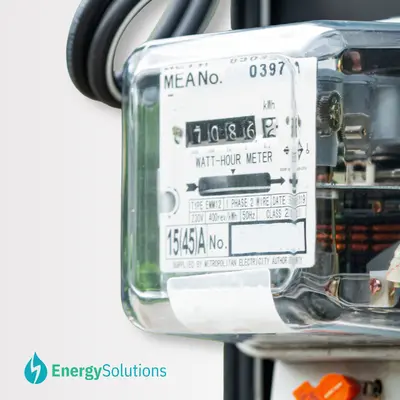
Older electromechanical electricity meters often use a series of mechanical dials.
These need to be read manually.
Citizens Advice still provides dedicated instructions for dial meters, including how to interpret alternating clockwise and anticlockwise dials.
Advantages
- Established technology.
- Does not depend on a smart communications network.
Limitations
- Requires manual readings.
- Dials can be confusing.
- Offers limited information about when electricity is being used.
- Cannot provide modern smart-tariff functionality by itself.
Digital Electricity Meter
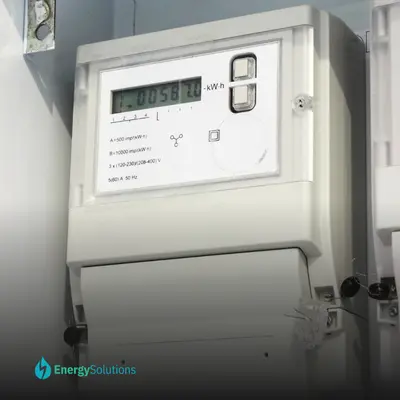
A digital electricity meter replaces mechanical dials with an electronic display.
It may show:
- one consumption register;
- two registers;
- several pieces of meter information.
But:
Digital does not automatically mean smart.
An older digital meter can display electricity consumption electronically while still requiring manual readings.
Advantages
- Usually easier to read than dials.
- Can support single or multiple registers.
- Clear electronic display.
Limitations
- May still need manual readings.
- Does not necessarily communicate with the supplier.
- Can easily be mistaken for a smart meter.
What Is a Smart Electricity Meter?
A smart electricity meter measures electricity consumption and can automatically send readings to the energy supplier when it is operating in smart mode.
Ofgem says smart meters can automatically send readings, reduce estimated billing and support functions such as remote prepayment top-ups.
Smart metering is now mainstream in Great Britain.
At the end of June 2026, DESNZ reported approximately 42 million smart and advanced meters in homes and small businesses, representing 72% of all meters in the official statistics. Around 40 million were smart meters, and 92% were operating in smart mode.
That means the useful question in 2026 is increasingly not:
“What is a smart meter?”
It is:
“Is mine working in smart mode, and am I using the tariff or data benefits it gives me?”
Smart Meter vs Digital Meter
| Feature | Digital meter | Smart meter |
| Electronic display | Yes | Yes |
| Measures electricity | Yes | Yes |
| Sends readings automatically | Usually no | Yes, in smart mode |
| Supports smart tariffs | Limited | Yes |
| Manual readings normally needed | Often | Normally no |
| Remote communication | No conventional smart function | Yes |
Smart Meter vs In-Home Display
These are not the same device.
The smart meter is the actual measuring equipment.
The in-home display, or IHD, is the separate screen that shows information such as energy use and estimated cost.
Ofgem clearly separates the two: the smart meter sends readings to the supplier while the IHD shows energy-use information to the customer.
So if the portable display stops working, that does not automatically mean the electricity meter has failed.
SMETS1 vs SMETS2 Smart Meters
SMETS stands for Smart Metering Equipment Technical Specifications.
SMETS1 refers to the first generation of the technical specifications.
SMETS2 refers to the second generation.
Older SMETS1 meters were originally installed using supplier-specific communications arrangements. Many were later enrolled into the national Data Communications Company infrastructure to improve interoperability when customers switch supplier.
For most customers, I would not spend too much time worrying about the generation label.
The more practical question is:
Is the meter currently operating in smart mode and sending data correctly?
DESNZ defines a meter in traditional mode as a smart meter that is not providing automatic remote readings and therefore needs to be treated more like a traditional meter until the issue is resolved.
Smart Meter Advantages and Limitations
| Advantages | Limitations |
| Automatic meter readings | Communications issues can occur |
| Fewer estimated bills | Smart functionality can temporarily be lost |
| Supports smart/time-of-use tariffs | Not every smart tariff suits every user |
| Better consumption visibility | Installation circumstances vary |
| Can support prepayment | Data-sharing preferences need understanding |
A smart meter is a useful tool.
It is not a guarantee of lower bills.
The saving, if there is one, comes from better tariff choice, more accurate billing or changing how electricity is used.
What Is a Prepayment Electricity Meter?
A prepayment electricity meter lets the customer pay for energy before using it.
That might involve:
- a physical key;
- a card;
- a smart prepayment account.
The important classification point is:
Prepayment describes the payment arrangement, not necessarily the underlying meter technology.
A compatible smart meter can operate in prepayment mode.
Ofgem confirms that smart metering supports prepayment functions including remote or automatic credit top-up.
Traditional vs Smart Prepayment
| Feature | Traditional prepayment | Smart prepayment |
| Top-up | Usually key/card | Often remote/app/account options |
| Meter technology | Traditional | Smart |
| Remote management | Limited | Greater capability |
| Automatic readings | No | Yes, in smart mode |
Prepayment Advantages and Limitations
Advantages
- Pay-as-you-go budgeting.
- Electricity spending can be monitored closely.
- Smart prepayment makes topping up easier.
Limitations
- Sufficient credit must be maintained.
- Tariff options vary.
- Traditional meters can require physical top-up.
- Running out of credit can create a practical supply issue.
For vulnerable domestic customers, supplier support and Ofgem’s prepayment protections matter far more than simply comparing hardware.
What Is an RTS Electricity Meter?
RTS stands for Radio Teleswitch Service.
The system used radio signals to control some older electricity arrangements, particularly:
- Economy 7;
- Economy 10;
- electric storage heating;
- hot-water heating;
- automatic switching between peak and off-peak periods.
The technology was introduced decades ago and has reached the end of its operational life.
RTS Meter Status in 2026
The phased shutdown of the Radio Teleswitch Service began on 30 June 2025.
Ofgem says suppliers are replacing remaining RTS meters with smart meters or other suitable metering solutions.
This is not a meter type I would include in a “which one should I choose?” table.
It is a legacy arrangement that needs replacement.
If you still have RTS equipment, contact your electricity supplier.
The risk is not simply inaccurate billing. RTS equipment may control heating or hot water, so an unresolved installation can create operational problems when the radio-controlled switching no longer works correctly.
What Electricity Meter Types Do Businesses Use?
Businesses can use many of the same meter arrangements as households.
But the larger or more complex the site becomes, the more likely you are to encounter:
- advanced meters;
- half-hourly data;
- polyphase/three-phase metering;
- CT metering;
- multiple MPANs;
- import/export arrangements;
- submeters.
The appropriate setup depends on the site, not simply the company size.
I would look at:
- annual electricity consumption;
- maximum electrical demand;
- operating hours;
- machinery and equipment;
- single-phase or three-phase supply;
- number of premises;
- EV charging;
- solar or battery generation;
- level of consumption data needed;
- procurement strategy.
That is a much more useful way to assess a business meter than asking:
“Which business electricity meter is best?”
What Is an Advanced Electricity Meter?
An advanced electricity meter is primarily a non-domestic metering arrangement capable of recording detailed consumption information and making that data remotely accessible.
DESNZ defines an advanced meter as one that can record consumption across multiple periods, including at least half-hourly electricity data, provide timely access to the customer and allow remote access for the supplier.
That makes advanced metering useful for businesses that want more detailed information than a basic meter provides.
Advanced Meter Advantages and Limitations
Advantages
- Automated data collection.
- Detailed consumption information.
- Better visibility of operating patterns.
- Useful for energy management.
- Supports more accurate commercial data.
Considerations
- More complex than basic metering.
- Data arrangements vary.
- Not every microbusiness needs to analyse detailed interval data.
- The meter does not automatically create a cheaper contract.
What I find useful about detailed metering data is that it can change the question.
Instead of:
“Why is my bill high?”
the business can start asking:
“Why are we using this much electricity between midnight and 5am when the premises is meant to be closed?”
That is actionable information.
What Is a Half-Hourly Electricity Meter?
Half-hourly metering records electricity consumption in 30-minute intervals.
For businesses, that creates a detailed consumption profile showing when electricity is being used, not merely the total amount used.
That information can help with:
- settlement;
- billing;
- electricity procurement;
- peak-demand analysis;
- energy management.
Half-Hourly Metering Advantages and Limitations
Advantages
- Detailed consumption profile.
- Identifies peak periods.
- Reveals overnight or out-of-hours baseload.
- Useful for analysing operational efficiency.
- Can support more sophisticated commercial procurement.
Considerations
- More data needs interpreting.
- Commercial electricity pricing can be more complicated.
- Metering and data arrangements can vary.
- Detailed data is only useful if somebody acts on it.
Historically, half-hourly metering was strongly associated with larger industrial and commercial sites.
That picture is changing.
What Is Market-Wide Half-Hourly Settlement?
Market-wide Half-Hourly Settlement or MHHS, is an industry programme changing how electricity consumption is settled across Great Britain.
Settlement is essentially the process used to compare the energy suppliers bought against what customers actually consumed.
Smart and advanced meters make much more granular consumption data available, allowing settlement to reflect actual half-hourly usage more accurately.
The important distinction is:
MHHS is not a type of electricity meter.
It is a market settlement programme.
Ofgem’s current programme rules require suppliers to complete migration of their MPANs by the 7 May 2027 M15 milestone.
This is why older guides saying half-hourly settlement is relevant only to a narrow group of large industrial users are becoming outdated.
More granular data is increasingly becoming part of how the whole electricity market operates.
Single-Phase vs Three-Phase Electricity Metering
Single-phase and three-phase describe the electrical supply configuration, not the tariff.
Single-Phase Electricity Supply
Single-phase supply is common in:
- homes;
- small offices;
- small retail units;
- lower-demand commercial premises.
It is appropriate where the connected electrical load can be supported safely by the available supply.
Three-Phase Electricity Supply
Three-phase supply is commonly used where higher electrical loads need to be supported.
Examples can include:
- commercial kitchens;
- workshops;
- factories;
- industrial motors;
- large HVAC installations;
- substantial EV charging;
- manufacturing equipment.
DESNZ uses the term polyphase metering for metering systems installed on premises with three-phase electrical supplies.
Single-Phase vs Three-Phase
| Comparison point | Single-phase | Three-phase |
| Typical use | Homes/lower-load premises | Higher-load commercial/industrial sites |
| Electrical capacity | Lower | Higher |
| Metering | Single-phase compatible | Polyphase/three-phase compatible |
| Installation complexity | Lower | Higher |
Three-phase is not automatically “better”.
A business should not upgrade simply because it is growing.
The decision needs to be based on the electrical load, equipment and connection capacity.
For that, use a qualified electrician and, where required, the relevant Distribution Network Operator.
What Is a CT Electricity Meter?
CT stands for Current Transformer.
A CT meter uses current transformers as part of the measurement system, allowing electricity to be measured where the electrical current is too high for a conventional direct-connected meter.
DESNZ defines CT meters as meters using a current transformer to measure current and notes that they are typically used at premises with higher electricity consumption.
CT Meter Advantages
- Suitable for high-current commercial installations.
- Allows larger electrical loads to be measured.
- Common in larger commercial and industrial sites.
CT Meter Considerations
- More complex installation.
- Correct CT ratios and configuration matter.
- Usually unnecessary for ordinary households or many small businesses.
If a site already uses CT metering, I would treat it as part of the wider electrical and metering infrastructure rather than something to change casually for tariff reasons.
What Is an Import/Export Electricity Meter?
An import/export arrangement measures electricity moving in both directions.
Import: electricity taken from the grid.
Export: electricity sent back to the grid.
This matters where a property has:
- solar PV;
- battery storage;
- other eligible electricity generation.
For example, the Smart Export Guarantee pays eligible small-scale generators for electricity exported to the grid.
Ofgem says SEG payments are based on export meter readings.
Import/Export Meter Advantages and Considerations
Advantages
- Measures electricity exported to the grid.
- Supports qualifying export-payment arrangements.
- Gives clearer visibility of grid interaction.
- Useful for solar and batteries.
Considerations
- Export and import tariffs are separate.
- SEG eligibility conditions apply.
- Supplier/export-provider requirements vary.
- Installation and metering configuration need to be correct.
Do not assume that choosing an import electricity supplier automatically determines who pays for your export.
They are separate commercial decisions.
What Is an Electricity Submeter?
A submeter measures electricity used inside part of a site.
It might be installed for:
- a tenant;
- a department;
- a shop within a larger building;
- a piece of machinery;
- an EV charger;
- a separate building.
The important distinction is that the submeter is not necessarily the supplier’s main settlement meter.
Submeter Advantages
- Better internal cost allocation.
- Identifies energy-intensive departments or equipment.
- Useful for landlord and tenant management.
- Supports energy-efficiency analysis.
Submeter Considerations
- Adds equipment and data complexity.
- Does not normally replace the main utility meter.
- Tenant billing can involve separate regulatory obligations.
- Accuracy and installation quality still matter.
For a multi-site or multi-tenant business, submeters can provide information the main supply meter never will.
The main meter may tell you the building used 30,000 kWh.
The submeters can tell you who or what used it.
How Do I Know What Type of Electricity Meter I Have?
Do not rely on appearance alone.
Start with the meter, then confirm what your bill says.
| What you see or know | Likely setup |
| One main kWh reading | Single-rate |
| Day/night or low/normal readings | Two-rate |
| Several time-based registers | Multi-rate |
| Mechanical dials | Traditional analogue |
| Electronic/LCD screen | Digital or smart |
| Supplier receives readings automatically | Smart or advanced |
| Key/card top-up | Traditional prepayment |
| Remote/app top-up | Smart prepayment |
| Economy 7 tariff | Two-rate or compatible smart setup |
| 30-minute business data | Smart/advanced/half-hourly arrangement |
| Three-phase supply | Polyphase metering |
| Separate export reading | Import/export metering |
Check Your Electricity Bill
Look for:
- tariff name;
- one or several unit rates;
- meter serial number;
- MPAN;
- meter information;
- settlement/profile information where available.
The MPAN is not the physical meter serial number.
Ofgem describes the Meter Point Administration Number as the electricity supply-point identifier. Your network operator can also help you find it if necessary.
Check the Meter Display
Look for:
- one reading;
- Rate 1/Rate 2;
- day/night;
- low/normal;
- total import;
- export;
- prepayment credit.
But don’t guess from button labels alone.
Different meter manufacturers use different display arrangements.
Ask Your Supplier
If you’re unsure, this is normally the fastest way to confirm:
- meter type;
- rate configuration;
- smart status;
- tariff;
- MPAN.
For a business, I would also keep the latest electricity bill available because it usually tells us much more than a photograph of the meter alone.
Which Electricity Meter Type Matters Most for a Business?
There is no universal “best business electricity meter”.
The right arrangement depends on the site.
Electricity Consumption Level
The more electricity a business uses, the more important metering and data can become.
For a small shop, detailed half-hourly analytics may offer limited operational benefit.
For a factory using hundreds of thousands of kWh, the consumption profile can materially affect procurement and cost management.
When Electricity Is Used
Two businesses can consume the same annual amount but have completely different patterns.
A restaurant may have strong evening demand.
A bakery may start at 3am.
A cold-storage facility runs continuously.
An office may be almost empty overnight.
The meter data can expose those differences.
Maximum Electrical Demand
High-load equipment can change the technical requirements of the supply.
That matters where there are:
- commercial ovens;
- refrigeration;
- motors;
- machinery;
- large HVAC systems;
- rapid EV chargers.
Single-Phase or Three-Phase Supply
This is an engineering question before it is an energy-contract question.
The site needs enough electrical capacity to support the connected load.
Need for Interval Data
Half-hourly data becomes useful where you want to understand:
- peaks;
- overnight use;
- inefficient operating hours;
- demand patterns.
EV, Solar or Battery Installations
These technologies can fundamentally change when the business imports electricity and whether it exports any.
That can alter both metering and tariff requirements.
Number of Sites or Occupiers
Landlords, multi-site operators and businesses sharing premises may need a different approach from one small single-unit office.
Tariff and Procurement Requirements
Meter capability can affect what products suppliers can offer.
But I would keep the order clear:
The meter should fit the technical requirements of the site. The electricity tariff and contract should then fit the way the business actually uses electricity.
Do not choose technical infrastructure just because one tariff happens to look attractive today.
How UK Electricity Metering Is Changing
Metering is changing quickly enough that older guides can become misleading.
Four developments matter in 2026.
Smart Meter Adoption
DESNZ reported that at the end of June 2026 there were approximately 42 million smart and advanced meters across homes and smaller businesses in Great Britain.
They represented around 72% of all meters, with 92% of smart meters operating in smart mode.
That makes smart metering mainstream infrastructure rather than a niche upgrade.
RTS Phase-Out
The phased Radio Teleswitch Service shutdown began on 30 June 2025.
Suppliers continue replacing affected legacy meters, particularly where storage heating and hot-water controls depend on RTS functionality.
If you still have RTS equipment, this is something to resolve rather than postpone.
Market-Wide Half-Hourly Settlement
MHHS is transitioning the electricity market towards settlement based on more granular consumption data.
Ofgem’s current milestone requires suppliers to complete migration of MPANs by 7 May 2027.
This is one reason old distinctions between “normal meter” and “half-hourly meter” are becoming less straightforward.
A Major Change for Business Contracts From 2027
There is another development businesses should know about.
On 1 September 2026, the government confirmed that from 1 September 2027, suppliers entering new fixed-term contracts with designated small and medium non-domestic sites must include a condition requiring the customer to have, or agree to have, a smart or advanced meter installed.
Suppliers must begin communicating the change from 1 January 2027.
For business owners, that means metering will become increasingly connected to the contract-renewal process.
I would expect this to make the question:
“What meter do I have?”
more commercially important, not less.
Electricity Meter Types: What Should You Do Next?
If you’re trying to identify your electricity meter, start by separating the questions.
Ask:
What technology is it?
Traditional, digital, smart or advanced?
How many rate registers does it use?
Single, two or multi-rate?
How do I pay?
Credit or prepayment?
What electrical supply does the site have?
Single-phase or three-phase?
How is the consumption data used?
Traditional or half-hourly?
Then check the tariff and bill.
That gives you a much clearer picture than simply trying to choose one item from a generic list of meter types.
For businesses, the meter is only one part of the decision. Consumption profile, electrical demand, tariff structure and contract terms still matter.
If you’re reviewing a business electricity contract and are unsure how your meter affects the tariffs or procurement options available, Energy Solutions can help you identify the relevant metering details and compare the commercial options on the right basis.
Frequently Asked Questions
What are the main types of electricity meter in the UK?
Common UK arrangements include single-rate, two-rate, multi-rate, traditional digital or dial meters, smart meters and prepayment meters. Businesses may also use advanced, half-hourly, three-phase and CT metering. These categories overlap because they describe different aspects of the same installation.
How do I know if my electricity meter is single-rate or two-rate?
A single-rate setup normally has one main consumption register and one electricity unit rate. A two-rate meter has two readings, often shown as day/night, normal/low or Rate 1/Rate 2. Check your bill as well as the meter display.
Is Economy 7 a meter or a tariff?
Economy 7 is primarily a tariff. It provides seven hours of off-peak electricity and requires suitable metering capable of recording peak and off-peak consumption separately. That may be a traditional two-rate meter or a compatible smart meter.
Can a smart meter be single-rate?
Yes.
“Smart” describes the meter’s technology and communications capability. “Single-rate” describes the way consumption is grouped for pricing. A smart meter can therefore operate on a single-rate tariff.
Can a smart meter be a prepayment meter?
Yes.
Compatible smart meters can operate in prepayment mode and can support remote top-ups, subject to the supplier’s system and account setup.
What is the difference between a digital and smart meter?
A digital meter has an electronic display, but it does not necessarily communicate with the supplier. A smart meter can automatically send readings when operating correctly in smart mode.
What is the difference between single-phase and three-phase electricity?
Single-phase and three-phase describe how electricity is supplied to the site. Single-phase is common in homes and lower-load premises. Three-phase is typically used where higher electrical loads need to be supported, particularly in commercial and industrial sites.
What is a half-hourly electricity meter?
Half-hourly metering records electricity consumption in 30-minute intervals. The data provides a detailed view of when electricity is used and can support settlement, billing, energy analysis and commercial procurement.
Does my electricity meter affect which tariff I can choose?
Yes. Some tariffs require specific capabilities. Economy 7 needs separate peak/off-peak measurement, while many modern time-of-use and EV tariffs require compatible smart metering.
What is an RTS electricity meter?
An RTS meter uses the legacy Radio Teleswitch Service to control some peak/off-peak tariffs and electrical heating systems. The phased shutdown began in June 2025, so remaining affected meters need replacement with appropriate modern metering.
Do I need to replace an RTS electricity meter?
If you still have an RTS meter, contact your supplier. Ofgem says suppliers are replacing remaining RTS meters with smart meters or alternative solutions because the supporting radio technology is being phased out.
What type of electricity meter does a business need?
It depends on the site’s electrical demand, consumption pattern, supply configuration, equipment, data requirements and procurement needs. Small businesses may use ordinary smart meters, while larger or higher-load premises may require advanced, half-hourly, three-phase or CT metering.