
The cheapest standing charge electricity tariff in the UK is rarely the cheapest overall business electricity deal, because suppliers recover the lost daily charge through a higher unit rate. For a business with low or infrequent usage, a no standing charge energy tariff can still work out cheaper overall. For most businesses with steady, higher consumption, it usually costs more across a full year.
Whether a no standing charge tariff is worth it depends on four things: your annual kWh consumption, your business type, your day-to-day usage pattern, and the total cost of the bill across 12 months, not the daily rate shown at the top of a quote.
That’s what this guide works out. Not which tariff has the lowest standing charge, since any comparison site can show that in seconds, but which tariff structure is actually cheapest for a business like yours.
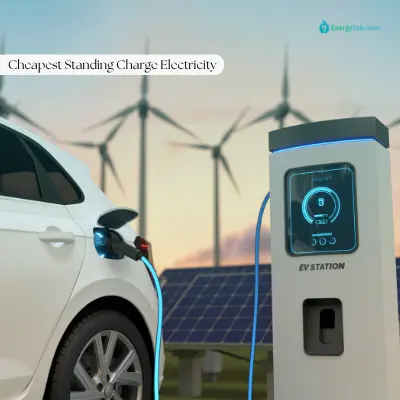
What Is the Cheapest Standing Charge Electricity UK Option?
There isn’t one single answer here, because the cheapest standing charge and the cheapest electricity bill are two different things, and confusing them is where most businesses lose money. A tariff with a £0 standing charge will almost always carry a higher unit rate, so it only wins for businesses using very little electricity. A tariff with a low but non-zero standing charge paired with a competitive unit rate is usually the cheaper option once you’re above light usage.
| Tariff type | Standing charge | Unit rate | Best suited to |
|---|---|---|---|
| Standard tariff | Higher, fixed | Lower | Regular or high-usage businesses |
| Low standing charge tariff | Reduced | Medium to high | Smaller businesses with moderate usage |
| No standing charge tariff | £0 | Higher | Low-usage, seasonal, or vacant sites |
The only way to know which row applies to you is to work out the total annual cost, not the daily figure printed at the top of a quote. That’s what the rest of this guide walks through.
What Is No Standing Charge Energy?
What is a standing charge on a business electricity bill?
A standing charge is a fixed daily amount you pay just for being connected to the electricity network, whatever your usage looks like that day. It runs every day of your contract, including the days your premises are closed, empty, or barely drawing any power at all.
Think of a seasonal café shut for the winter, a storage unit ticking over on almost no load, or a vacant commercial unit sitting empty between tenants. All three will still be billed a standing charge every single day, even at zero consumption.
Why do energy suppliers charge standing charges?
It’s not profit sitting quietly with your supplier. It covers real costs that exist whether you use a single kWh or not:
- Network costs, for maintaining the cables, substations, and infrastructure run by your regional Distribution Network Operator (DNO)
- Metering costs, covering installation, maintenance, and reading of your meter, smart meter rollout included
- Administrative and policy costs, which fold in supplier operating costs and government mandated environmental and social obligations
Standing charges are regulated at network level and passed through by suppliers. That’s why they shift by region and DNO area rather than being something a supplier can simply set to whatever they like.
Standing charge vs unit rate: what’s the difference?
Every business electricity bill boils down to the same formula:
Total Annual Cost = (Standing Charge × Number of Days) + (Unit Rate × kWh Used)
The standing charge is fixed and unavoidable. The unit rate moves with how much you actually use. This is the whole reason a “cheapest standing charge” tariff and a “cheapest bill” tariff can turn out to be completely different contracts, and it’s why looking only at the standing charge line on a quote is one of the most common, and most costly, mistakes business owners make.
Does No Standing Charge Electricity Exist for UK Businesses?
Yes, it exists, but it’s not widely available, and it isn’t the automatic money saver it sounds like on paper.
A handful of suppliers offer no standing charge or reduced standing charge tariffs, generally built for low usage or intermittent use sites. Eligibility usually hinges on your meter type, your region, and your historical or estimated annual usage, so it’s not something every business can simply opt into. It needs to be checked against your actual circumstances, which is exactly what happens during a proper broker comparison before you sign anything.
How do suppliers structure a no standing charge tariff?
- Traditional tariff: standing charge (fixed daily cost) plus a lower unit rate per kWh
- No standing charge tariff: £0 standing charge plus a higher unit rate per kWh
The supplier still has to recover the same underlying network and admin costs. Dropping the standing charge just means that cost gets spread across every kWh you buy instead of being billed daily. For a business that barely touches electricity, that trade usually works in your favour. For a business running equipment, lighting, refrigeration, or heating throughout the day, it usually doesn’t.
Why aren’t no standing charge tariffs more widely available?
Suppliers price these tariffs cautiously because they’re riskier to offer, not less risky. A site with unpredictable or seasonal demand is harder to forecast than one sitting on a standard fixed structure, so these tariffs tend to be offered selectively rather than pushed as a default. It’s also why working with a broker who can check live availability against your meter and usage profile beats hunting for a “cheapest standing charge” deal on your own.
Cheapest Standing Charge Electricity UK vs Cheapest Business Electricity: What’s the Difference?
This is the distinction almost every comparison guide skips straight past, and it’s the one that actually decides what you end up paying.
The lowest daily charge is not the same thing as the lowest annual bill. A tariff can be marketed as having the “cheapest standing charge” and still cost you more over twelve months once your real usage is multiplied by its unit rate. Here’s how that plays out across three business types you’ll recognise.
Example 1: Seasonal café
Profile: around 2,500 kWh a year, closed over winter, low and irregular demand.
At this usage level, the extra pence per kWh on a no standing charge tariff only applies to a small number of units, while the daily standing charge saving keeps stacking up across 365 days regardless of whether the café is even trading. A no standing charge tariff usually wins here.
Example 2: Small office
Profile: around 8,000 kWh a year, open daily, steady but moderate consumption.
This is the genuine borderline case, and it’s where a lot of businesses guess wrong. Whether a no standing charge or low standing charge tariff wins depends entirely on how big the unit rate premium is. A small premium can still pay off at this usage level; a large one can wipe the saving out completely. This is exactly the situation that calls for a proper break-even calculation rather than a hunch, which is what the next section covers.
Example 3: Warehouse
Profile: 50,000+ kWh a year, continuous lighting, equipment, and refrigeration.
At this scale, even a small bump in unit rate gets multiplied across a huge number of units and quickly swallows any standing charge saving. A standard tariff with the lowest achievable unit rate is almost always the cheaper route.
How to Calculate Whether No Standing Charge Energy Will Save Your Business Money
You don’t have to guess. There’s a straightforward break-even calculation that shows you exactly where the crossover sits.
Annual Cost = (Standing Charge × 365) + (Unit Rate × Annual kWh Usage)
Run this for both tariffs using your actual, or best estimated, annual usage, then compare the two totals. The tariff with the lower total wins for your business, not the one with the smaller headline standing charge.
The break-even point, explained
The break-even point is the annual kWh figure where the daily saving from having no standing charge gets exactly cancelled out by the extra you’re paying on every unit. Below that usage level, no standing charge wins. Above it, the standard or low standing charge tariff takes over.
Worked example:
- Tariff A (standard): 70p/day standing charge + 25p/kWh
- Tariff B (no standing charge): £0/day + 35p/kWh
| Annual usage | Tariff A cost | Tariff B cost | Cheaper option |
|---|---|---|---|
| 2,000 kWh | £255.50 + £500 = £755.50 | £700 | Tariff B (no standing charge) |
| 5,000 kWh | £255.50 + £1,250 = £1,505.50 | £1,750 | Tariff A (standard) |
| 10,000 kWh | £255.50 + £2,500 = £2,755.50 | £3,500 | Tariff A (standard) |
The break-even point in this example falls somewhere between 2,000 and 5,000 kWh. Below it, drop the standing charge. Above it, keep it and put your energy into chasing the lowest unit rate instead. Your own break-even point will land wherever your actual quoted rates put it, which is exactly why a generic “cheapest standing charge” table can’t tell you what to do. The numbers only mean something once they’re run against your usage, your quote, and your region.
Want this calculated against your actual bill? Send us your latest bill and our team will run the break-even numbers against live market rates for you, free of charge and with no obligation.
Which Businesses Benefit Most From Low or No Standing Charge Electricity?
Low and no standing charge tariffs tend to work best for businesses with light, irregular, or seasonal demand:
- Seasonal businesses, summer only cafés, ice cream kiosks, outdoor attractions that shut for part of the year
- Holiday parks and static caravan sites, highly seasonal demand with long stretches of low or no occupancy
- Churches and community buildings, used a handful of hours a week and otherwise sitting near zero
- Storage units and self storage sites, minimal lighting and security load, no significant equipment
- Vacant commercial properties, landlords and agents holding empty units between tenants, where paying a standing charge on zero usage is money down the drain
- Construction sites with temporary connections, short term, variable demand that doesn’t justify a standard fixed cost structure
- Event venues, irregular, event by event usage with long dormant periods in between
If your business fits one of these profiles, it’s worth specifically asking whether a no standing charge or low standing charge tariff is available for your meter and region. This is exactly the kind of match our energy consultants check for as standard whenever we run a comparison.
Which Businesses Should Avoid No Standing Charge Electricity?
For businesses running regular, ongoing consumption, a higher unit rate spread across a large number of units almost always ends up costing more than the standing charge it replaced:
- Restaurants, continuous cooking, refrigeration, and extraction load through every opening hour
- Hotels, round the clock operation across heating, hot water, lighting, and guest facilities
- Factories and manufacturing sites, high, sustained kWh draw from machinery and processes
- Retail chains and multi-site operators, usage adds up fast across several locations, and a unit rate premium gets multiplied at every single site
- Warehouses, continuous lighting, materials handling equipment, and often refrigeration or climate control
For businesses in this bracket, the real lever isn’t chasing a no standing charge deal. It’s locking in the lowest achievable unit rate on a standard or fixed contract, since that’s where most of the meaningful savings sit once consumption climbs.
Lowest Standing Charge Electricity UK: What Should Businesses Actually Compare?
Standing charge is just one line on a business energy quote. Before you choose between suppliers or tariff structures, weigh up all of the following together:
| Factor | Why it matters |
|---|---|
| Standing charge | Fixed daily cost, applies regardless of usage. |
| Unit rate | Cost per kWh, the variable that scales with consumption. |
| Annual usage | Determines which tariff structure actually suits your business. |
| Contract length | Longer fixed terms offer price certainty; shorter terms offer flexibility. |
| Exit fees | Can make switching mid-contract more expensive than staying put. |
| Meter type | Not every tariff, including no standing charge deals, is available for every meter type. |
| Business location | Regional network (DNO) charges affect the standing charge you’re quoted, independent of supplier. |
Comparing on standing charge alone, which is how most “cheapest standing charge electricity UK” content frames the whole decision, ignores five of these seven factors. That’s how businesses end up on a tariff that looks cheap on paper and costs more in practice.
How to Find the Cheapest Standing Charge Electricity UK Tariff for Your Business
- Work out your actual annual electricity usage. Pull this from a recent bill or your smart meter data. Estimates tend to steer you toward the wrong tariff.
- Check your current standing charge and unit rate. You need both figures, not just the standing charge, to know what you’re actually being compared against.
- Compare unit rates across suppliers and tariff types, including any no standing charge or low standing charge options open to your meter and region.
- Run the break-even calculation using your real usage figure against each quote, so you’re comparing total annual cost rather than headline rates.
- Request tailored business energy quotes instead of relying on generic published rates. Business electricity has no price cap, so quotes vary a lot by supplier, region, and consumption profile.
This is the exact process our team runs for every business we work with: comparing live rates from 30+ suppliers against your actual usage, with full transparency on any commission we earn, so the tariff you land on is genuinely the cheapest one for your business, not just the one with the lowest number printed on the front page.
Frequently Asked Questions
Does no standing charge energy really exist?
Yes, but it’s offered by a limited number of suppliers and isn’t available for every meter type, region, or business. It needs to be checked against your specific circumstances rather than assumed to be an option.
Can businesses get no standing charge electricity?
Some can, depending on their supplier options, meter type, and usage profile. It suits low usage or seasonal sites far better than businesses with continuous consumption.
What is the lowest standing charge electricity UK tariff available right now?
This shifts regularly, since business energy has no price cap and rates move with the wholesale market. What’s lowest for you depends on your region, meter type, and supplier options at the moment you compare. Live quotes are the only reliable way to check.
What is the cheapest standing charge electricity UK option for my business?
It depends on your annual usage. Low usage or seasonal businesses tend to save more with reduced or no standing charge tariffs; regular or high usage businesses usually do better with a standard structure and the lowest available unit rate.
Is low standing charge electricity better than a lower unit rate?
Neither wins outright; it depends on your consumption. Low usage favours a low or no standing charge, while high, regular usage favours a lower unit rate. The only way to know for certain is to calculate the total annual cost for your actual usage under both structures.
Why are business electricity standing charges different from household ones?
Business electricity isn’t covered by the domestic energy price cap, so standing charges and unit rates come from individual supplier quotes rather than a regulated ceiling. That’s also why rates vary far more between business suppliers than between household ones, and why comparing quotes matters more for businesses.
Can an energy broker negotiate better electricity prices?
Yes. A broker compares live rates across multiple suppliers on your behalf, checks tariff eligibility against your meter and usage, and can spot when a tariff structure, no standing charge included, genuinely suits your business rather than just looking cheap on the surface.
Is a zero standing charge tariff good for seasonal businesses?
Generally, yes. Seasonal businesses avoid paying a fixed daily charge through closed periods, which is often the single biggest saving available on their energy contract.
Yes, but it’s offered by a limited number of suppliers and isn’t available for every meter type, region, or business. It needs to be checked against your specific circumstances rather than assumed to be an option.
Some can, depending on their supplier options, meter type, and usage profile. It suits low usage or seasonal sites far better than businesses with continuous consumption.
This shifts regularly, since business energy has no price cap and rates move with the wholesale market. What’s lowest for you depends on your region, meter type, and supplier options at the moment you compare. Live quotes are the only reliable way to check.
It depends on your annual usage. Low usage or seasonal businesses tend to save more with reduced or no standing charge tariffs; regular or high usage businesses usually do better with a standard structure and the lowest available unit rate.
Neither wins outright; it depends on your consumption. Low usage favours a low or no standing charge, while high, regular usage favours a lower unit rate. The only way to know for certain is to calculate the total annual cost for your actual usage under both structures.
Business electricity isn’t covered by the domestic energy price cap, so standing charges and unit rates come from individual supplier quotes rather than a regulated ceiling. That’s also why rates vary far more between business suppliers than between household ones, and why comparing quotes matters more for businesses.
Yes. A broker compares live rates across multiple suppliers on your behalf, checks tariff eligibility against your meter and usage, and can spot when a tariff structure, no standing charge included, genuinely suits your business rather than just looking cheap on the surface.
Generally, yes. Seasonal businesses avoid paying a fixed daily charge through closed periods, which is often the single biggest saving available on their energy contract.
Compare Business Electricity Quotes and Find the Right Tariff Structure
Choosing between a standard, low standing charge, or no standing charge tariff isn’t about finding the smallest number on a comparison table. It’s about matching the tariff structure to how your business actually uses electricity.
At Energy Solutions, we compare live rates from 30+ suppliers, including the “Big Six” and green specialists, and we’re upfront about any commission we earn under the TPI Code of Practice. If your current rate is already competitive, we’ll tell you, even if it means we don’t earn a thing from the conversation.
✓ Compare multiple suppliers side by side
✓ Understand exactly how your standing charge and unit rate combine
✓ Avoid tariffs that don’t suit your actual usage pattern
✓ Get a recommendation based on your real consumption, not a generic table
Get your free business electricity comparison → or call 0330 135 8266 (Mon to Fri, 9am to 5pm) to speak with an energy consultant directly.