Author: Joy | Energy Markets Analyst, 3.6+ years in the energy industry
Last reviewed: 27 October 2026
Table of Contents
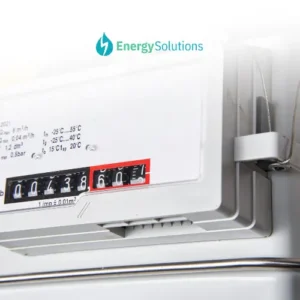
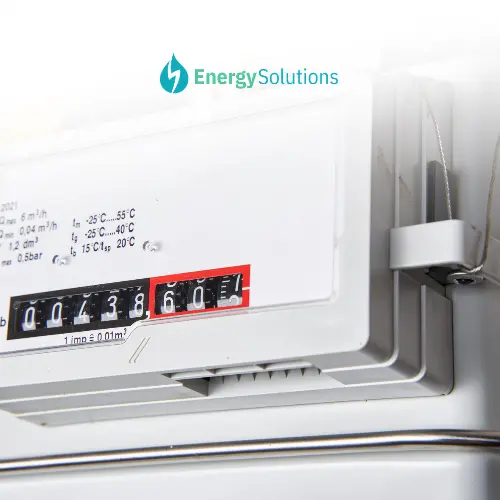
An imperial gas meter measures the volume of gas passing through it in cubic feet, ft³. The clearest way to identify one is to look for the ft³ marking on the meter register. A traditional digital imperial meter normally has four main digits used for the supplier reading.
Your supplier does not bill you directly for cubic feet. The gas volume recorded by the meter is converted into kilowatt hours, kWh, before your tariff is applied. GOV.UK confirms that gas meters can record in cubic feet or cubic metres, while customers are billed in kWh.
Quick answer: If your gas meter is marked ft³, it is imperial. For a traditional digital imperial meter, record the first four main digits from left to right and ignore the red or fractional figures. For billing, traditional imperial meter units are converted from hundreds of cubic feet into cubic metres before the correction factor and calorific value are applied.
Although new gas meters register in cubic metres, GOV.UK confirms that a significant number of older imperial meters remain in use for billing.
How to Identify an Imperial Gas Meter
The most reliable way to identify your meter is not its age, colour or casing.
Check the unit shown on the register.
| Feature | Imperial gas meter | Metric gas meter |
| Volume unit | Cubic feet | Cubic metres |
| Symbol | ft³ | m³ |
| Traditional main reading | Usually 4 digits | Usually 5 digits |
| Cubic feet conversion required | Yes | No |
| Final billing unit | kWh | kWh |
If the meter says:
ft³
you have an imperial meter.
If it says:
m³
you have a metric meter.
OPSS guidance confirms that approved gas meters must clearly identify the unit of measurement on the register.
Do Not Identify an Imperial Meter From Appearance Alone
Older imperial meters are often mechanical, but appearance is not reliable enough for billing decisions.
The ft³ marking is the evidence that matters.
This is particularly important at commercial premises. A business may have occupied a site for years without knowing whether a meter has previously been exchanged, altered or recorded incorrectly.
When we review a business gas account, I would always rather verify what is physically installed than make assumptions from the age or appearance of the meter.
How to Read an Imperial Gas Meter
For a traditional digital imperial gas meter:
- Find the main number display.
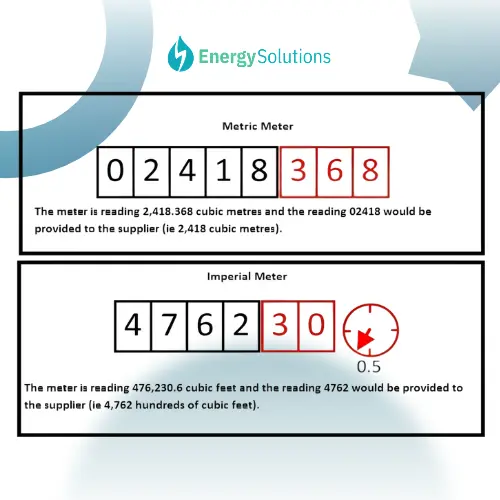
- Read the first four main digits from left to right.
- Include leading zeros.
- Ignore red digits and fractional figures.
- Submit the four digit reading to your supplier.
Citizens Advice gives the same method. Its current guidance says a digital imperial gas meter normally shows four black or white figures followed by two red figures, and only the first four are submitted.
Example
Suppose the meter shows:
0 4 7 2 | 6 3
If 0472 represents the four main figures and the remaining numbers are fractional figures, the reading to submit is:
0472
not:
047263
This may look like a small detail, but meter readings form part of the evidence used to calculate a bill.
A perfectly accurate meter can still produce a billing dispute if the wrong figures are submitted, recorded or carried forward.
What If Your Imperial Meter Has Dials?
A dial meter is read differently.
Citizens Advice advises reading the first four relevant gas dials from left to right, ignoring large or red dials. Where a pointer falls between two figures, the lower number is normally recorded, with a specific rule where the pointer sits between 9 and 0.
If your meter does not resemble a standard four digit imperial register, do not force it into the four digit method.
Follow the instructions for that meter type.
How Is an Imperial Gas Meter Converted to kWh?
An imperial gas meter measures volume.
Your bill charges for energy.
That is why a conversion is required.
For a traditional imperial gas meter where each main register unit represents 100 cubic feet, the calculation can be expressed as:
kWh = imperial units used × 2.83 × 1.02264 × calorific value ÷ 3.6
The steps are:
- Imperial units used: current meter reading minus previous meter reading.
- 2.83: converts 100 cubic feet into approximately 2.83 cubic metres.
- 1.02264: adjusts the volume for temperature and pressure.
- Calorific value: represents the energy contained in the gas.
- 3.6: converts megajoules into kilowatt hours.
GOV.UK sets out these billing steps under the Gas Calculation of Thermal Energy Regulations 1996.
Use the Calorific Value on Your Bill
You will often see worked examples using:
39.5 MJ per m³
That is useful for an illustration, but it is not a permanent universal calorific value.
GOV.UK explains that calorific value varies and that the figure used for the billing period should appear on the gas bill. Gas transporters are required to keep the value within the prescribed range.
If you are reconstructing an actual bill, use the calorific value printed on that bill rather than taking a figure from an online calculator.
That is one of the first things I would check when somebody says their manual calculation does not match the supplier’s.
Why Do You Multiply an Imperial Gas Meter Reading by 2.83?
This is where many imperial gas calculations go wrong.
A traditional imperial gas meter normally records the main units in hundreds of cubic feet.
One cubic foot is approximately:
0.0283 m³
So:
100 ft³ = approximately 2.83 m³
That is why one whole traditional imperial meter unit is normally multiplied by 2.83 during the billing calculation.

Why Do Some Sources Use 0.0283 Instead of 2.83?
Both figures can be correct.
They start from different quantities.
| Starting quantity | Conversion |
| 1 cubic foot | × 0.0283 |
| 100 cubic feet | × 2.83 |
So:
1 ft³ = approximately 0.0283 m³
while:
100 ft³ = approximately 2.83 m³
If you are converting individual cubic feet, use 0.0283.
If you are converting traditional imperial meter units where one register unit represents 100 cubic feet, use 2.83.
Confusing these two starting points creates a 100 times difference before the rest of the calculation is even applied.
That is not a rounding error. It can completely invalidate the calculation.
Worked Example: Imperial Gas Meter to kWh
Suppose a meter has these readings:
| Reading | Value |
| Previous meter reading | 2500 |
| Current meter reading | 2510 |
| Imperial units used | 10 |
| Example calorific value | 39.5 MJ per m³ |
These figures are illustrative.
1. Calculate the Usage
2510 minus 2500 = 10 imperial units
2. Convert to Cubic Metres
10 × 2.83 = 28.3 m³
3. Apply the Correction Factor
28.3 × 1.02264 = approximately 28.94
4. Apply the Calorific Value
28.94 × 39.5 = approximately 1,143.1 MJ
5. Convert to kWh
1,143.1 ÷ 3.6 = approximately 317.5 kWh
The 10 imperial meter units therefore represent approximately:
317.5 kWh
using the example calorific value.
Your supplier’s result may differ slightly because it will use the calorific value and calculation precision applicable to the billing period.
Metric vs Imperial Gas Meter: What Actually Changes?
The main difference is the unit used to record gas volume.
An imperial meter records:
ft³
A metric meter records:
m³
Both eventually need to convert the measured volume into kWh for billing.
The difference is that an imperial reading requires the additional cubic feet to cubic metres conversion.
A metric meter already measures cubic metres, so the 2.83 imperial conversion step is not required.
That is why two businesses can both receive bills in kWh even though one meter displays ft³ and the other displays m³.
Imperial Gas Meters in Businesses
For a business, identifying a gas meter correctly is about more than submitting a reading.
The meter information can affect:
- bill validation
- consumption analysis
- supplier disputes
- annual consumption calculations
- procurement
- meter capacity reviews
- new equipment planning
One mistake I would avoid is treating imperial, U6 and U16 as if they describe the same thing.
They do not.
Imperial Does Not Mean U6, U16 or U40
Imperial or metric describes how the meter records gas volume.
U6, U16, U25, U40 and similar classifications relate to meter size and capacity.
National Gas guidance identifies U6, U16 and U25 as different meter sizes. Its published meter identification guidance also shows that a meter marked Q max 16 m³ per hour corresponds to the U16 category.
So seeing:
U16
does not tell you whether the meter register is imperial or metric.
Likewise, seeing:
ft³
does not tell you the meter capacity.
The register unit and the meter capacity answer different questions.
That distinction becomes commercially important when a business changes its gas demand.
A restaurant adding kitchen equipment, a hotel expanding hot water demand or a manufacturer installing another gas appliance may need to establish whether the existing supply and meter capacity still match the required load.
An Imperial Meter Does Not Tell You Annual Consumption
A business cannot look at ft³ and know its annual gas consumption.
It also cannot look at U16 and calculate annual usage.
When reviewing a commercial gas account, I would verify:
- opening and closing readings
- dates covered by those readings
- converted kWh
- billed annual consumption
- meter serial number
- MPRN
- changes in operating pattern
If a restaurant adds another kitchen or a manufacturing site installs new gas equipment, historical consumption may no longer be a reliable forecast for the next contract period.
That matters when comparing business gas quotes.
A cheaper tariff applied to the wrong consumption assumption is still a poor comparison.
Can an Imperial Gas Meter Be Used for Gas Rating?
A suitable imperial meter can form part of an engineer’s gas rate assessment.
That is different from reading a meter for billing.
Gas Safe Register inspection guidance includes appliance gas rates, operating pressure and heat input among the technical checks registered engineers may be required to demonstrate.
For a business owner or ordinary customer, this is not a DIY calculation.
Safety: Appliance gas rate, heat input and gas safety work should be carried out by an appropriately qualified Gas Safe registered engineer.
For billing purposes, your task is to identify and read the meter correctly.
Are Imperial Gas Meters Still Legal in the UK?
Yes.
An imperial meter is not illegal simply because it records in cubic feet.
GOV.UK confirms that although new gas meters register in cubic metres, significant numbers of imperial meters remain in service for billing.
Meters used for billing must meet the relevant legal approval and accuracy requirements.
OPSS is responsible for gas meter metrology and accuracy. Its guidance states that meters used for billing must be of an approved design and meet defined performance requirements.
The useful question is not:
Is this meter old and imperial?
It is:
Is the meter correctly recorded, legally suitable for billing and registering accurately?
Do Imperial Gas Meters Have to Be Replaced?
Not simply because they are imperial.
OPSS states that gas meters do not have a defined statutory in service life.
The meter owner has an obligation to keep the meter in proper order so that the quantity of gas supplied is correctly registered.
A gas meter may instead be replaced because of:
- an asset replacement programme
- smart meter installation
- damage
- accuracy concerns
- a change in gas demand
- a change in required meter capacity
- redevelopment of the premises
Meters can remain in service while they continue to meet the applicable legal requirements.
If your supplier proposes a replacement, ask why.
The fact that the meter uses cubic feet is not evidence that it is inaccurate.
Does an Imperial Gas Meter Make Your Gas Bill Higher?
No.
You are not charged more simply because your meter records in cubic feet.
The supplier converts the gas volume into kWh before applying the energy tariff.
If two customers consume the same amount of energy under the same tariff and circumstances, the fact that one meter records in cubic feet and another records in cubic metres should not by itself make one supply more expensive.
The problems I would look for are different:
- wrong meter reading
- estimated reading
- incorrect opening reading
- wrong meter serial number
- incorrect meter record
- incorrect conversion
- wrong supply point information
Those can affect a bill regardless of whether the meter itself is working correctly.
What to Check If Your Gas Bill Looks Wrong
For a business, I would not start with the assumption that the tariff is expensive.
First establish whether the bill is based on the correct meter and believable consumption.
1. Confirm Whether the Meter Is Imperial or Metric
Check the register.
ft³ = imperial
m³ = metric
Do not rely on appearance.
2. Compare the Physical Reading With the Bill
Check whether the invoice uses:
- an actual reading
- a customer reading
- an estimated reading
Estimated readings can create significant corrections later when an actual reading is submitted.
3. Check the Opening Reading
This is particularly important after:
- moving into a property
- switching supplier
- changing account responsibility
- meter replacement
- beginning a new contract
An incorrect opening reading can affect every bill that follows.
A Real Energy Solutions Example: Why the Opening Reading Matters
We saw exactly this problem with Mo’s Kitchen, a restaurant in Penarth.
The account had started with an incorrect gas opening meter reading inherited from the previous supplier.
The resulting bill reached £20,298.01.
When Energy Solutions reviewed the account, we identified the opening reading as the underlying problem. The dispute continued for more than 12 months because the supplier required specific photographic evidence and repeatedly requested further documentation.
When the normal evidence route failed, we examined the metadata within the original meter photograph to establish when the image had been taken.
The supplier accepted the evidence and revised the bill to £11,292.59, a reduction of approximately £10,000.
That case is not evidence that every high gas bill is wrong.
It demonstrates why I would verify the meter evidence before deciding that the tariff itself is the problem.
It also shows why businesses should retain original meter photographs, dates, opening readings, supplier correspondence and bills.
A photograph can be much more useful months later if the original file and its metadata have been preserved.
4. Check the Conversion
For a traditional imperial meter where the main register records hundreds of cubic feet, the calculation should reflect:
imperial units × 2.83 × correction factor × calorific value ÷ 3.6
A metric meter should not have the 2.83 imperial conversion applied.
GOV.UK confirms both methods.
5. Check the Meter Serial Number
Compare the serial number printed on the physical meter with the serial number shown on the bill or supplier records.
This is particularly important where:
- a meter has been replaced
- several meters are present
- the business occupies part of a larger building
- responsibility for the supply has changed
British Gas Business explains that the meter serial number identifies the physical meter and is separate from the MPRN that identifies the gas supply point.
6. Check the MPRN
The Meter Point Reference Number, MPRN, identifies the gas supply point.
Ofgem documentation defines the MPRN as the unique reference used to identify a gas supply meter point.
It is not the same as the physical meter serial number.
For a commercial account, checking both helps establish whether the supplier’s records connect the correct physical meter to the correct gas supply point.
7. Keep the Evidence
If something looks wrong, keep:
- dated meter readings
- original meter photographs
- meter serial number
- MPRN
- bills
- contract information
- emails with the supplier
- dates of calls and complaints
- meter exchange documents where relevant
From experience, a billing dispute becomes much harder when the business knows something is wrong but cannot reconstruct what happened.
Good records give you something specific to challenge.
8. Raise the Discrepancy With the Supplier
Billing complaints should first be raised with the supplier.
OPSS makes this distinction clear. It deals with meter accuracy, while billing disputes should initially go to the company issuing the bill.
If the concern is specifically that the meter itself is inaccurate, there is a formal independent testing route.
OPSS says customers can request an independent gas meter accuracy test after raising the issue with their supplier. If the meter is found outside the legal accuracy limits, the supplier may need to correct the billing.
A Practical Business Energy Check
When I review a commercial gas account, the first question is not:
Does this bill look expensive?
I want to establish:
Is the correct meter being billed, are the readings valid, and is the annual kWh believable?
Only then does it make sense to judge the tariff.
Otherwise, a business can spend time negotiating a lower unit rate while the real problem remains an incorrect meter reading or account record.
Who Regulates Imperial Gas Meters?
Different organisations have different responsibilities.
| Organisation | Role |
| OPSS | Gas meter approval, metrology and accuracy |
| Ofgem | Energy market regulation and responsibility for the thermal energy calculation regulations |
| Energy supplier | Billing, account records and first investigation of billing problems |
| Energy Ombudsman | Eligible unresolved supplier disputes |
GOV.UK states that OPSS is responsible for gas meter accuracy, while Ofgem has responsibility for the regulations governing how measured gas volume is converted into billed thermal energy.
That distinction matters.
A meter accuracy problem and a billing problem are not necessarily the same thing.
Frequently Asked Questions
How Do I Know If My Gas Meter Is Imperial?
Check the measurement unit shown on the meter.
If it says ft³, it records gas in cubic feet and is imperial.
A traditional digital imperial meter normally has four main figures used for the supplier reading.
How Do I Read an Imperial Gas Meter?
For a traditional digital imperial meter, record the first four main digits from left to right and ignore the red or fractional figures.
Citizens Advice confirms this method for standard digital imperial gas meters.
What Does ft³ Mean on a Gas Meter?
ft³ means cubic feet.
It measures gas volume.
Your supplier then converts that volume into kWh before applying the tariff.
How Do I Convert Imperial Gas Units to kWh?
For a traditional meter where one main register unit represents 100 cubic feet:
kWh = units used × 2.83 × 1.02264 × calorific value ÷ 3.6
Use the calorific value shown on your actual bill when checking a billed calculation.
Why Is an Imperial Gas Reading Multiplied by 2.83?
Because one traditional imperial meter unit represents 100 cubic feet, and 100 cubic feet is approximately 2.83 cubic metres.
Why Do Some Calculators Use 0.0283?
Because one cubic foot is approximately 0.0283 cubic metres.
The 2.83 figure applies to 100 cubic feet.
Both conversion factors can be correct, but only when they are applied to the correct starting quantity.
Is an Imperial Gas Meter Still Legal?
Yes.
Existing imperial meters can remain in use for billing provided they meet the applicable approval and accuracy requirements.
GOV.UK confirms that imperial meters remain in service even though new gas meters register in cubic metres.
Does an Imperial Gas Meter Need Replacing?
Not simply because it is imperial.
OPSS states that gas meters do not have a defined statutory in service life.
Replacement can instead be driven by accuracy, condition, asset programmes, smart metering or changes in site requirements.
Does an Imperial Gas Meter Make Gas More Expensive?
No.
The difference is how the gas volume is recorded.
The volume is converted into kWh before the tariff is applied.
If a bill looks wrong, check the readings, meter details, MPRN and conversion rather than assuming the imperial meter itself is increasing the price.
Is a U6 Meter an Imperial Gas Meter?
Not necessarily.
U6 describes a meter size or capacity classification.
Imperial describes the unit used by the register.
National Gas guidance identifies U6, U16 and U25 as different meter sizes. You still need to check whether the register itself is marked ft³ or m³.
Can an Imperial Gas Meter Be Used for Gas Rating?
A suitable meter can form part of a gas engineer’s gas rate assessment.
That is a technical appliance test, not the same task as reading the meter for billing.
Gas rate and heat input checks should be carried out by an appropriately qualified Gas Safe registered engineer.
Final Takeaway
An imperial gas meter records gas volume in cubic feet rather than cubic metres.
For most customers, the key points are:
- identify the meter from the ft³ marking
- read the correct main digits
- understand that the imperial reading must be converted before billing
- remember that 2.83 converts 100 cubic feet into cubic metres
- use the actual calorific value shown on the bill when checking a calculation
For businesses, I would add one more rule:
Do not evaluate the gas tariff until you trust the meter data behind the bill.
Imperial or metric tells you how the meter records volume.
It does not tell you the meter capacity or annual consumption.
If a commercial gas bill looks wrong, verify the meter type, opening and closing readings, meter serial number, MPRN and conversion first.
That gives you a reliable annual kWh figure to work from.
Energy Solutions can then use validated consumption and meter information when reviewing the business gas contract and comparing supplier options.