Author: Abdullah Shoaib | Energy Markets Analyst, 10+ years in the energy industry
Table of Contents
UK gas meters are described in several different ways, which is why identifying your “meter type” can become confusing.
A single gas meter could be smart, digital, metric, and credit-operated at the same time. If it serves a commercial property, it may also have a capacity description such as U6, U16, or U25, alongside information such as Qmax or a G-number.
The important point is that these labels answer different questions.
Quick answer: UK gas meters can be described by five characteristics: how you pay, whether the meter communicates automatically, how the reading is displayed, whether it measures in metric or imperial units, and, particularly for commercial meters, its flow capacity and construction. A U-number or Qmax describes capacity, not annual gas consumption.
For a business, that final distinction matters.
A U16 does not mean a business uses 16,000 kWh of gas per year.
It describes meter capacity.
Annual consumption, annual quantity (AQ), peak demand, and meter capacity are different measurements and should not be used interchangeably.
What Are the Main Types of Gas Meters in the UK?
The main UK gas meter descriptions are the following:
Credit meter: Gas is used before the supplier bills you.
Prepayment meter: Gas is paid for in advance.
Smart meter: Usage readings can be sent electronically to the supplier.
Metric meter: Gas volume is recorded in cubic meters.
Imperial meter: Gas volume is recorded in cubic feet.
Digital meter: The reading appears as numbers.
Dial meter: The reading appears on clock-style dials.
Commercial meter: The meter is also identified by capacity, such as U6, U16, U25, or larger classifications.
These are not eight completely separate technologies. They describe different aspects of the same installation. For example, one meter can be a smart, metric credit meter.
A commercial meter can also have a payment arrangement, display type, measurement unit, and capacity classification.
| What you’re checking | Examples | What it tells you |
| Payment arrangement | Credit, prepayment | How the gas is paid for |
| Technology or display | Traditional, digital, dial, smart | How usage is measured, displayed or communicated |
| Measurement unit | Metric, imperial | Whether volume is recorded in m³ or ft³ |
| Capacity classification | U6, U16, U25, Qmax, G-number | The meter’s nominal flow-capacity class |
Ofgem confirms that a smart meter can operate in either credit or prepayment mode. The meter’s payment mode therefore does not tell you its capacity, and its metric or imperial unit does not tell you whether it is smart.
How Do I Identify Which Gas Meter I Have?
Don’t identify the meter from its shape alone.
Meter casings, screens, and index designs vary by manufacturer and age.
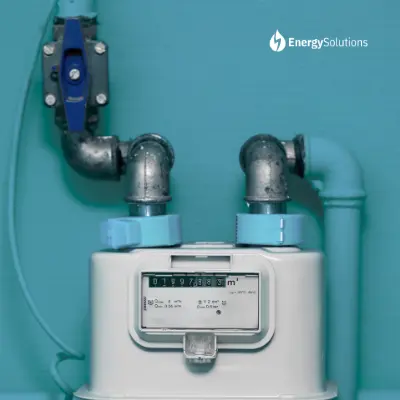
I would check three things together: the physical meter, its data badge, and the gas bill.
1. Check how the meter displays the reading
If the meter has a modern numerical screen, it may be a smart meter or a traditional meter with a digital/electronic index.
If it has several clock-style dials, it is an older dial-style meter.
A mechanical row of numbers does not automatically mean a meter is imperial or metric. Check the units as well.
2. Check whether it uses metric or imperial units
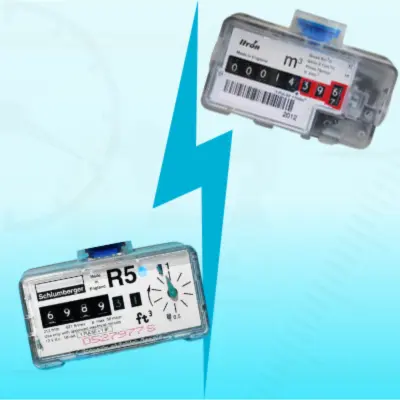
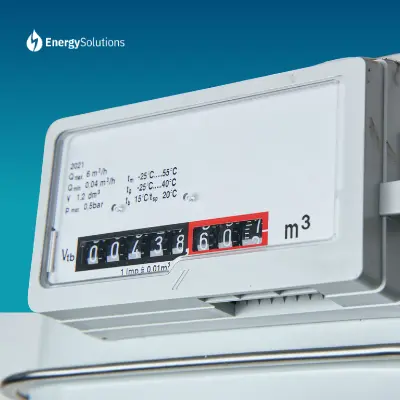
Look for m³ (metric, cubic metres) or ft³ (cubic feet, imperial).
This is one of the easiest ways to identify how the meter records gas volume.
3. Check the payment setup
A key, card, or top-up arrangement normally indicates prepayment.
However, smart prepayment meters may allow remote or online topping up, so the absence of a physical card slot does not prove that a meter is operating in credit mode.
Ofgem confirms that smart meters can be switched between credit and prepayment arrangements without necessarily changing the physical meter.
4. Check the meter badge
For a commercial property, take one photograph of the whole installation and another close photograph of the meter label.
Look for the meter serial number; manufacturer; model; Qmax; Qmin; U-number, if shown; G-number; m³/h or other flow units; measurement unit; pressure information; and conformity markings.
Don’t rely on one number in isolation.
5. Compare the meter against the bill
The meter serial number identifies the physical meter.
The Meter Point Reference Number (MPRN) is different.
Xoserve describes an MPRN as a unique number relating to a gas site, and Find My Supplier can provide the gas supplier, MPRN, and gas transporter for a property.
That distinction matters because the physical meter can be exchanged while the gas supply point remains identifiable through its MPRN.
How Do You Read the Main Gas Meter Types?
You don’t need to turn this article into a complete meter-reading manual, but identifying the display should tell you how to approach the reading.
| Meter display | Typical reading method |
| Digital metric | Record the main numbers before the decimal point; ignore decimal/red figures when instructed by the supplier |
| Digital imperial | Usually record the four main figures; ignore red figures |
| Dial meter | Read the relevant dials from left to right, taking care when a pointer sits between two numbers |
| Smart meter | The reading may need to be displayed by pressing the appropriate button if you are checking it manually |
British Gas distinguishes digital metric, imperial, and dial gas-meter readings in this way, while smart meters normally communicate readings automatically when operating correctly in smart mode.
If you are submitting a reading, follow your supplier’s exact instructions rather than converting the reading yourself first.
Credit vs Prepayment Gas Meters
A credit gas meter allows gas to be consumed before payment is collected through the energy account.
A prepayment gas meter requires credit to be maintained in advance.
Ofgem describes prepayment as pay-as-you-go and confirms that customers using prepayment meters still pay relevant standing charges.
For a business, however, payment mode tells you almost nothing about the physical capacity of the meter.
Changing from credit to prepayment does not tell you whether the installation can supply a larger boiler, commercial kitchen, or additional process equipment.
What Is a Smart Gas Meter?
A smart gas meter records consumption and can communicate readings to the supplier when it is operating in smart mode.
That can reduce manual meter reading and estimated billing.
The practical question I would ask is not simply, “Is this a smart meter?”
It is “Is the smart meter actually communicating correctly?”
Government policy explicitly recognizes that smart meters can sometimes operate in traditional mode instead of providing full smart functionality.
The post-2025 smart-metering framework includes requirements intended to return affected meters to smart operation.
So if a business with a smart meter suddenly starts receiving estimated bills, check whether current readings are actually reaching the supplier.
What are SMETS1 and SMETS2?
SMETS1 and SMETS2 refer to generations of Great Britain’s smart-meter technical specifications.
The important point for most users is not memorising the acronym.
It is whether the meter is communicating correctly with the supplier.
For a business owner, I would prioritize accurate readings and billing over the generation label unless communication problems need investigating.
Metric vs Imperial Gas Meters
A metric gas meter records volume in cubic meters.
An imperial gas meter records volume in cubic feet.
The bill itself expresses gas consumption in kilowatt-hours because the measured volume is converted into an energy value.
This is why m³ is not kWh.
And it is also why you should not look at a meter-volume figure and assume it represents annual energy consumption.
Commercial Gas Meter Sizes Explained
For commercial gas users, “gas meter type” often becomes a question about capacity.
Common low-pressure diaphragm meter capacity descriptions include U6, U16, U25, U40, U65, U100, and U160.
The number is commonly used as a practical indication of the meter’s maximum flow capacity in cubic meters per hour.
For example, Gas Connections identifies a meter with Qmax 16 m³/h as a U16 capacity meter.
But that does not mean every commercial meter can be understood from a U-number alone. Larger or specialised installations may use different meter technologies and classifications. Commercial gas meter sizes at a glance
| Common capacity description | Approx. maximum flow | Approx. maximum energy input* | Typical orientation only |
| U6 | 6 m³/h | ~65 kW | Homes and low-demand small commercial sites |
| U16 | 16 m³/h | ~173 kW | Shops, cafés, offices and smaller commercial kitchens |
| U25 | 25 m³/h | ~271 kW | Restaurants, small hotels and light commercial sites |
| U40 | 40 m³/h | ~430 kW | Larger hospitality and medium commercial sites |
| U65 | 65 m³/h | ~700 kW | Higher-demand commercial and institutional sites |
| U100 | 100 m³/h | ~1,080 kW | Large commercial and industrial applications |
| U160 | 160 m³/h | ~1,730 kW | Very high-demand commercial and industrial applications |
*The kW figures are orientation figures, not engineering limits or a meter-selection calculator.
Actual suitability depends on factors including appliance input ratings, simultaneous demand, available pressure, regulators, pipework, gas characteristics and the site supply arrangement.
That’s why I prefer displaying the approximate maximum rather than telling a business that falling into a particular annual-kWh or kW “band” automatically determines the meter it needs.
What Do Qmax and Qmin Mean?
These two values are useful when identifying a commercial gas meter.
| Term | Meaning | Why it matters |
| Qmax | Maximum specified/rated flow within the meter’s operating range | Helps identify maximum meter flow capacity |
| Qmin | Minimum flow within the specified metrological operating range | Shows the lower end of the meter’s rated measurement range |
| U-number | Common UK shorthand used for capacity on many diaphragm meters | Gives a quick capacity orientation |
Gas Connections defines Qmax and Qmin as the maximum and minimum flow rates over which the meter operates within applicable permissible-error limits.
For a business trying to identify an existing meter, Qmax is usually more useful than guessing from the physical size of the casing.
U-Number vs G-Number: Are They the Same?
No.
This is an area where abbreviated meter labels can cause unnecessary confusion.
The number following G does not necessarily equal the maximum flow in m³/h.
For example, Honeywell’s commercial diaphragm-meter specifications give: G10, Qmax 16 m³/h G16, Qmax 25 m³/h G25, Qmax 40 m³/h
So don’t look at “G16” and assume it means 16 m³/h.
Likewise, don’t try to convert a commercial meter from one classification system using the number alone.
If you need to identify an existing meter accurately, use: manufacturer plus model plus complete meter badge plus Qmax plus serial number, rather than one isolated marking.
Meter Capacity Is Not Annual Gas Consumption
This is probably the most important commercial point in the article.
A business can have relatively modest annual consumption but still require substantial flow capacity for short periods.
Consider a restaurant that opens only part of the week.
Its annual consumption may not look especially high.
But during a busy service it could have cooking equipment, water heating and space heating operating simultaneously.
The meter and installation need to cope with the relevant peak demand, not simply the total amount of gas consumed across the year.
The opposite can happen as well.
A building may consume substantial gas over a long heating season while having a lower simultaneous peak requirement.
That is why annual kWh alone should not be used to select a commercial meter.
U-Number, Qmax, AQ and Actual Usage: What’s the Difference?
These numbers answer completely different questions.
| Measure | What it tells you |
| U-number / Qmax | Meter flow capacity |
| Peak demand | Maximum gas requirement when relevant appliances operate together |
| AQ | Estimated annual consumption under seasonal-normal weather conditions |
| Actual consumption | Gas actually consumed over a measured billing period |
| MPRN | Identity of the gas supply point |
Xoserve defines Annual Quantity (AQ) as an estimate of how much gas a meter point will use during a year under seasonal-normal weather conditions.
Therefore: a U16 does not mean 16,000 kWh per year, and a high AQ does not by itself prove that a particular meter size is required.
These figures can all be relevant to the same commercial site, but they describe different aspects of the supply.
What Can a Gas Meter Label Tell You, and What Can’t It Tell You?
This is a useful distinction before making any commercial decision.
| The meter can help tell you | The meter alone cannot tell you |
| Its model and manufacturer | Your exact annual consumption |
| Its serial number | Whether your tariff is competitive |
| Its measurement unit | Your correct future AQ |
| Its Qmax/capacity specification | Whether all planned appliances can operate safely |
| Its G/U classification where present | Whether upstream and downstream pipework is adequate |
| Some pressure/specification information | Whether a meter upgrade is actually required |
A photograph is useful for identification.
It is not a complete engineering assessment.
How Do I Know What Commercial Gas Meter Size I Need?
Start with the equipment, not last year’s bill.
I would gather: current meter specification, appliance input ratings, appliances likely to operate simultaneously, current and planned equipment, operating hours, available supply information, known pressure constraints, future expansion plans.
Gas Connections similarly advises establishing the combined requirements of the site’s gas appliances when determining the required meter capacity.
The key question is: what is changing at the site?
A new boiler, commercial kitchen, production process, extension, or longer operating hours could materially change peak demand.
If nothing has changed and the site has operated properly for years, jumping immediately to a larger meter may solve the wrong problem.
Are All Commercial Gas Meters Diaphragm Meters?
No.
Diaphragm meters are widely used across domestic and lower-flow commercial applications.
But higher-capacity or specialist installations can use technologies such as:
Diaphragm meters. These are positive-displacement meters commonly used for domestic and commercial gas measurement.
Rotary meters. Rotary meters are used across higher-flow commercial and industrial applications and measure gas using rotating displacement elements.
Turbine meters. Turbine meters are used where higher flow rates and different operating conditions make that technology more appropriate.
Honeywell’s commercial product range, for example, includes diaphragm meters across G10 to G25 classes, illustrating how commercial gas metering extends beyond domestic-style meter descriptions.
Once a site reaches larger or more specialized requirements, the full meter and supply specification matters more than shorthand such as U16 or U25.
Does Gas Meter Size Affect a Business Energy Contract?
Not as directly as many businesses assume.
A bigger meter does not automatically mean the supplier must charge a particular tariff, and a U-number is not the same thing as an annual-consumption band.
However, meter data sits alongside other information used to understand and price a commercial gas supply.
AQ is particularly important because it represents expected annual consumption.
Xoserve also uses meter-point information, AQ, and other technical supply data across industry processes.
My advice would therefore be: do not request a meter change simply because you think a larger or smaller meter will automatically produce a cheaper contract.
First establish whether the underlying issue is actual meter capacity, peak demand, inaccurate AQ, outdated account data, changed business use, a connection constraint, downstream gas installation, or simply an uncompetitive supply contract.
Those are different problems.
When Should a Business Review Its Gas Meter and Supply Data?
There are several situations where I would take a closer look.
Moving into new premises is Do not assume the previous occupier’s setup suits the new business. A shop becoming a restaurant may have a completely different demand profile.
Installing major new gas equipment. Additional boilers, catering appliances, or process equipment can increase simultaneous demand.
Removing significant gas equipment. A historically large installation may no longer reflect how the premises operate.
Receiving unexpected or estimated bills. Check readings, meter communication, meter serial information, and account data before assuming the physical meter is wrong.
Preparing for contract renewal. A renewal is a sensible time to make sure the meter details, AQ, and actual site usage still make sense.
Redeveloping or extending the premises. Meter capacity is only one part of the issue. The gas connection, pressure, and installation may also need assessment.
MPRN vs Meter Serial Number
These are commonly confused.
Meter serial number. Identifies the physical meter.
MPRN. Identifies the gas supply point/site.
Xoserve describes the MPRN as a unique reference relating to a gas site, while Find My Supplier can help consumers retrieve an MPRN and identify the gas supplier and transporter.
If a meter is exchanged, don’t assume the supply point itself has changed.
For switching, tenancy, and account-data questions, check the MPRN as well as the physical meter details.
Who Owns or Maintains the Gas Meter?
The practical answer is more useful than trying to make a business owner learn the entire gas-industry structure.
For billing problems, missing readings, or a suspected meter fault, start with the supplier.
Commercial gas metering can also involve separate meter asset providers, meter asset managers, shippers, and gas transporters.
Xoserve’s industry systems hold and process supply-point and meter-related technical information across multiple market participants.
The important thing is to identify the problem first.
| Problem | Practical starting point |
| Wrong bill or reading | Supplier |
| Smart meter not communicating | Supplier |
| Suspected faulty meter | Supplier |
| Need MPRN/supplier details | Check supply-point information |
| Major new gas equipment | Have demand and installation requirements assessed |
| Connection alteration | Establish network/metering requirements |
| Gas fitting or pipework work | Appropriately qualified gas professional |
Can I Move, Alter, or Replace a Gas Meter Myself?
No.
Do not move, remove, or alter a gas meter yourself.
Ofgem states that customers must not move prepayment meters themselves, while HSE guidance requires relevant gas work to be carried out by appropriately competent professionals and, where gas safety legislation applies, Gas Safe registered engineers qualified for that category of work.
If you suspect a gas escape or immediate safety problem, treat that as a gas-safety issue, not an energy-contract question.
Are UK Gas Meters Regulated?
Yes.
Gas meters used for regulated measurement fall within UK metrology requirements.
GOV.UK states that meters within the scope of the Measuring Instruments Regulations 2016 and placed on the market after 30 October 2016 must be MIR approved. Older meters can continue in service under the relevant transitional arrangements where applicable.
That is one reason the manufacturer’s badge, conformity markings, and complete specification are useful when identifying a meter.
Common Gas Meter Mistakes We See in Business Enquiries
1. Assuming one label describes the entire meter. “Smart,” “metric,” and “U16” answer completely different questions. Identify the characteristics separately.
2. Assuming U16 means 16,000 kWh per year. It doesn’t. U16 refers to flow capacity; annual energy consumption is measured separately.
3. Choosing a meter from annual consumption alone. A year’s consumption does not show what happens when several gas appliances operate at once. Peak demand matters.
4. Treating the previous tenant’s setup as automatically suitable. A property does not retain the same gas-demand profile simply because its address hasn’t changed. The new occupant may operate completely different equipment.
5. Looking only at the physical size of the meter. Read the badge. Qmax, manufacturer, and model tell you more than the size of the casing.
6. Assuming the G-number equals the maximum flow. It does not necessarily. Honeywell’s G10, for example, has a maximum flow capacity of 16 m³/h rather than 10 m³/h.
7. Requesting a larger meter before diagnosing the problem. Bigger is not automatically better. Sometimes a meter upgrade is required. Sometimes the issue is supply pressure, pipework, AQ, account data, communication, or the commercial contract. Find out which problem you have first.
What Information Should a Business Gather Before Asking for Help?
For a commercial meter or capacity inquiry, I would start by gathering everything that identifies the meter itself: a photograph of the complete installation, a close photograph of the meter badge, the manufacturer and model, the meter serial number, the U/G classification if shown, Qmax and Qmin, and the MPRN.
Alongside that, I would also collect the information that shows how the site actually uses gas: a recent gas bill, the AQ if known, recent annual consumption, appliance input ratings, planned new equipment, the expected operating pattern, and any known pressure or connection information.
That information is usually enough to establish what needs investigating next.
It is not necessarily enough to engineer or approve a new installation, and those are different things.
Frequently Asked Questions About Gas Meter Types in the UK
What are the main types of gas meters in the UK?
There is no single classification. Gas meters can be described by payment mode, communications capability, display type, measurement unit, and flow capacity. For example, one meter may simultaneously be smart, digital, metric, and credit-operated.
How do I know what type of gas meter I have?
Check the display, measurement unit, payment arrangement, and meter badge. For a commercial meter, photograph the label and look for the manufacturer, model, serial number, Qmax, and any U- or G-classification.
What does U6 mean on a gas meter?
U6 is commonly used as a capacity description for a low-pressure diaphragm gas meter with an approximate maximum flow of 6 m³/h. It describes flow capacity, not 6,000 kWh of annual consumption.
What does U16 mean on a gas meter?
A U16 capacity meter is associated with approximately 16 m³/h maximum flow. Whether that capacity is suitable for a particular business depends on peak demand and the wider gas installation.
What is Qmax on a gas meter?
Qmax is the upper end of the meter’s specified flow range. On many commercial meters it is one of the clearest values for identifying maximum rated flow capacity.
What is Qmin?
Qmin is the lower end of the meter’s specified metrological flow range. Qmax and Qmin therefore describe opposite ends of the meter’s operating measurement range.
Is G16 the same as U16?
No. The numbers should not be assumed to correspond directly. Honeywell, for example, specifies a G16 diaphragm meter with Qmax of 25 m³/h, while its G10 model has Qmax of 16 m³/h.
Does a bigger gas meter mean I use more gas?
No. Meter capacity describes how much flow the meter can accommodate. Annual consumption describes how much gas the site actually uses over time.
Is AQ the same as meter capacity?
No. Xoserve defines AQ as estimated annual gas consumption under seasonal-normal weather conditions. Meter capacity concerns flow, so the two measurements answer different questions.
Is MPRN the meter serial number?
No. The meter serial number identifies the physical meter. The MPRN is the reference for the gas supply point/site.
Is U6 only a domestic gas meter?
No. U6 is commonly found in domestic properties but can also serve smaller commercial premises where its capacity is appropriate.
Can a commercial gas meter be too large?
Potentially, but don’t assume that downsizing automatically reduces the energy tariff. First establish actual peak demand, current metering arrangements, AQ, supply data and the reason the existing capacity is no longer appropriate.
What size commercial gas meter does my business need?
Do not choose it from annual consumption alone. The assessment should consider gas-appliance requirements, simultaneous peak demand, supply conditions, pressure, regulators, pipework and planned future loads.
The Practical Rule I Use
When a business is unsure about its gas meter, I use a simple order: identify first, diagnose second, change something only when you know what problem the change is meant to solve.
For a reading problem, check the display and units.
For a capacity question, check Qmax, the complete meter specification and peak appliance demand.
For a contract question, check AQ, actual consumption and supply data.
For a safety or installation issue, use the appropriately qualified people.
One gas meter can carry several labels.
Understanding what each label actually tells you, and what it doesn’t, is much more useful than trying to force every UK gas meter into one simple “type.”