Author: Abdullah Shoaib | Energy Markets Analyst, 10+ years in the energy industry
Last checked: 25 September 2026
Next price-cap period: 1 October to 31 December 2026
Table of Contents
Economy 7 is a multi-rate electricity tariff that gives you seven cheaper off-peak hours and a higher rate for electricity used during the rest of the day.
It can save money if enough of your electricity use falls into those cheaper hours. But there is no universal rule saying you must use exactly 30%, 35% or 40% of your electricity at night. The real break-even point depends on the Economy 7 day rate, night rate, standing charge and the single-rate tariff you could choose instead.
That is the comparison I would make before deciding whether Economy 7 is worth keeping.
Quick answer: Economy 7 is most useful for households that can consistently move a meaningful amount of electricity into the seven off-peak hours, particularly homes with storage heaters, electric hot water or other large overnight loads. The cheapest-looking night rate does not automatically mean the cheapest annual tariff.
Economy 7 at a Glance
| Question | Answer |
| What is Economy 7? | A multi-rate electricity tariff |
| How many cheap hours? | Seven off-peak hours |
| Is there one UK-wide timetable? | No |
| Does it need a special meter? | It needs metering that can record separate rate periods |
| Can a smart meter support it? | Yes |
| Is the night rate cheaper? | Normally yes |
| Is the daytime rate higher? | Usually |
| Is Economy 7 automatically cheaper? | No |
| Is there one break-even percentage? | No |
| Who may benefit? | Households with significant off-peak use |
| What should you compare? | Day rate, night rate, standing charge and total annual cost |
Information and rates checked
The worked examples in this guide use the current 1 July to 30 September 2026 price-cap period because that is the period in force at the time of writing.
Ofgem has already confirmed the next cap period from 1 October to 31 December 2026. The average single-rate electricity price for a Direct Debit customer will move from 26.11p/kWh to 26.32p/kWh, while the average electricity standing charge falls from 57.19p/day to 54.83p/day. Electricity VAT will also temporarily fall to 0% from 1 October 2026 to 31 March 2027.
Economy 7 does not have one national day rate and one national night rate. Suppliers can divide the peak and off-peak pricing differently while remaining within Ofgem’s multi-rate price-cap rules.
That is why every Economy 7 comparison should be dated and based on your actual tariff.
What Is an Economy 7 Meter and Tariff?
Economy 7 is primarily an electricity tariff arrangement.
The name comes from the seven-hour off-peak period during which electricity is charged at a lower rate.
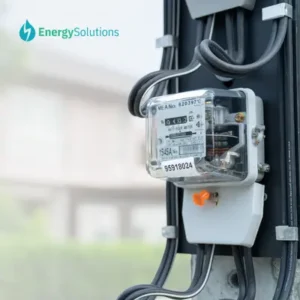
To bill those two prices correctly, your meter needs to record peak and off-peak electricity separately.
That could be:
- an older dedicated two-rate Economy 7 meter;
- a digital dual-rate meter;
- a compatible smart meter.
A smart meter therefore does not replace Economy 7 as a concept. It can simply provide the metering needed to operate the tariff.
Is Economy 7 a meter or a tariff?
Technically, Economy 7 is the tariff structure.
People commonly say “Economy 7 meter” because older installations used dedicated meters with two registers: one for daytime electricity and one for off-peak electricity.
Modern smart meters can also support Economy 7.
EDF, for example, currently says most smart meters can be switched into Economy 7 mode.
How does Economy 7 work?
For each 24-hour period:
- seven hours are charged at the cheaper off-peak rate;
- the remaining 17 hours are charged at the higher peak/day rate.
Your meter records the consumption separately and your supplier applies the appropriate tariff rate.
That creates the core Economy 7 trade-off:
cheap electricity at night in exchange for more expensive electricity during peak hours.
If you use enough during the cheap period, that can work in your favour.
If most of your electricity use happens during the expensive period, it can cost you more than a normal single-rate tariff.
What Are Economy 7 Rates in 2026?
There is no single Economy 7 rate for the whole UK.
Rates vary by:
- supplier;
- region;
- payment method;
- tariff;
- meter arrangement;
- whether the tariff is fixed or variable.
For the current July–September 2026 cap period, British Gas uses the following all-region average Economy 7 price-cap figures in its current guide:
| Current Economy 7 benchmark | Average rate |
| Day rate | 31.61p/kWh |
| Night rate | 14.53p/kWh |
| Standing charge | 56.95p/day |
British Gas states that these figures are based on Ofgem’s July 2026 multi-rate price-cap assumptions for a Direct Debit customer averaged across regions.
For comparison, Ofgem’s average single-rate electricity figures for the same July–September period are:
- 26.11p/kWh
- 57.19p/day standing charge
That comparison immediately shows why the night rate alone is misleading.
The Economy 7 night rate is much cheaper.
But the Economy 7 day rate is also much higher than the single-rate benchmark.
The question is how many kWh you put through each one.
What happens from October 2026?
From 1 October, Ofgem’s average single-rate electricity figure rises slightly to 26.32p/kWh, while the standing charge falls to 54.83p/day for Direct Debit customers.
But Ofgem does not publish one universal Economy 7 day/night split that every supplier must copy.
Its rule is that, for multi-rate tariffs such as Economy 7, the peak and off-peak rates together must comply with the price cap.
So avoid articles saying:
“The Ofgem Economy 7 night rate is Xp.”
There is no single national Economy 7 night rate.
What Is the Economy 7 Standing Charge?
The standing charge is the daily fixed amount you pay regardless of how much electricity you use.
It needs to be included when you compare Economy 7 against a single-rate tariff.
This becomes particularly important for lower-use households.
If two tariffs have similar unit costs but one has a materially higher standing charge, that difference applies 365 days a year.
That is why my comparison would always be:
daytime electricity cost + off-peak electricity cost + annual standing charge
rather than simply:
Which tariff has the cheapest night rate?
How Does the Ofgem Price Cap Affect Economy 7?
If you have an Economy 7 meter and you’re on a qualifying default tariff, the Ofgem energy price cap can protect you.
Ofgem specifically includes Economy 7 customers among the domestic customers covered by the price cap when they are on applicable default tariffs.
But multi-rate tariffs work differently from a single-rate tariff.
With a normal single-rate tariff, there is one electricity unit rate.
With Economy 7, the supplier has a day rate and a night rate.
Ofgem says those multi-rate prices must comply together with the price-cap rules.
That gives suppliers flexibility in how they divide the price between peak and off-peak electricity.
It also explains why one supplier might offer:
- a very cheap night rate;
- but a much more expensive day rate.
Another supplier could have:
- a slightly higher night rate;
- but a lower daytime rate.
Which is cheaper depends on your usage.
How We Compare Economy 7 Tariffs
I would not compare Economy 7 suppliers from the night rate alone.
For every tariff, you need:
- day rate;
- night rate;
- standing charge;
- tariff type;
- payment method;
- region;
- annual consumption;
- percentage used off-peak.
Then calculate:
Annual Economy 7 cost = daytime kWh × day rate + night kWh × night rate + annual standing charge
Compare that with:
Annual single-rate cost = total annual kWh × single-rate unit rate + annual standing charge
That’s the only useful comparison.
If two tariff tables were collected on different dates, from different regions or using different payment assumptions, I would not treat them as a proper like-for-like test.
Economy 7 Times: When Is Electricity Cheaper?
There is no single UK-wide Economy 7 start and finish time.
You receive seven cheaper hours, but exactly when those hours occur depends on factors including:
- supplier;
- region;
- meter setup;
- legacy switching arrangements;
- how the meter handles GMT and British Summer Time.
E.ON Next says Economy 7 customers will usually receive seven hours somewhere between 11pm and 8am, with examples such as 11pm–6am or 1am–8am.
Octopus currently uses a fixed smart Economy 7 period of 00:30–07:30 UTC. That becomes 01:30–08:30 during British Summer Time.
Those are supplier examples.
Neither should be treated as the national Economy 7 timetable.
Do Economy 7 hours change when the clocks change?
They can.
Some meter configurations operate according to GMT rather than automatically following BST.
Citizens Advice gives an example where off-peak Economy 7 hours may be:
- midnight–7am in winter;
- 1am–8am after the clocks change.
But it also stresses that the exact times depend on the supplier, tariff and location.
How do I find my exact Economy 7 hours?
Use this order:
- Check your tariff terms.
- Check your supplier account or app.
- Check your meter/tariff documentation.
- Ask your supplier if you’re still unsure.
Do not plan heating or EV charging around a generic online timetable unless you’ve confirmed it matches your meter.
How Much Electricity Do You Need to Use at Night to Save Money?
This is where most Economy 7 advice becomes too simplistic.
You will often see guidance saying:
- 30%;
- 35%;
- 40%
of your electricity needs to be used at night.
They cannot all be a universal answer.
And they are not.
Octopus currently says Economy 7 will typically save money at around 30% off-peak use.
Uswitch uses a rule of thumb of more than 35%.
British Gas currently suggests around 40% or more.
The reason these figures differ is simple:
they are based on different tariff assumptions.
What actually determines your break-even point?
Your Economy 7 break-even percentage depends on:
- Economy 7 day rate;
- Economy 7 night rate;
- single-rate alternative;
- Economy 7 standing charge;
- single-rate standing charge;
- annual electricity consumption.
So the correct question is not:
“Is the magic number 35% or 40%?”
It is:
“What percentage do I need at night on the two tariffs available to me?”
How to Calculate Your Economy 7 Break-Even Point
If the standing charges are the same, the simplified formula is:
Break-even night-use percentage =
(Economy 7 day rate − single-rate rate) ÷
(Economy 7 day rate − Economy 7 night rate)
Using the current July–September 2026 reference figures:
- Economy 7 day: 31.61p
- Economy 7 night: 14.53p
- single rate: 26.11p
The calculation is:
(31.61 − 26.11) ÷ (31.61 − 14.53)
5.50 ÷ 17.08 = about 32.2%
The Economy 7 standing charge in this example is also slightly lower than the single-rate standing charge, so when that difference is included the break-even point is approximately 32%.
That does not mean 32% is the new universal Economy 7 rule.
It means:
On these specific rates, during this specific price-cap period, the break-even point is around 32%.
Change the tariffs and the answer changes.
That is why your own Economy 7 break-even calculation matters more than a generic rule copied from another website.
Economy 7 Break-Even Calculator
Enter your own tariff rates to see whether your night-time electricity use makes Economy 7 worthwhile.
Your usage and rates
Your comparison
Results are estimates based on the rates and usage information entered. Actual bills may differ because tariffs, taxes, discounts, usage patterns and supplier terms can vary.
Use the calculator with the rates from your own bill or a current tariff quote.
The most useful inputs are:
- annual electricity use;
- night-use percentage;
- Economy 7 day rate;
- Economy 7 night rate;
- Economy 7 standing charge;
- single-rate price;
- single-rate standing charge.
The result should be treated as an estimate because supplier terms, tariff changes, discounts and actual consumption can affect what you pay.
Economy 7 Cost Examples
To make the break-even point easier to understand, here are three examples using:
- 2,700 kWh annual electricity;
- 31.61p Economy 7 day rate;
- 14.53p Economy 7 night rate;
- 56.95p/day Economy 7 standing charge;
- 26.11p single rate;
- 57.19p/day single-rate standing charge.
These are July–September 2026 reference figures, not a personal quote.
The equivalent single-rate annual cost is about £913.71.
Example 1: 20% night usage
540 kWh is used off-peak.
2,160 kWh is used during the day.
Estimated Economy 7 cost:
about £969.11
Compared with single-rate:
about £55 more expensive
At this usage pattern, the cheap night electricity is not enough to offset the higher daytime rate.
Example 2: 35% night usage
945 kWh is used off-peak.
1,755 kWh is used during the day.
Estimated Economy 7 cost:
about £899.93
Compared with single-rate:
about £13.78 cheaper
At this point, Economy 7 starts to work in the household’s favour under these particular tariff assumptions.
Example 3: 50% night usage
1,350 kWh is used off-peak.
1,350 kWh is used during the day.
Estimated Economy 7 cost:
about £830.76
Compared with single-rate:
about £82.96 cheaper
That is why the percentage matters.
| Night usage | Economy 7 cost | Single-rate cost | Difference |
| 20% | £969.11 | £913.71 | £55.40 more |
| 35% | £899.93 | £913.71 | £13.78 less |
| 50% | £830.76 | £913.71 | £82.96 less |
The tariff did not change between examples.
Only the timing of consumption changed.
Is Economy 7 Worth It?
Economy 7 can be worthwhile when your off-peak savings are large enough to compensate for the higher daytime electricity price and any standing-charge difference.
I would look at your situation like this:
| Situation | What matters most |
| Storage heaters | How much heating charges overnight |
| Electric hot-water cylinder | Whether water heating is correctly timed off-peak |
| EV charging | Economy 7 vs dedicated EV tariff |
| Home battery | Economy 7 vs smart time-of-use options |
| Mainly daytime use | Higher Economy 7 peak rate |
| Low overnight use | Your break-even calculation |
| Solar panels | Daytime generation vs overnight imports |
| Solar + battery | Battery charging strategy |
| Night-shift household | Actual night consumption |
| Gas central heating | Whether enough other electricity can move overnight |
For me, the decision comes down to how much of your electricity use is genuinely flexible.
If you have to change your entire routine just to get close to the break-even percentage, the tariff may not fit you particularly well.
If storage heaters and hot water already use a large amount overnight, Economy 7 may fit naturally.
Economy 7 vs Single-Rate vs Smart Time-of-Use Tariffs
Economy 7 used to be the obvious way to access cheaper overnight electricity.
That is no longer the whole market.
Smart meters have made more flexible time-of-use products possible.
| Feature | Economy 7 | Single-rate | Smart TOU |
| Main rates | Two | One | Multiple possible |
| Off-peak pricing | Yes | No | Usually |
| Smart meter required | Not always | No | Usually |
| Best for | Regular off-peak use | Simplicity | Flexible smart usage |
| EV suitability | Possible | Limited advantage | Often strong |
| Battery suitability | Possible | Limited advantage | Often worth comparing |
| Main risk | Higher day rate | No cheap period | More complexity |
Economy 7 vs standard single-rate electricity
A single-rate tariff is simpler.
Every kWh is charged at the same unit rate regardless of time.
Economy 7 makes sense only when the night discount is valuable enough to compensate for the more expensive day rate.
That is why I would compare annual cost, not individual rates.
Economy 7 vs an EV tariff
If you’ve bought an electric car, do not assume Economy 7 is automatically the best way to charge it.
Dedicated EV tariffs can now offer lower overnight prices.
For example, Intelligent Octopus Go currently advertises eligible EV smart charging from 8p/kWh, with six cheap whole-home hours from 11:30pm to 5:30am. Eligibility includes compatible smart-meter and EV charger requirements.
That is much lower than the July Economy 7 benchmark night rate of 14.53p/kWh.
But the night rate alone still does not decide the winner.
Compare:
- EV charging rate;
- number of cheap hours;
- daytime household rate;
- standing charge;
- smart-meter requirement;
- charger/car compatibility;
- the rest of the home’s electricity use.
A tariff designed specifically for your EV may beat Economy 7 for charging while still being worse for another household.
Economy 7 vs modern smart time-of-use tariffs
Smart ToU tariffs may offer:
- several cheap periods;
- flexible charging windows;
- dynamic pricing;
- special EV/battery rates.
Economy 7 has one major advantage:
simplicity.
You know there are seven off-peak hours.
More advanced smart tariffs can potentially be cheaper, but they may also require more active management or specific technology.
Economy 7 for Storage Heaters and Hot Water
Storage heaters are one of the strongest traditional use cases for Economy 7.
They use cheaper electricity overnight to heat internal storage material and then release that heat during the following day.
Citizens Advice says storage heaters are designed to work with time-of-use tariffs such as Economy 7 and that correct control settings matter if you want to avoid paying more than necessary.
Why storage heaters suit Economy 7
The design naturally moves a large electrical load into the off-peak period.
That can push the household’s overnight percentage well above the break-even point.
The same principle can apply to an electric immersion heater if it is correctly timed to heat water during the cheaper hours.
Why is my Economy 7 bill still high?
Having storage heaters does not guarantee Economy 7 will be cheap.
Common problems include:
Using the boost function too often
Energy Saving Trust warns that the boost function may use the more expensive electricity rate and recommends using it only when necessary.
Heating water at the wrong time
If an immersion heater is running during peak hours, you can lose a large part of the Economy 7 benefit.
Incorrect input/output settings
The input controls how much heat is stored.
The output controls how quickly stored heat is released.
If those settings are wrong, the heater may run out of stored heat too early and force you to use more expensive daytime heating.
Wrong Economy 7 timings
If the meter clock or heating timer doesn’t match the actual cheap period, your heating may be running at the peak rate.
Day and night registers being mixed up
Incorrect meter readings can create incorrect bills.
Poor insulation
Economy 7 can make the electricity cheaper during certain hours.
It cannot stop an inefficient home losing heat.
Economy 7 for EV Charging
Economy 7 can work well for EV charging because cars are often parked at home overnight.
But in 2026 I would compare Economy 7 against dedicated EV tariffs before deciding.
Is Economy 7 good for an electric car?
Potentially.
If your EV charges during all or part of the seven-hour Economy 7 window, that charging can make up a substantial share of your off-peak electricity use.
That may push you comfortably beyond the Economy 7 break-even point.
But specialist EV products can offer:
- lower charging rates;
- smart scheduling;
- longer or differently structured charging windows.
British Gas itself notes that specific EV tariffs may work out cheaper than Economy 7 for electric-car owners.
Do not compare only the EV rate
If one tariff offers 8p charging but a much higher daytime household rate, calculate what happens to the whole house.
A household might use:
- 2,000 kWh for the EV;
- another 3,000 kWh for everything else.
The correct comparison is 5,000 kWh across the full tariff.
Not just the electricity going into the car.
Economy 7 With Solar Panels and Batteries
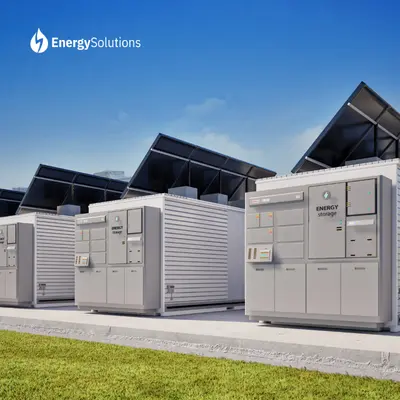
Solar changes the Economy 7 calculation because solar panels generate electricity mainly during daylight hours.
That can reduce the amount of expensive daytime electricity you need to import.
At the same time, Economy 7 can provide cheaper electricity overnight when the panels are not generating.
That combination can work well.
But once a home battery is added, there are more options.
Economy 7 with solar panels
A simple pattern could be:
Day: use solar where available.
Night: import electricity at the cheaper Economy 7 rate.
This can reduce exposure to the more expensive Economy 7 day rate.
Seasonality matters, though. Winter solar production is much lower than summer production.
Economy 7 with a home battery
A battery could potentially:
- charge from solar during the day;
- charge from cheap grid electricity overnight;
- discharge during expensive peak periods.
The economics depend on:
- battery efficiency;
- capacity;
- degradation;
- tariff rates;
- solar generation;
- export tariff;
- alternative smart tariffs.
British Gas, for example, currently requires a smart electricity meter for its dedicated battery tariffs and specifically distinguishes smart Economy 7 meters from standard Economy 7 meters for eligibility.
That illustrates the wider point:
If you already have a battery, Economy 7 should be compared with modern battery and time-of-use tariffs rather than assessed in isolation.
How Do You Read an Economy 7 Meter?
An Economy 7 meter normally records two readings:
- peak/day electricity;
- off-peak/night electricity.
Depending on the meter, these may be labelled:
- day / night;
- normal / low;
- peak / off-peak;
- Rate 1 / Rate 2;
- R1 / R2.
Is Rate 1 always the day reading?
No.
Do not assume that universally.
Different meter configurations can assign the registers differently.
British Gas currently describes R1 as day and R2 as night for the meters in its own guidance.
Octopus gives more useful general advice: if you’re unsure, take one reading during known daytime hours, use some electricity, and check which register increases. The moving register is the peak/day register.
That is safer than assuming every meter is configured identically.
How do smart Economy 7 meters work?
A compatible smart meter records the different periods automatically.
The meter does not decide how much each period costs.
Your supplier’s tariff configuration determines which rate applies.
If the meter is communicating correctly, readings should normally be sent automatically.
Economy 7, Smart Meters and RTS
Can a smart meter work with Economy 7?
Yes.
Smart meters can support multi-rate tariffs such as Economy 7.
EDF currently says most smart meters can be switched into Economy 7 mode.
If you already have a suitable smart meter, switching between single-rate and multi-rate arrangements may sometimes be possible without replacing the physical meter.
Supplier rules vary.
What is an RTS meter?
RTS stands for Radio Teleswitch Service.
It was used to control some older multi-rate electricity meters and switch heating or hot-water systems between peak and off-peak periods using a radio signal.
It is particularly associated with:
- storage heating;
- Economy 7;
- Economy 10;
- other legacy electric-heating tariffs.
What happened to RTS meters?
The phased withdrawal of RTS began on 30 June 2025.
Ofgem says suppliers are replacing affected RTS meters with smart meters or alternative metering solutions.
If you still have an RTS meter, I would not ignore it.
Some RTS systems control heating or hot-water switching. If the equipment is not replaced, those systems may stop working normally.
Contact your supplier and confirm the replacement plan.
What Should You Run During Economy 7 Hours?
The obvious answer seems to be:
Run everything at night because electricity is cheaper.
I would not give that advice.
Use cheap periods where it is safe and practical.
| Appliance/use | Economy 7 potential | Main consideration |
| Storage heater | Strong | Designed for off-peak charging |
| Hot-water cylinder | Strong | Correct timer/settings |
| EV charger | Strong | Compare dedicated EV tariffs |
| Home battery | Potential | Compare smart TOU alternatives |
| Washing machine | Price saving possible | Fire-safety guidance |
| Dishwasher | Price saving possible | Fire-safety guidance |
| Tumble dryer | Price saving possible | Fire-safety guidance |
UK government fire-safety guidance specifically says not to run washing machines, tumble dryers and dishwashers overnight while people are asleep.
London Fire Brigade gives the same advice.
So I would prioritise equipment designed for unattended off-peak operation, such as correctly installed and configured:
- storage heating;
- hot-water systems;
- compatible EV charging;
- battery systems.
Follow manufacturer and fire-safety instructions for everything else.
Saving a few pence per kWh is not worth creating an unnecessary safety risk.
Common Economy 7 Mistakes
1. Comparing only the night rate
A 12p night rate can look excellent until you discover the day rate is 34p.
Compare the whole year.
2. Ignoring the daytime price
For many households, most electricity is still used outside the seven cheap hours.
That rate matters.
3. Ignoring the standing charge
Include all 365 days.
4. Assuming one UK-wide Economy 7 timetable
There isn’t one.
Check your own setup.
5. Treating 30%, 35% or 40% as a universal rule
Calculate the threshold from the actual tariffs.
6. Assuming Rate 1 always means day
Check.
7. Using storage-heater boost too often
That may use expensive peak electricity.
8. Not checking day/night readings
Incorrect or reversed readings can lead to incorrect billing.
9. Comparing only Economy 7 and single-rate electricity
EV and smart time-of-use tariffs now matter.
10. Assuming solar or batteries automatically make Economy 7 better
They change the calculation.
They don’t predetermine the answer.
11. Running unsafe appliances overnight simply to save money
Follow fire-safety and manufacturer guidance.
12. Using an old tariff article as today’s quote
Rates change.
Always check the date.
Should You Switch From Economy 7?
Consider comparing other tariffs if:
- your night-use percentage is below your break-even point;
- most electricity is used during expensive daytime hours;
- you no longer use storage heaters;
- your lifestyle has changed;
- you’ve bought an EV;
- you’ve installed solar;
- you’ve added battery storage;
- a better smart tariff is available.
Before switching, compare:
- annual consumption;
- day/night consumption split;
- unit rates;
- standing charges;
- exit fees;
- contract duration;
- smart-meter requirements;
- supplier conditions.
Do not switch simply because another tariff has one cheaper number.
Do you need a new meter?
Not always.
If you have a compatible smart meter, your supplier may be able to change the tariff configuration remotely.
EDF, for example, says smart-meter customers wanting to leave Economy 7 can contact it to switch the meter from Economy 7 mode. Some customers with traditional meters may be able to have their two registers totalised instead or move to a smart meter.
Ask your supplier what is possible with your specific meter.
Does Economy 7 Apply to Businesses?
Businesses can also have day/night or multi-rate electricity arrangements, but commercial electricity should not be treated as though it follows domestic Economy 7 rules.
A small commercial site may have a two-rate meter.
Larger businesses may have:
- advanced metering;
- half-hourly consumption data;
- more complex time-of-use structures.
Most importantly, business energy contracts are not protected by the domestic Ofgem energy price cap.
So if you’re comparing electricity for a business, use the commercial contract rates, standing charges, meter details and consumption profile.
Do not apply domestic Economy 7 price-cap figures to a business contract.
Economy 7: Is It Worth It?
Economy 7 is neither automatically cheap nor automatically outdated.
It can still work very well where the household naturally uses a large amount of electricity during the seven off-peak hours, particularly with storage heating and electric hot water.
But I would not make the decision from a generic 30%, 35% or 40% rule.
Use the actual tariffs available to you.
Calculate:
daytime cost + off-peak cost + standing charge
Then compare that with the best realistic single-rate or smart time-of-use alternative.
Your break-even percentage is far more useful than somebody else’s rule of thumb.
That gives you a decision based on your household rather than an average.
Economy 7 Frequently Asked Questions
What time does Economy 7 start and finish?
There is no single national timetable. Your seven off-peak hours depend on your supplier, region and meter configuration. They are normally overnight, often somewhere between 11pm and 8am.
Is Economy 7 cheaper than a normal electricity tariff?
It can be, but only if enough electricity is used during the cheaper off-peak period to compensate for the higher daytime rate and any standing-charge difference.
What percentage of electricity should I use at night?
There is no universal percentage. Current guides quote figures ranging from roughly 30% to 40%, but your real break-even point depends on the tariffs being compared. On the July–September 2026 illustrative rates used in this guide, the threshold is around 32%.
Is 30% night usage enough for Economy 7?
It might be on some tariffs and not on others. Calculate the annual cost from the day rate, night rate, standing charge and single-rate alternative rather than relying on 30% as a fixed rule.
Can a smart meter work with Economy 7?
Yes. Compatible smart meters can record separate peak and off-peak periods and support Economy 7 tariffs.
Is Economy 7 good for EV charging?
It can be because EV charging can be shifted overnight. However, dedicated smart EV tariffs may offer cheaper charging rates, so compare the entire household tariff before deciding.
Is Economy 7 good for storage heaters?
Usually this is one of its strongest use cases. Storage heaters are designed to charge during cheaper off-peak periods and release the stored heat later. Correct input, output and boost settings are important.
Is Economy 7 good with solar panels?
Potentially. Solar can reduce expensive daytime imports while Economy 7 provides cheaper electricity at night. The result depends on solar generation, electricity usage and the alternative tariffs available.
Is Economy 7 good with a home battery?
It can be. A battery may charge during cheap Economy 7 hours and discharge later, but modern smart battery tariffs may offer better charging windows or rates. Compare both options.
Can I switch from Economy 7 to a single-rate tariff?
Yes, in many cases. A compatible smart meter may be reconfigured, while traditional meters may require register totalisation or replacement depending on the supplier and meter.
How do I read an Economy 7 meter?
Take both peak and off-peak readings. They may be labelled day/night, normal/low or Rate 1/Rate 2. Do not assume Rate 1 always means daytime usage.
What happened to RTS Economy 7 meters?
The phased withdrawal of the Radio Teleswitch Service began in June 2025. Suppliers are replacing remaining RTS installations with smart meters or other suitable solutions. Contact your supplier if you still have RTS equipment.