If you’ve spotted “renewable” on your energy bill, heard it thrown around in policy debates, or simply want to understand where your electricity actually comes from, this guide covers it properly. No jargon, no spin, just a clear explanation of what renewable energy is, how the different sources work, and what it actually means for your business costs.
What Is Renewable Energy?
Renewable energy is power generated from natural sources that continuously replenish themselves. Unlike coal, oil, and gas, which took millions of years to form and are being burned far faster than they can regenerate, renewable sources are refreshed by natural processes on a human timescale.
The most common are sunlight, wind, flowing water, geothermal heat, and organic matter (biomass). They generate electricity and heat with little to no greenhouse gas emissions, which is why they sit at the centre of every serious climate strategy.
The clearest way to think about the difference: coal technically renews itself, but over millions of years. Sunlight renews itself every single day. That gap in timescale is what separates renewable from non-renewable energy.
Types of Renewable Energy
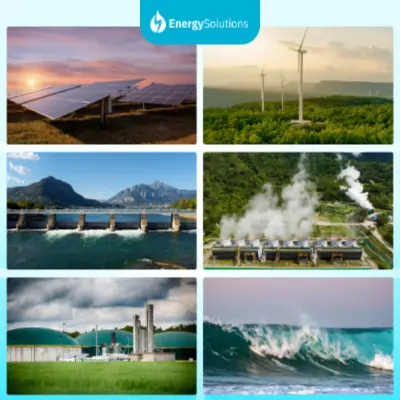
Solar Energy
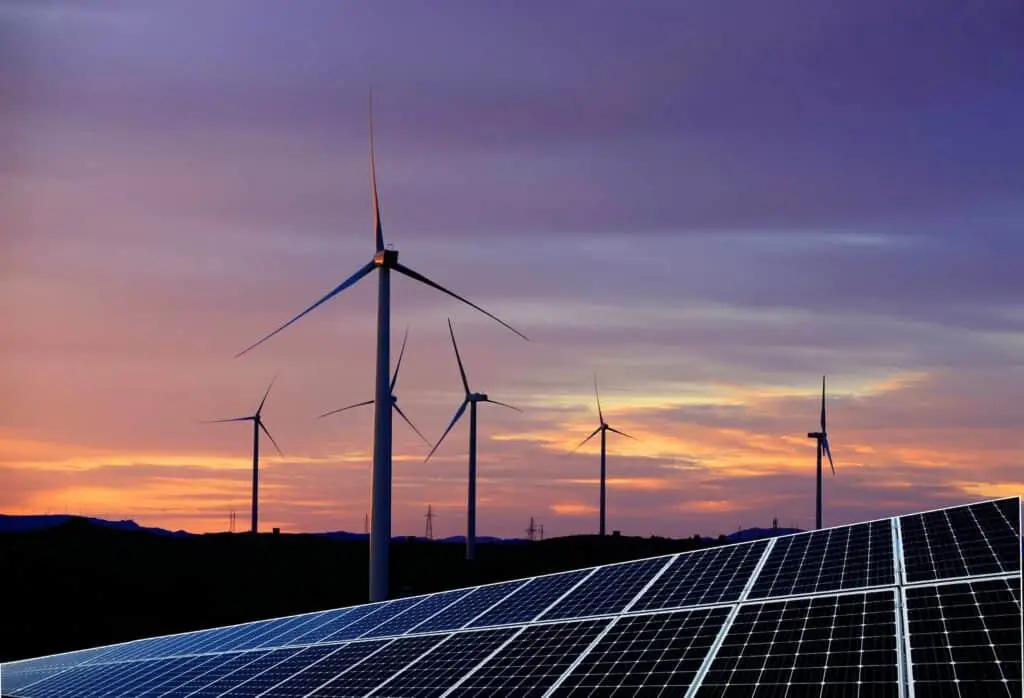
Solar panels convert sunlight directly into electricity using photovoltaic (PV) cells. They can sit on rooftops, cover large ground-mounted solar farms, or be built into construction materials.
The UK generated record solar output in 2023, and the cost of panels has fallen by over 90% since 2010, making solar one of the most accessible options for homes and businesses alike. The obvious limitation is intermittency: solar only produces when the sun shines. Battery storage is increasingly used alongside panels to hold surplus power for cloudy periods or overnight use.
Wind Energy
Wind turbines convert the kinetic energy of moving air into electricity. The UK has some of the strongest, most consistent wind resources in Europe, and wind is now the country’s largest single source of renewable electricity.
Two main types exist:
- Onshore wind: turbines built on land, typically in rural or upland areas
- Offshore wind: turbines installed at sea, where winds are stronger and more reliable
The UK’s offshore wind capacity is among the largest in the world, currently exceeding 14 GW, and the government has committed to significant further expansion as part of its clean energy targets. National Grid’s energy data portal tracks live generation by source if you want to see how much wind is contributing at any given moment.
Hydropower
Hydropower uses the energy of moving water, typically through dams or run-of-river systems, to spin turbines and generate electricity. It’s one of the oldest and most reliable renewable technologies in existence.
In the UK, hydropower is concentrated mainly in Scotland and Wales, where geography and rainfall create suitable conditions. Its particular advantage is dispatchability: unlike solar and wind, hydro can be switched on or off to match demand, making it a useful counterbalance to more intermittent sources.
Geothermal Energy
Geothermal energy draws on natural heat from deep within the Earth, using it to heat buildings directly or generate electricity through steam turbines.
The UK doesn’t have the high-temperature geothermal resources of Iceland or New Zealand, but ground source heat pumps, which extract shallow ground heat, are a growing low-carbon alternative to gas boilers in UK homes and commercial buildings.
Biomass Energy
Biomass covers organic materials such as wood, agricultural residues, animal waste, and energy crops that are burned or converted to produce heat and electricity.
Drax power station in Yorkshire converted several units from coal to biomass, making it one of Europe’s largest renewable electricity generators. The important nuance here: biomass is only genuinely renewable when managed sustainably. Burning it releases CO2, but if the trees or crops are replanted and allowed to reabsorb that carbon, the overall lifecycle emissions are substantially lower than fossil fuels. Cut down forests without replanting and that benefit disappears.
Biomethane, produced from the anaerobic digestion of organic waste, can be injected directly into the gas grid as a renewable substitute for natural gas. The UK government has set a target of 20% biomethane in the grid by 2030.
Ocean and Tidal Energy
Tidal stream generators work much like underwater wind turbines, capturing energy from the movement of tides. Wave energy converters extract power from the surface motion of waves.
The UK has significant tidal potential, particularly around Scotland, Wales, and the southwest coast. It’s still earlier-stage commercially compared to solar or wind, but it has one meaningful advantage: tides follow predictable astronomical cycles, making tidal energy far more foreseeable than solar or wind output.
Why Renewable Energy Matters
It Doesn’t Run Out
Fossil fuel reserves are finite, and extracting them becomes progressively more difficult and expensive over time. Wind, sunlight, and water are effectively inexhaustible on any timescale that matters to us.
It Cuts Carbon Emissions Significantly
Burning fossil fuels for energy is the single largest source of global greenhouse gas emissions. Renewables generate electricity and heat with little to no direct carbon output. The UK has already made real progress here: renewables generated roughly 40% of UK electricity in 2023, compared to under 10% in 2010. The government’s target is 100% clean electricity by 2030.
It Reduces Price Volatility
Fossil fuel prices swing with geopolitical events, supply disruptions, and commodity markets. UK businesses experienced this sharply during the 2021 to 2023 energy crisis, when gas prices hit historic highs and pushed energy bills to levels many had never seen before.
Once renewable infrastructure is built, its fuel costs are essentially zero. Expanding domestic renewable generation reduces dependence on imported fossil fuels and the price unpredictability that comes with them.
It Builds Energy Independence
Generating more electricity domestically from wind and solar reduces the UK’s exposure to global energy markets. That’s increasingly viewed as a strategic national interest, particularly since Russia’s invasion of Ukraine exposed just how vulnerable European energy systems were to external supply shocks.
How Renewable Energy Works in the UK
From a practical standpoint, you don’t need any special equipment or setup to benefit from renewable electricity. It’s fed into the National Grid and delivered to your premises the same way as electricity from any other source.
When you turn on a machine or switch on a light, you can’t tell whether the electrons came from an offshore wind farm or a gas-fired power station. The grid mixes all sources together.
What you can do is choose a tariff that supports renewable generation. Green electricity tariffs are backed by REGO (Renewable Energy Guarantee of Origin) certificates, which confirm that a volume of renewable electricity equivalent to your usage has been fed into the grid on your behalf.
What About Renewable Gas?
Natural gas used for heating and hot water is a non-renewable fossil fuel. However, the gas grid is increasingly blended with biomethane, produced from the breakdown of organic waste.
Businesses looking to reduce their carbon gas footprint have a few practical options:
- Switching from gas boilers to electric heat pumps
- Installing solar panels to offset electricity consumption
- Purchasing voluntary carbon offsets for remaining gas use
- Signing a green gas tariff backed by biomethane certificates
Renewable Energy for Businesses
Renewable energy has shifted from a “nice to have” for UK businesses into a genuine financial and operational consideration.

Green Electricity Tariffs
Many business energy suppliers now offer 100% renewable electricity tariffs backed by REGOs. Choosing one doesn’t typically cost significantly more than a standard tariff, and it allows you to credibly report renewable electricity usage in sustainability documents, supply chain questionnaires, and ESG disclosures. That matters increasingly to investors, procurement teams, and larger customers.
On-Site Generation
Businesses with suitable premises can install solar panels or small wind turbines to generate their own electricity. Surplus power can be sold back to the grid through a Smart Export Guarantee (SEG) tariff, creating an additional revenue stream while reducing exposure to rising grid electricity prices. Ofgem’s Smart Export Guarantee guidance explains how the scheme works in practice.
Renewable Energy and Procurement
When comparing business energy contracts, it’s worth looking beyond unit rate and standing charge to consider whether the tariff is backed by renewable certificates, what the supplier’s overall generation mix looks like, and whether the contract supports your sustainability reporting requirements.
An independent energy broker can identify suppliers offering competitive green tariffs and help you switch without disrupting supply.
UK Renewable Energy: Key Facts
|
Fact |
Figure |
|
Share of UK electricity from renewables (2023) |
Approximately 40% |
|
Largest single renewable source |
Offshore wind |
|
UK clean electricity target |
100% by 2030 |
|
UK offshore wind capacity (2024) |
Over 14 GW |
|
Cost of solar since 2010 |
Fallen by over 90% |
|
Biomethane grid target |
20% by 2030 |
Frequently Asked Questions
What is the difference between renewable and non-renewable energy?
Renewable energy comes from sources that replenish faster than they’re consumed, such as sunlight, wind, and water. Non-renewable energy comes from coal, oil, and gas, which take millions of years to form and are being depleted far faster than they can regenerate.
Is nuclear energy renewable?
No. Nuclear is low-carbon but not renewable, because it relies on uranium, a finite mined resource. It’s often grouped with renewables in clean energy discussions due to its very low operational carbon emissions.
What is the most common renewable energy source in the UK?
Wind power, particularly offshore wind, is currently the largest source of renewable electricity in the UK.
Is biomass truly renewable?
Only when managed sustainably. If harvested material is replaced through replanting, the carbon cycle remains roughly balanced. If forests are cleared without replanting, the carbon benefit is lost.
Can businesses run entirely on renewable energy?
Yes, in practical terms. A 100% renewable electricity tariff, on-site solar generation, and a green gas tariff can significantly decarbonise a business’s energy supply. Full renewable gas coverage is more challenging given current grid infrastructure, but the direction of travel is toward greater biomethane availability.
Does switching to a green tariff make my business carbon neutral?
Not on its own. A green electricity tariff addresses your Scope 2 emissions from purchased electricity, but your overall footprint also includes direct gas use (Scope 1) and supply chain emissions (Scope 3). It’s an important step, not a complete solution.
What is a REGO certificate?
A Renewable Energy Guarantee of Origin is a certificate issued for each megawatt-hour of electricity generated from a renewable source. Suppliers use REGOs to back green tariff claims and verify that customer usage is matched by genuine renewable generation.
How does renewable energy affect business energy prices?
Expanding renewable capacity tends to reduce price volatility over time, since wind and solar have no fuel costs once built. In the short term, green tariffs are typically comparable in price to standard business tariffs.
Final Thoughts
Renewable energy already powers a substantial and growing share of the UK’s electricity supply. It’s cost-competitive, central to government policy, and increasingly important to how businesses manage costs and report on sustainability.
For businesses, understanding it goes beyond environmental responsibility. Green tariffs, on-site generation, and smart procurement are practical tools that can reduce bills, protect against fossil fuel price swings, and support the sustainability credentials that matter more every year to customers, investors, and regulators.
If you want to explore renewable electricity options for your business, our team can compare green tariffs across the market and help you find a supplier that fits both your sustainability goals and your budget.