
Executive Summary
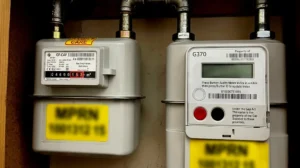
The UK business energy landscape faces a critical transformation period between 2026 and 2030, driven by wholesale market volatility, unprecedented policy reforms and the accelerating transition to net zero. This research examines current market conditions, forecasts price trajectories and analyzes how regulatory changes will reshape commercial energy costs across all business sectors.
Key Findings:
- Wholesale electricity prices are projected to stabilize between £60-80/MWh by 2027, down from 2022-2023 crisis peaks but above pre-pandemic levels
- Network charges will increase 15-25% by 2030 due to grid infrastructure investments required for electrification
- Small and medium enterprises face disproportionate impacts, with standing charges representing up to 40% of total bills for low-consumption businesses
- Energy-intensive industries may see competitive advantages emerge through strategic contract timing and efficiency investments
Current State of UK Business Energy Market (2026)
What is the current business energy market situation in the UK?
The UK business energy market in 2026 operates in a post-crisis stabilization phase, characterized by reduced volatility compared to 2022-2023 but persistent structural challenges. Business electricity prices remain approximately 60-70% higher than pre-pandemic levels, while wholesale markets show increasing stability with prices averaging £70-85/MWh for baseload electricity (Cornwall Insight, 2024).
The market has transitioned from emergency intervention to structural reform, with businesses navigating a complex landscape of:
Price Components:
- Wholesale costs: 40-50% of total bill
- Network charges: 25-30% of total bill
- Policy and environmental costs: 15-20% of total bill
- Supplier margins and operational costs: 5-10% of total bill
Unlike the domestic energy price cap, UK businesses operate in a fully liberalized market where prices reflect wholesale costs, supplier risk premiums and contract terms directly. This creates both opportunities for strategic procurement and risks for businesses without energy management expertise (Ofgem, 2025).
Critical Market Dynamics:
The Department for Energy Security and Net Zero (DESNZ) reports that British businesses consumed approximately 285 TWh of electricity and 267 TWh of gas in 2024-2025, representing significant economic exposure to energy price movements (DESNZ, 2025a). Small and medium enterprises (SMEs) face particular challenges, as they typically lack dedicated energy procurement teams and pay premium rates compared to larger competitors with sophisticated energy strategies.
Energy-intensive sectors including manufacturing, food processing, chemicals and data centers experienced disproportionate impacts during the 2022-2023 crisis, with some operations temporarily shutting down when electricity costs exceeded 30% of operational expenditure. The British Chambers of Commerce (2024) found that 67% of businesses cited high energy costs as a primary constraint on business growth and competitiveness.
How have wholesale energy prices evolved since the 2022-2023 crisis?
Wholesale electricity prices peaked at over £500/MWh during August-September 2022 following Russia’s invasion of Ukraine and subsequent European gas supply disruptions. By early 2024, prices had normalized to £80-100/MWh and current forward markets for 2026-2027 delivery suggest further stabilization around £70-85/MWh for baseload electricity (ICE Futures Europe, 2025).
Key Drivers of Price Normalization:
- Diversified gas supply: UK gas storage capacity increased from 1% to approximately 5% of annual demand through new LNG import facilities and the reopening of Rough storage facility (National Grid ESO, 2025)
- Renewable capacity expansion: UK renewable electricity generation reached 45% of total supply in 2025, up from 38% in 2022, reducing dependence on gas-fired generation during peak pricing periods (DESNZ, 2025b)
- Demand reduction: Business energy consumption decreased 8-12% across most sectors through efficiency improvements and behavioral changes implemented during the crisis (Energy Intensive Users Group, 2024)
- European market stabilization: Coordinated European response to gas supply security, including demand reduction targets and strategic storage requirements, reduced extreme price volatility (European Commission, 2024)
However, the market remains fundamentally vulnerable to geopolitical disruptions, with gas prices still representing the marginal cost of electricity generation during approximately 40-50% of settlement periods. This creates persistent correlation between gas market events and business electricity costs.
Warning for Energy Buyers: Forward curves currently show relative stability, but historical volatility patterns suggest businesses should maintain flexible procurement strategies rather than assuming sustained low prices. The period 2015-2021 of consistently low energy prices is unlikely to return due to structural market changes (Cornwall Insight, 2025).
Comprehensive Price Forecasts: 2026-2030
What are the projected electricity prices for UK businesses through 2030?
Based on analysis of forward markets, policy trajectories, and infrastructure investment requirements, UK business electricity prices are forecast to follow a gradually declining trend through 2028, followed by potential stabilization or modest increases through 2030.
Central Forecast Scenario (£/MWh, baseload electricity):
| Year | Wholesale Price | Network Charges | Policy Costs | Total Delivered Price* |
| 2026 | £75-85 | £28-32 | £18-22 | £135-155 |
| 2027 | £70-80 | £30-35 | £20-24 | £135-150 |
| 2028 | £65-75 | £32-38 | £22-26 | £135-155 |
| 2029 | £60-75 | £35-42 | £24-28 | £140-160 |
| 2030 | £60-80 | £38-45 | £25-30 | £145-170 |
*Excludes supplier margin, VAT, and Climate Change Levy. Typical SME half-hourly metered profile.
Sources: Aurora Energy Research (2025), Cornwall Insight (2025), National Grid ESO (2024)
Key Forecast Assumptions:
These projections assume continuation of current policy frameworks, moderate economic growth (1.5-2.5% GDP annually) and no major geopolitical disruptions comparable to 2022. Forecasts incorporate:
- Renewable capacity additions of 15-20 GW across solar, wind and battery storage
- Natural gas remaining the marginal price-setting technology during 35-45% of periods
- Grid infrastructure investment of £35-40 billion over the forecast period
- Carbon price escalation aligned with UK Emissions Trading Scheme trajectories
- Successful delivery of 3-5 GW of nuclear capacity coming online by 2029-2030
Sector-Specific Variations:
Energy-intensive industries with high consumption profiles (>2 GWh annually) typically secure wholesale-indexed or bespoke contracts 15-25% below published tariff rates. Conversely, small businesses with consumption below 50 MWh annually often pay 20-35% premiums due to higher standing charges, lower negotiating power and inclusion in deemed or out-of-contract rates (Make UK, 2024).
Will gas prices continue to impact business electricity costs?
Yes, gas prices will remain the dominant driver of wholesale electricity prices throughout the forecast period, despite increasing renewable penetration. Natural gas-fired generation continues to set the marginal clearing price in the UK electricity market during approximately 40-50% of settlement periods under current market designs (Ember, 2025).
The Gas-Electricity Price Relationship:
UK electricity markets operate on marginal cost pricing, where the most expensive generator needed to meet demand sets the price for all generators in each settlement period. With renewable sources having near-zero marginal costs, gas-fired power stations typically set this marginal price during:
- Peak demand periods (morning and evening)
- Low wind generation periods
- Winter months with reduced solar output
- Periods of high industrial demand
Forward gas prices for 2026-2030 delivery currently range between £0.70-1.20 per therm (approximately £20-35/MWh thermal equivalent), significantly below 2022-2023 crisis levels of £3-7 per therm but above the 2015-2020 average of £0.40-0.60 per therm (ICE Endex, 2025).
Critical Consideration: The UK’s ongoing dependence on gas-fired generation creates structural vulnerability to:
- Geopolitical supply disruptions affecting European gas markets
- Liquefied natural gas (LNG) competition from Asian markets during supply constraints
- Unplanned outages of nuclear or interconnector capacity increasing gas demand
- Extreme weather events driving simultaneous heating and electricity demand
The Department for Energy Security and Net Zero acknowledges this vulnerability, with reforms to the electricity market design under consideration to reduce gas price transmission to renewable generators and potentially implement locational pricing mechanisms by 2027-2028 (DESNZ, 2025c).
How will standing charges and network costs evolve?
Standing charges and network costs represent the fastest-growing component of business energy bills, projected to increase 15-25% between 2026-2030 as the UK undertakes essential grid infrastructure upgrades to support electrification and renewable integration.
Understanding Network Charges:
Network charges recover the costs of operating and maintaining the UK’s electricity transmission and distribution infrastructure. These charges are regulated by Ofgem and allocated to businesses based on consumption profiles, connection capacity and geographic location. The charges include:
Transmission Network Use of System (TNUoS) charges: Cover the high-voltage transmission network operated by National Grid Electricity System Operator. These vary by location, with businesses in northern Scotland facing charges up to £40/kW annually, while southern England locations may receive credits of £10-20/kW (National Grid ESO, 2025).
Distribution Use of System (DUoS) charges: Recover costs of the 14 regional distribution network operators (DNOs) maintaining local electricity networks. These typically add £15-35/MWh to business electricity costs depending on voltage level and time of consumption (Energy Networks Association, 2024).
Balancing Services Use of System (BSUoS) charges: Cover the costs of keeping supply and demand balanced in real-time. These averaged £6-8/MWh in 2024-2025 and are being reformed under the Targeted Charging Review (Ofgem, 2024).
Forecast Network Cost Increases:
The UK’s electricity transmission network requires £35-40 billion of investment through 2030 to:
- Connect 15-20 GW of new offshore wind capacity
- Upgrade aging infrastructure dating to the 1960s-1970s
- Enable electrification of heat and transport sectors
- Integrate distributed generation and battery storage
- Enhance resilience against extreme weather events
These investments will be recovered through network charges, with Ofgem’s RIIO-3 price control period (2026-2031) incorporating these costs into allowed revenues for network operators (Ofgem, 2025). For typical small businesses, standing charges may increase from £1,500-2,500 annually in 2026 to £1,800-3,200 by 2030.
Disproportionate Impact on Low-Consumption Businesses:
Businesses with low energy consumption face the most significant percentage increases, as standing charges represent a larger proportion of total bills. A small retail shop consuming 25 MWh annually might see standing charges account for 35-45% of the total electricity bill by 2030, compared to 10-15% for a manufacturing facility consuming 2,000 MWh annually (Federation of Small Businesses, 2024).
Policy Reforms and Their Impact on Business Energy Costs
How will Labour government energy policies affect business electricity prices?
The Labour government elected in July 2024 introduced an ambitious energy strategy centered on achieving clean power by 2030, requiring accelerated renewable deployment and grid infrastructure modernization. These policies create both cost pressures and potential savings for UK businesses across different timeframes.
GB Energy and Public Ownership:
The establishment of GB Energy as a publicly-owned clean energy company aims to deploy £8.3 billion in renewable energy projects through 2030, primarily in offshore wind, tidal and community energy. While this represents government capital investment rather than consumer-funded schemes, network connection costs and grid reinforcement for these projects will flow through to network charges (Labour Party, 2024; DESNZ, 2025d).
Expected Impact: Neutral to slightly positive for businesses by 2028-2030 as increased renewable capacity reduces wholesale price volatility and average clearing prices during high-generation periods. However, near-term network charge increases of 3-5% annually are likely through 2028.
Planning Reform and Onshore Wind:
Removal of the effective ban on onshore wind development in England enables deployment of lower-cost renewable capacity compared to offshore wind. Onshore wind levelized costs range £40-50/MWh versus £50-65/MWh for offshore wind and £60-80/MWh for gas generation with carbon costs (Aurora Energy Research, 2024).
Expected Impact: Modest downward pressure on wholesale electricity prices from 2027 onward, potentially reducing average wholesale costs by £3-8/MWh by 2030 compared to scenarios without onshore wind expansion. Greatest benefits accrue to businesses with flexible demand or storage capability to utilize low-price periods.
National Wealth Fund and Green Investment:
The £7.3 billion National Wealth Fund includes targeted support for energy-intensive industries to upgrade facilities, improve efficiency and electrify heat processes. Manufacturing, chemicals, ceramics, glass and steel sectors may access capital support reducing investment barriers for efficiency measures with 3-7 year payback periods (HM Treasury, 2024).
Expected Impact: Sector-specific benefits for energy-intensive industries, potentially reducing energy consumption 15-25% in participating facilities. Broader market impact limited but industrial demand reduction of 3-5 TWh annually could modestly reduce peak prices.
What is the electricity market reform agenda and timeline?
The Review of Electricity Market Arrangements (REMA), initiated under the previous government and continued under Labour, represents the most significant restructuring of UK electricity markets in three decades. The reform aims to reduce wholesale electricity price dependence on gas costs, improve locational price signals and accelerate renewable investment.
Current Market Design Limitations:
The existing wholesale electricity market operates on uniform marginal pricing, where all generators receive the clearing price set by the most expensive generator needed to meet demand. This creates windfall revenues for low-cost renewable and nuclear generators during gas-price-driven periods, while exposing consumers to gas price volatility even when consuming electricity generated from renewables (Ofgem, 2023).
Proposed Reform Options (Consultation Phase 2025-2026):
1. Locational Marginal Pricing (LMP): Implement regional or nodal pricing reflecting transmission constraints and local generation costs. Similar to systems in Texas, New Zealando, and parts of Europe, LMP would create price differences between regions, with areas near renewable generation seeing lower costs while demand centers face higher prices (FTI Consulting, 2024).
Business Impact: Energy-intensive industries located near renewable generation clusters (Scotland, Wales, northern England) could secure electricity 15-30% below national averages. However, businesses in southern England and urban centers might face 10-20% premiums. Implementation timeline: 2028-2030 at earliest.
2. Zonal Pricing: Less granular than LMP, dividing GB into 5-15 zones with distinct prices. Simpler to implement than full LMP while retaining locational benefits. Similar to Italian and Swedish market models (Imperial College London, 2024).
Business Impact: Moderate locational differentiation, with renewable-rich zones seeing 10-20% price advantages. More predictable than full LMP for long-term business planning. Implementation timeline: 2027-2029 likely.
3. Split Clean Energy Market: Separate clean and firm power markets, with clean energy traded separately from dispatchable generation. Aims to decouple renewable prices from gas costs while maintaining security of supply through firm power markets (Energy Systems Catapult, 2024).
Business Impact: Businesses with flexible demand or storage could access cheaper clean energy during high renewable periods. May reduce average prices 5-15% while requiring more sophisticated procurement strategies. Implementation timeline: 2027-2028 possible.
4. Enhanced Contracts for Difference (CfDs): Expand CfD mechanisms to accelerate renewable deployment while stabilizing revenues. Already used for offshore wind but potential expansion to solar, storage and flexibility services (Low Carbon Contracts Company, 2025).
Business Impact: Minimal direct impact on wholesale prices but improves investor certainty, potentially accelerating deployment and indirectly reducing long-term price volatility.
Expert Assessment: Most analysts expect a hybrid approach combining elements of locational pricing with enhanced CfDs rather than a single wholesale replacement of the current system. The government aims to publish final recommendations in Q3 2026 with phased implementation beginning 2027-2028 (Cornwall Insight, 2025).
Critical Business Planning Consideration: Companies should monitor REMA developments closely, particularly if considering facility relocations, capacity expansions or long-term energy contracts extending beyond 2028. Locational pricing implementation could fundamentally alter the competitive geography of UK industry.
How will carbon pricing and environmental policies impact energy costs?
The UK Emissions Trading Scheme (UK ETS) and associated environmental policies create rising carbon costs for fossil fuel generation, driving a gradual increase in the baseline electricity price floor while incentivizing cleaner generation investment.
UK ETS Price Trajectory:
Carbon allowance prices in the UK ETS traded at £35-45 per tonne CO₂ equivalent through 2024-2025, with forward markets indicating price escalation to:
- 2026-2027: £40-50/tCO₂e
- 2028-2029: £50-65/tCO₂e
- 2030: £60-75/tCO₂e
(ICE Endex, 2025; UK ETS Authority, 2024)
These prices add approximately £25-35/MWh to the operating costs of gas-fired generation and £75-90/MWh to coal-fired generation, making clean energy increasingly cost-competitive and establishing a price floor for wholesale electricity markets during gas-price-driven periods (Carbon Tracker, 2024).
Climate Change Levy (CCL) Impacts:
The CCL represents a direct tax on business energy consumption, with rates for 2026-2027 set at:
- Electricity: £0.00775/kWh (£7.75/MWh)
- Natural gas: £0.00568/kWh (£5.68/MWh)
These rates increase annually based on CPI inflation, potentially reaching £9-10/MWh for electricity and £6.50-7.50/MWh for gas by 2030. For a typical SME consuming 100 MWh annually, CCL adds approximately £775-1,000 to annual electricity costs (HMRC, 2025).
Important Exemptions: Energy-intensive businesses operating in sectors deemed at risk of carbon leakage may qualify for Climate Change Agreements (CCAs), reducing CCL by 92% in exchange for meeting energy efficiency targets. Eligible sectors include ceramics, chemicals, food and drink manufacturing, foundries, glass, paper and steel production (Environment Agency, 2024).
VAT on Business Energy:
Standard VAT rate of 20% applies to most business energy consumption, adding significant costs compared to the 5% reduced rate for domestic consumers. For a business with £50,000 annual energy expenditure, VAT represents £10,000 of total costs.
Recent Policy Debate: Some business groups advocate for VAT reduction or removal on business electricity to improve competitiveness, particularly for small businesses and energy-intensive sectors competing with EU manufacturers benefiting from temporary energy support schemes. However, Treasury has resisted these proposals due to fiscal implications of £3-5 billion annually (British Chambers of Commerce, 2024; HM Treasury, 2024).
Renewable Energy Transition and Generation Mix Impact
How will increased renewable capacity affect business electricity prices?
The UK aims to deploy 15-20 GW of additional renewable capacity between 2026-2030, primarily offshore wind, solar and battery storage. This expansion fundamentally alters electricity market dynamics, creating both opportunities and challenges for business energy buyers.
Renewable Generation Forecast:
| Technology | 2026 Capacity | 2030 Capacity | Average Load Factor |
| Offshore Wind | 16 GW | 25-28 GW | 45-50% |
| Onshore Wind | 14 GW | 18-20 GW | 30-35% |
| Solar PV | 18 GW | 28-32 GW | 11-13% |
| Battery Storage | 5 GW | 12-15 GW | N/A (dispatch) |
| Nuclear | 6 GW | 9-11 GW | 75-85% |
Sources: National Grid ESO (2024), DESNZ (2025b), RenewableUK (2024)
Impact on Wholesale Price Dynamics:
Increased renewable capacity creates a “merit order effect” where near-zero marginal cost renewables displace higher-cost gas generation, reducing average wholesale prices during high renewable output periods. Analysis by Imperial College London (2024) estimates that planned renewable additions could reduce average wholesale electricity prices by £8-15/MWh by 2030 compared to counterfactual scenarios without capacity expansion.
However, this relationship is non-linear and creates distinct price characteristics:
1. Increased Price Volatility: While average prices decline, the spread between high and low price periods widens substantially. Solar-rich summer afternoons may see prices approaching £20-30/MWh, while winter evening peaks with low renewable output maintain prices at £150-250/MWh (Aurora Energy Research, 2025).
Business Implication: Companies with flexible operations or storage capability can capture significant value by shifting demand to low-price periods. Manufacturing processes, cold storage, water treatment and data processing represent sectors well-positioned to benefit from demand flexibility.
2. Renewable Curtailment Risk: As renewable penetration exceeds 50-60% of instantaneous demand during optimal conditions, grid constraints and lack of demand flexibility may require curtailing renewable output. The ESO estimates potential curtailment of 5-8% of renewable generation by 2030 without significant grid upgrades and demand flexibility deployment (National Grid ESO, 2024).
Business Implication: Locational differences intensify, with areas of high renewable generation and weak grid connections (Scotland, Wales, East Anglia) experiencing the highest curtailment and lowest average prices.
3. Reduced Gas Dependency (But Not Elimination): Despite renewable expansion, gas-fired generation remains essential for system security, operating during approximately 30-40% of settlement periods by 2030. This persistent gas dependency means businesses remain exposed to gas price volatility, though the magnitude and frequency of exposure decline (Ember, 2025).
What role will nuclear and grid infrastructure play?
Nuclear energy and grid infrastructure represent critical enablers of the energy transition, providing baseload security and transmission capacity necessary to integrate renewable generation while maintaining supply reliability.
Nuclear Capacity Development:
The UK’s nuclear program faces significant delivery challenges, with existing fleet aging and new projects experiencing substantial delays and cost overruns. Current committed projects include:
Hinkley Point C (3.2 GW): Expected completion 2029-2031, significantly delayed from original 2025 target. Strike price of £92.50/MWh (2012 prices, approximately £128/MWh in 2026 prices) means this project will receive substantial CfD payments when wholesale prices are below strike price, funded through supplier obligations passed to consumers (EDF Energy, 2024).
Sizewell C (3.2 GW): Final investment decision expected 2026, construction to 2035-2037. Regulated Asset Base (RAB) funding model means construction costs recovered through network charges during build period, adding approximately £1-2/MWh to all consumer bills through 2030s (Sizewell C, 2025).
Small Modular Reactors (SMRs): Potential deployment of 3-5 GW capacity by late 2030s but unlikely to impact market conditions within 2026-2030 forecast window. Great British Nuclear coordinates development programs with Rolls-Royce and other vendors (Great British Nuclear, 2024).
Business Impact Assessment:
Nuclear provides price stability by reducing reliance on gas-fired generation during baseload periods but high CfD strike prices and RAB cost recovery mechanisms mean businesses pay for nuclear through contract mechanisms rather than benefiting from low wholesale prices. For businesses seeking price certainty, nuclear expansion provides moderate benefits by reducing exposure to gas price spikes but near-term cost impacts from CfD payments and RAB charges partially offset these benefits.
Grid Infrastructure Constraints:
The UK’s electricity transmission network was designed for centralized generation in the Midlands and North, delivering power to demand centers in the South East. Renewable generation concentrates in Scotland (offshore wind), Wales (onshore wind), and East Anglia (offshore wind), requiring fundamental network reconfiguration.
Critical Infrastructure Projects (2026-2030):
- Eastern Green Links 1 & 2: 4 GW subsea HVDC connections from Scotland to North East England and Yorkshire (£4.3 billion)
- Scotland-England connections: Multiple reinforcements adding 5-7 GW transfer capacity (£3.2 billion)
- Offshore transmission: 10-12 GW of offshore wind connections (£8-10 billion)
- Distribution network upgrades: Local network reinforcement for electric vehicle charging, heat pumps and distributed generation (£12-15 billion)
Total investment: £35-40 billion through 2030 (Energy Networks Association, 2024; National Grid ESO, 2024)
Cost Recovery Mechanism:
These investments are recovered through TNUoS and DUoS network charges allocated to all grid users. For a typical SME, network charge increases of 15-25% through 2030 represent £1,500-3,500 in additional annual costs. However, improved transmission capacity enables renewable generation delivery, potentially reducing wholesale price volatility and average costs by £5-12/MWh (Ofgem, 2025).
Expert Perspective: Grid infrastructure represents unavoidable investment for energy transition and long-term energy security. While near-term cost increases are inevitable, failure to invest would perpetuate higher wholesale price volatility and renewable curtailment, ultimately costing businesses more through sustained exposure to gas prices.
Energy Contract Strategy and Procurement Best Practices
What energy contract types should businesses consider for 2026-2030?
UK businesses access electricity through various contract structures, each offering distinct risk-reward profiles, price mechanisms and flexibility characteristics. Selecting appropriate contract types requires assessing risk tolerance, price forecasts, operational flexibility and internal energy management capability.
Fixed-Rate Contracts:
Fixed contracts establish a predetermined unit rate (£/kWh) for the contract duration, typically 1-5 years, insulating businesses from wholesale price movements but eliminating potential savings during price declines.
Optimal Use Cases:
- Businesses requiring budgetary certainty
- Limited energy management resources or expertise
- Risk-averse financial strategies
- Expectation of rising wholesale prices during contract period
Current Market Context (2026): Forward curves suggest relatively stable prices through 2028, making 2-3 year fixed contracts reasonable for risk-averse businesses. However, fixing at 2026 prices may mean missing potential savings if wholesale prices decline as renewable capacity increases through 2027-2028.
Pricing Premium: Fixed contracts typically include supplier risk premiums of 5-12% above equivalent wholesale index prices to compensate for price risk assumption and hedging costs (Energy UK, 2024).
Flexible or Pass-Through Contracts:
Flexible contracts link business electricity prices directly to wholesale market indices (typically day-ahead or half-hourly settlement prices) with fixed adders covering supplier margin and operational costs.
Optimal Use Cases:
- Energy-intensive businesses with sophisticated energy management
- Operations with demand flexibility or on-site generation
- High price volatility risk tolerance
- Belief that wholesale prices will decline or remain stable
Current Market Context: With wholesale prices showing stability and potential decline through 2028, flexible contracts allow businesses to benefit from favorable market movements while requiring active monitoring and risk management.
Pricing Advantage: Flexible contracts typically price 5-15% below equivalent fixed contracts when comparing average costs but expose businesses to short-term price spikes requiring cash flow management (Cornwall Insight, 2024).
Hybrid or Partially Fixed Contracts:
Hybrid structures combine fixed and flexible elements, fixing a baseline percentage (50-80%) while exposing remaining consumption to wholesale prices. This balances price security with opportunity for savings.
Optimal Use Cases:
- Medium-sized businesses with moderate risk tolerance
- Partial demand flexibility
- Seeking benefits of both contract types
- Uncertain price outlook
Structure Example: Fix 70% of forecast consumption at £130/MWh, with remaining 30% exposed to day-ahead index capped at £200/MWh and floored at £80/MWh. This provides substantial certainty while retaining 30% exposure to potential price declines.
Power Purchase Agreements (PPAs):
PPAs establish direct relationships between electricity consumers and generators, bypassing traditional supply routes. Businesses contract directly with renewable projects (solar, wind) to purchase power at predetermined prices, often including renewable energy certificates.
Types of PPAs:
Physical PPAs: Business directly receives electricity from generation asset via private wire or grid connection, paying agreed rate to generator. Most common for businesses co-locating with generation or large consumers with half-hourly settlement.
Virtual/Synthetic PPAs: Financial contract where business receives renewable electricity through standard supplier while settling price differences with generator separately. Enables businesses to support renewable projects regardless of location.
Sleeved PPAs: Generator sells power to intermediary supplier who delivers to business customer under standard supply agreement. Combines renewable procurement with supplier services.
Optimal Use Cases:
- Large businesses (>5 GWh annual consumption)
- Strong corporate sustainability commitments
- Risk tolerance for long-term price commitments (10-25 years typical)
- Located near suitable generation projects (physical PPAs)
Current Market Context: Corporate PPA prices for 2026-2030 delivery currently range £60-85/MWh for wind projects and £50-70/MWh for solar, potentially offering 10-20% savings versus traditional supply contracts while securing renewable energy credentials (RE-Source, 2024).
Important Consideration: PPAs involve complex legal, financial and operational considerations requiring specialist advice. Suitable primarily for businesses with substantial consumption and internal energy expertise or ability to engage specialist consultants.
How can businesses optimize energy procurement timing?
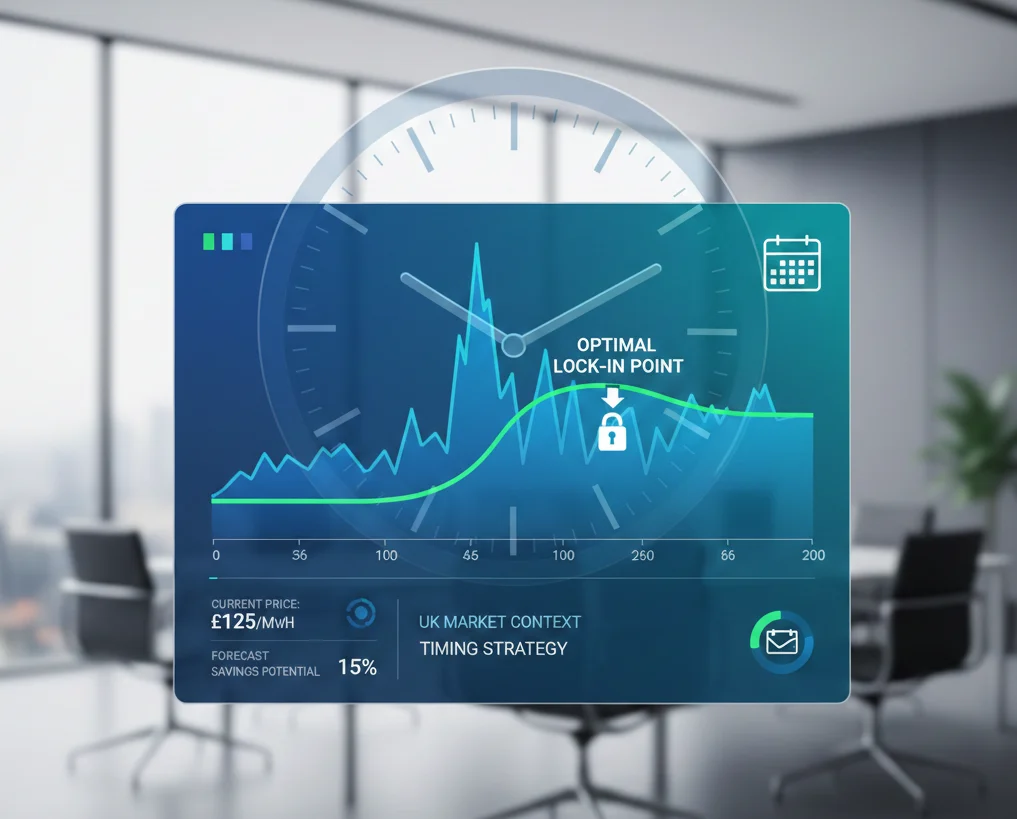
Strategic contract timing significantly impacts electricity costs, with procurement decisions during favorable market conditions potentially saving 10-30% compared to poorly timed contracts.
Market Timing Principles:
1. Forward Curve Analysis: Wholesale electricity markets trade contracts for delivery up to 6 years ahead, creating forward price curves reflecting market expectations. Businesses should analyze forward curves to identify whether current prices represent value relative to expectations.
Current Forward Curve (2026): Prices for 2027-2028 delivery currently trade £5-10/MWh below 2026 delivery, suggesting market expects gradual price declines. Businesses with contracts expiring 2026-2027 might delay fixing to potentially capture lower prices, while businesses with current flexibility might lock favorable 2027-2028 prices before potential curve changes (ICE Futures Europe, 2025).
2. Avoid Peak Price Periods: Historical analysis shows seasonal price patterns with wholesale electricity typically most expensive during October-March (winter demand) and cheapest during April-September (lower demand, higher solar output). Businesses renewing contracts during Q2-Q3 often secure 5-15% better rates than Q4-Q1 renewals (Energy Procurement Specialists, 2024).
3. Seasonal Consumption Profiles: Businesses with winter-weighted consumption (heating-dominant) should consider fixing prices during summer when winter-delivery contracts trade at discounts to spot prices. Conversely, summer-peaking businesses (cooling-dominant) might wait for winter periods to fix summer delivery at favorable rates.
4. Multi-Year Procurement Strategy: Rather than fixing 100% of consumption for entire contract terms, sophisticated businesses implement staged procurement strategies:
Example Strategy:
- Year 1 (2026): Fix 30% of 2027 consumption, 20% of 2028 consumption
- Year 2 (2027): Fix additional 40% of 2027 consumption as delivery nears, 30% of 2028, 20% of 2029
- Year 3 (2028): Complete remaining requirements
This “layering” approach averages procurement timing, reducing risk of fixing all consumption at market peaks while maintaining significant price certainty.
Risk Management Approach:
Businesses should align procurement strategies with financial risk management policies, considering:
- Cash flow sensitivity: Can business absorb 20-30% electricity cost increases without operational impacts?
- Budget certainty requirements: Do annual budgets require fixed costs or can they accommodate variance?
- Competitive dynamics: Are competitors fixing prices, creating competitive disadvantages if wholesale prices rise?
- Forward curve expectations: Does internal or consultant analysis suggest current prices represent value?
Expert Recommendation: For most SMEs lacking dedicated energy teams, securing 2-3 year fixed or hybrid contracts during favorable market periods (currently Q2-Q3 2026) provides reasonable balance of price protection and simplicity. Larger organizations with energy management resources should implement sophisticated procurement strategies including flexible contracts, PPAs and staged fixing approaches (Make UK, 2024).
Sector-Specific Energy Cost Analysis and Impacts
How do energy costs affect different business sectors?
Energy costs represent vastly different proportions of operational expenditure across business sectors, creating divergent impacts from price movements and policy changes.
Energy Intensity by Sector:
Manufacturing (High Intensity):
- Energy as % of turnover: 5-12% (general manufacturing), 15-30% (energy-intensive industries)
- Key sectors: Chemicals, steel, ceramics, glass, paper, food processing
- Primary concerns: International competitiveness, carbon leakage risk, capital intensity of efficiency upgrades
- Typical consumption: 500-50,000 MWh annually
- Price sensitivity: Extreme! 10% energy cost increase may eliminate profit margins
The Energy Intensive Users Group (2024) reports that UK industrial electricity prices rank among
the highest in Europe at approximately £120-140/MWh versus £80-100/MWh in France and Germany, creating significant competitive disadvantages. This pricing gap drives offshoring considerations, with 23% of energy-intensive manufacturers reporting evaluation of facility relocations to lower-cost jurisdictions during 2024 strategic planning.
Critical Factor: Energy-intensive industries qualify for various support schemes including:
- Exemption from renewable energy costs (up to £40/MWh reduction)
- Climate Change Agreements reducing CCL by 92%
- Energy-Intensive Industries (EII) compensation scheme offsetting network costs
- Potential access to industrial energy transformation funding
Even with support schemes, UK energy-intensive industries face structural disadvantages requiring strategic responses including on-site generation, efficiency upgrades, production scheduling optimization and raw material substitution where possible.
Retail and Hospitality (Medium Intensity):
- Energy as % of turnover: 2-6%
- Key sectors: Supermarkets, restaurants, hotels, retail stores
- Primary concerns: Customer experience (lighting, heating/cooling), food safety (refrigeration), margin pressure
- Typical consumption: 50-500 MWh annually
- Price sensitivity: High energy ranks among top 5 operational costs
Retail and hospitality sectors face particular challenges from refrigeration and climate control requirements representing 40-60% of electricity consumption. Rising energy costs during 2022-2023 crisis prompted widespread behavioral changes including reduced operating hours, temperature adjustments and LED lighting upgrades (British Retail Consortium, 2024).
These sectors benefit substantially from efficiency investments with typical payback periods of 2-5 years for LED lighting, building management systems and refrigeration upgrades. However, SME businesses often lack capital or expertise to implement comprehensive efficiency programs.
Services and Offices (Low-Medium Intensity):
- Energy as % of turnover: 0.5-2%
- Key sectors: Professional services, finance, technology, creative industries
- Primary concerns: Employee comfort, operational continuity, corporate sustainability commitments
- Typical consumption: 20-200 MWh annually
- Price sensitivity: Moderate, meaningful cost but not competitiveness-critical
Service sector businesses typically show moderate energy intensity with consumption dominated by lighting, heating/cooling and office equipment. Remote work trends reduced office electricity consumption 15-25% during 2020-2023, with hybrid work maintaining reductions of 10-15% in 2024-2025 (British Council for Offices, 2024).
These sectors often lead corporate renewable energy procurement through PPAs and green tariffs, driven by employee expectations, client requirements and corporate sustainability commitments rather than cost optimization alone.
Data Centers and Technology (Very High Intensity):
- Energy as % of turnover: 15-40%
- Key sectors: Data centers, cryptocurrency mining, high-performance computing, telecommunications
- Primary concerns: Energy availability, price predictability, renewable energy access, cooling efficiency
- Typical consumption: 5,000-100,000+ MWh annually
- Price sensitivity: Extreme energy represents largest operating cost after capital
Data center sector experiences most acute energy cost sensitivity with electricity representing 30-40% of total operating costs for established facilities. UK data center capacity expansion plans of 500-800 MW through 2030 face constraints from grid connection availability, with some projects experiencing 5-8 year connection queue timelines (techUK, 2024).
This sector increasingly pursues direct renewable PPAs, on-site generation and strategic location selection in areas with available grid capacity and favorable renewable energy access. Scotland and Wales attract data center development due to renewable energy availability, cooling climate benefits and network operator incentives.
What strategies can energy-intensive businesses employ?
Energy-intensive industries require sophisticated, multi-faceted energy strategies addressing procurement, operations, investment and policy engagement to maintain competitiveness under sustained high energy costs.
Operational Optimization:
Demand-Side Response (DSR): Shift electricity consumption from high-price periods to low-price periods through production scheduling flexibility. Manufacturing processes with batch operations, flexible shift patterns or inventory buffering capacity can reduce electricity costs 10-25% by concentrating consumption during overnight and weekend periods when wholesale prices average 30-50% below peak periods (National Grid ESO, 2024).
Example Implementation: Food processing facility with cold storage capacity runs production and refrigeration loads during 11pm-7am period when Day-Ahead prices average £60/MWh versus £120/MWh during 5pm-8pm peak. This requires production planning coordination, labor agreements for overnight shifts and potentially enhanced cold storage to buffer product through peak-price periods.
Revenue Opportunity: Businesses with substantial flexibility can participate in formal DSR schemes, receiving capacity payments of £30,000-50,000/MW/year for committing to reduce consumption during system stress events, creating £50,000-500,000 annual revenue for facilities with 1-10 MW of flexible load (Electron, 2024).
Process Efficiency and Electrification:
Motor System Optimization: Electric motors represent 60-70% of industrial electricity consumption, with efficiency improvements of 15-30% achievable through variable speed drives, motor replacements and compressed air system optimization. Typical projects achieve 2-4 year paybacks at current electricity prices (Carbon Trust, 2024).
Heat Process Electrification: Replace gas-fired heat processes with electric alternatives where economically viable. Heat pumps, induction heating and resistance heating enable fuel switching away from gas exposure while accessing lower-carbon electricity. Economic viability depends on heat temperature requirements, load factors, and relative electricity-gas pricing (Energy Systems Catapult, 2024).
Important Assessment: Electrification projects require careful analysis considering:
- Capital costs (electric equipment typically 20-60% more expensive than gas equivalents)
- Operating costs (electricity £/kWh versus gas £/kWh accounting for efficiency differences)
- Carbon implications (important for businesses with net zero commitments)
- Funding availability (industrial energy transformation schemes may cover 30-50% of capital costs)
On-Site Generation and Storage:
Solar PV Deployment: Businesses with available roof or land space can deploy solar generation providing electricity at levelized costs of £40-60/MWh over 25-year asset life, significantly below grid electricity costs. Typical 500 kW commercial solar installation costs £400,000-500,000, generating 450-550 MWh annually worth £60,000-75,000 at current electricity prices, achieving 6-8 year paybacks (Solar Energy UK, 2024).
Combined Heat and Power (CHP): Businesses with simultaneous heat and electricity requirements can deploy CHP systems achieving 75-85% overall efficiency versus 30-35% for separate grid electricity and gas boilers. Economics depend on relative electricity-gas prices, heat-power ratios, and load factors (CHPA, 2024).
Battery Storage: Businesses with high peak demand charges or exposure to time-of-use pricing can deploy battery storage to arbitrage price differences, reduce network peak demand charges, and participate in grid service markets. Commercial battery storage achieves 7-12 year paybacks depending on price volatility and demand profiles (Renewable Energy Association, 2024).
Strategic Contract Structures:
Energy-intensive businesses should employ sophisticated contract strategies including:
Portfolio Approach: Combine multiple contract types fix 40-60% for price certainty, maintain 20-30% on flexible index contracts to benefit from low-price periods, secure 10-20% through direct renewable PPAs for sustainability credentials and long-term price certainty.
Interruptible Contracts: Accept disconnection rights during system emergencies in exchange for 20-40% electricity price discounts. Suitable for businesses with on-site backup generation, flexible operations or tolerance for occasional interruptions (Energy UK, 2024).
Longer-Term Fixed Contracts: While typical fixed contracts span 1-3 years, energy-intensive businesses may secure 5-10 year fixed contracts providing enhanced price certainty for strategic planning. These longer terms typically achieve lower prices than rolling short-term contracts due to reduced supplier hedging costs.
Energy Efficiency and Demand Management
What energy efficiency measures offer best returns for UK businesses?
Energy efficiency investments represent the most cost-effective energy strategy for most businesses, offering savings of 15-40% on energy consumption with typical payback periods of 1-5 years while reducing carbon emissions and enhancing resilience to future price increases.
High-Return Efficiency Measures (1-3 Year Payback):
LED Lighting Upgrades:
- Typical savings: 50-75% of lighting electricity consumption
- Capital cost: £15-40 per fitting replacement
- Payback period: 1-3 years
- Additional benefits: Reduced maintenance (50,000+ hour LED life vs. 2,000 hours for halogen), improved light quality, reduced cooling loads
Lighting represents 15-25% of commercial building electricity consumption, making LED upgrades among the highest-impact efficiency measures. A typical office replacing 200 fittings saves approximately 30,000 kWh annually worth £4,000-5,000 at current electricity prices against installation costs of £5,000-8,000 (Carbon Trust, 2024).
Building Management Systems (BMS):
- Typical savings: 15-30% of heating, ventilation and air conditioning (HVAC) consumption
- Capital cost: £20,000-100,000 depending on building size
- Payback period: 2-4 years
- Additional benefits: Enhanced comfort control, remote monitoring, preventive maintenance capabilities
Modern BMS enables precise temperature control, scheduling optimization, zone management, and integration with occupancy sensors to reduce unnecessary heating/cooling. Particularly valuable for retail, hospitality and office sectors where HVAC represents 40-60% of electricity consumption (Building Services Research and Information Association, 2024).
Compressed Air System Optimization:
- Typical savings: 20-40% of compressed air electricity consumption
- Capital cost: £5,000-30,000 for leak detection, control upgrades
- Payback period: 1-2 years
- Additional benefits: Improved production quality, reduced maintenance
Compressed air ranks among the most inefficient industrial energy uses, with typical systems wasting 30-50% of generated air through leaks, inappropriate uses and poor controls. Manufacturing facilities using compressed air extensively can save 15,000-100,000 kWh annually through systematic optimization (Energy Trust, 2024).
Medium-Return Efficiency Measures (3-5 Year Payback):
HVAC Equipment Replacement: Modern high-efficiency boilers, chillers and air handling units achieve 20-35% efficiency improvements versus equipment installed pre-2010. However, higher capital costs (£30,000-500,000 depending on capacity) extend payback periods to 3-6 years for most commercial applications.
Refrigeration Upgrades: Critical for food retail and hospitality, refrigeration efficiency improvements including doors on display cases, efficient compressors and heat recovery achieve 25-40% savings with 3-5 year paybacks (British Retail Consortium, 2024).
Variable Speed Drives (VSDs): Installing VSDs on motors, pumps and fans enables load matching versus binary on/off operation, reducing electricity consumption 20-50% for variable-load applications. Capital costs of £500-5,000 per motor depending on size, achieving 2-5 year paybacks (Carbon Trust, 2024).
Long-Term Efficiency Investments (5-10 Year Payback):
Building Fabric Improvements: Insulation, glazing upgrades and air tightness improvements reduce heating/cooling requirements 30-60% but involve substantial capital costs (£50-200 per square meter) suitable primarily during major refurbishments.
Heat Pump Installations: Air source or ground source heat pumps replace gas heating with electric systems achieving coefficient of performance (COP) of 3-4 (generating 3-4 kWh heat per 1 kWh electricity). Economics depend heavily on relative electricity-gas prices, with current ratios making heat pumps economically challenging except for buildings without gas connections or those accessing capital grants (Department for Energy Security and Net Zero, 2025e).
How can businesses implement effective energy management?
Systematic energy management separates high-performing businesses achieving sustained 20-40% energy reductions from those implementing isolated efficiency measures with minimal long-term impact.
ISO 50001 Energy Management Framework:
The international standard for energy management provides structured methodology for businesses to:
- Establish energy baseline: Understand current consumption patterns, costs and performance metrics
- Set objectives and targets: Define specific, measurable energy reduction goals aligned with business strategy
- Implement action plans: Deploy efficiency measures, operational changes and procurement strategies
- Monitor and measure: Track consumption, costs and savings against baseline and targets
- Review and improve: Analyze performance, identify opportunities and continuously enhance energy management
Businesses implementing ISO 50001 frameworks achieve average energy savings of 10-15% in year one, with sustained annual improvements of 2-3% through continuous optimization (International Organization for Standardization, 2024).
Energy Audits and Assessments:
Professional energy audits identify specific opportunities, quantify potential savings, and prioritize investments based on return on investment:
Walk-Through Audits (£1,000-3,000): Visual inspection identifying obvious opportunities like lighting, controls, and operational practices. Suitable for small businesses seeking quick wins.
Detailed Technical Audits (£5,000-20,000): Comprehensive assessment including sub-metering, thermal imaging, equipment testing and detailed financial analysis. Suitable for medium-large businesses planning significant investments.
Energy Intensive Users Group (EIUG) members benefit from subsidized audit programs, with government schemes covering 50-75% of audit costs for qualifying businesses (Energy Trust, 2024).
Behavioral and Cultural Change:
Technology-focused efficiency measures deliver one-time savings, while organizational culture changes drive continuous improvement:
Employee Engagement: Staff awareness campaigns, energy champions and incentive programs reduce consumption 5-15% through behavioral changes like shutting down equipment, eliminating unnecessary use and reporting inefficiencies (Carbon Trust, 2024).
Management Commitment: Senior leadership commitment to energy management, integration with business strategy and appropriate resource allocation separate successful energy management programs from failed initiatives.
Performance Monitoring: Visibility of energy performance through dashboards, regular reporting and integration with operational KPIs enables quick identification of anomalies and opportunities.
Risks, Volatility and Resilience Planning
What are the primary risks to UK business energy price forecasts?
Energy price forecasts through 2030 face substantial uncertainties requiring business scenario planning and resilience strategies to manage potential outcomes ranging from sustained low prices to renewed crisis conditions.
Geopolitical Supply Risks:
Russian gas supplies: While direct UK reliance on Russian pipeline gas was minimal (4% of supply pre-2022), European gas market integration means UK prices respond to Continental disruptions. Potential scenarios include:
- Escalation scenario: Further European supply disruptions driving gas prices to £2-4/therm (approximately £60-120/MWh thermal equivalent), transmitting to electricity prices of £150-250/MWh during gas-price-set periods
- Normalization scenario: Gradual European-Russian rapprochement enabling resumed pipeline gas flows, potentially reducing gas prices to £0.60-0.90/therm and electricity prices to £60-80/MWh
Current forward markets price minimal probability of normalization, suggesting potential downside price risks if geopolitical conditions improve unexpectedly (ICE Endex, 2025).
Middle East instability: Approximately 20% of global LNG supplies transit Middle Eastern export facilities and shipping routes. Major disruptions could temporarily spike global LNG prices, impacting UK gas and electricity costs even without direct supply dependencies.
Climate and Weather Risks:
Extreme cold events: Prolonged winter cold spells simultaneously increase heating demand (gas) and electricity demand while potentially reducing wind output and freezing renewable infrastructure. The “Beast from the East” (2018) and December 2022 cold snaps demonstrated 50-100% wholesale price increases during severe weather periods (Met Office, 2024).
Heat waves: Summer heat events increase cooling demand while reducing solar efficiency and thermal generation capacity. However, UK electricity demand remains winter-peaked, making cold events higher risk.
Drought conditions: While UK electricity generation shows minimal hydroelectric dependence (1-2% of supply), European market interconnection means severe Continental droughts affecting hydro and nuclear cooling water availability can transmit price pressures to UK markets.
Renewable Output Variability:
As renewable penetration increases toward 50-60% of generation, system exposure to weather-dependent output variability intensifies:
Low wind periods: “Dunkelflaute” events with sustained low wind and solar output require gas-fired generation to meet demand, potentially driving prices to £200-300/MWh during multi-day periods. UK experienced several such events during winter 2023-2024, highlighting ongoing gas dependency despite renewable growth (National Grid ESO, 2024).
High renewable output periods: Conversely, optimal wind and solar conditions can drive wholesale prices toward zero or even negative during periods of high generation and low demand, particularly spring/autumn shoulder seasons. Businesses with demand flexibility or storage benefit substantially from capturing these low-price periods.
Policy and Regulatory Risks:
Market design uncertainty: REMA implementation timeline, design choices and transition arrangements remain uncertain through 2026-2027. Different reform options create divergent price impacts, with locational pricing potentially creating ±30% regional price variations compared to current national pricing.
Carbon price trajectories: UK ETS prices depend on supply-demand balance, policy ambition, and international carbon market linkages. Scenarios range from £40-50/tCO₂e (weak climate policy, oversupply) to £80-100/tCO₂e (enhanced ambition, market tightening), impacting baseline electricity prices by £15-25/MWh.
Support scheme changes: Government fiscal constraints may alter industrial energy support schemes, renewable subsidy mechanisms or business taxation, changing the relative economics of energy consumption, generation and efficiency investment.
Infrastructure Delivery Risks:
Grid reinforcement, renewable project development and nuclear construction all face delivery risks from planning constraints, supply chain disruptions, labor shortages and cost overruns. Significant delays could:
- Perpetuate network constraints limiting renewable deployment and maintaining high curtailment
- Delay renewable capacity additions keeping wholesale prices elevated
- Extend gas generation dependency prolonging price volatility exposure
How should businesses build resilience against energy price volatility?
Strategic resilience planning enables businesses to navigate potential price scenarios ranging from sustained low prices to renewed crisis conditions without operational disruption or competitive disadvantage.
Diversified Contract Portfolio:
Rather than “all-or-nothing” fixed versus flexible decisions, resilient businesses maintain diversified contract portfolios balancing risk and opportunity:
Example Portfolio for Medium Manufacturing Business:
- 40% fixed 3-year contract: Provides baseline price certainty for core operations
- 30% flexible day-ahead indexed: Captures savings during low-price periods
- 20% renewable PPA: Locks long-term prices while meeting sustainability goals
- 10% on-site solar generation: Reduces grid exposure and provides known costs
This structure provides 60% price certainty through fixed and PPA elements while retaining 30% exposure to potential market declines plus 10% complete cost certainty from owned generation.
Financial Hedging Strategies:
Sophisticated energy buyers can implement financial hedging using exchange-traded electricity futures to manage price exposure separately from physical supply contracts:
- Purchase futures contracts for forecast consumption, locking prices months ahead
- Maintain flexible supply contracts to receive physical delivery
- Settle price differences between futures and spot markets financially
This approach requires energy trading expertise and financial risk management capabilities, making it suitable primarily for large energy-intensive businesses with dedicated energy teams or external specialist support (Energy Procurement Specialists, 2024).
On-Site Generation and Storage:
Physical assets providing businesses with partial or complete energy independence from grid electricity:
Solar PV: Generates electricity at known levelized costs (£40-60/MWh over 25 years), eliminating price volatility for self-consumed generation. Excess generation can be exported to grid, exported to tenants or stored in batteries.
Combined Heat and Power (CHP): Businesses with substantial heat requirements can achieve 75-85% overall efficiency while reducing electricity costs 20-40% during normal price periods and providing resilience during grid price spikes.
Battery Storage: Enables businesses to charge batteries during low-price periods (night, high renewable output) and discharge during peak-price periods, arbitraging price differences worth £20-80/MWh depending on daily volatility.
Important Economic Reality: On-site assets require substantial capital (£800-1,200 per kW for solar, £1,500-2,500 per kW for CHP, £400-800 per kWh for batteries) and operational commitment. Businesses should evaluate total cost of ownership including capital, financing, maintenance and opportunity costs versus alternative energy strategies.
Operational Flexibility:
The most capital-efficient resilience strategy involves building operational flexibility enabling businesses to adapt consumption to price conditions:
Production Scheduling: Manufacturing businesses with batch processes, inventory capacity or flexible delivery timelines can concentrate production during low-price periods (nights, weekends, high renewable output).
Interruptible Processes: Identify non-critical loads acceptable for interruption during price spike periods; examples include ice/cold storage (thermal mass provides hours of buffering), water heating/treatment, battery charging and some HVAC loads.
Demand-Side Response Participation: Formalize operational flexibility through DSR programs, receiving capacity payments for interruptibility commitment while reducing exposure to extreme price events.
Crisis Response Planning:
Despite best efforts at resilience, extreme price events may exceed planned risk tolerance. Businesses should develop crisis response protocols including:
- Price trigger mechanisms: Define specific price levels (e.g., wholesale prices exceeding £200/MWh for 48+ hours) activating crisis responses
- Operational responses: Pre-planned production curtailments, shift modifications, or temporary closures
- Communication protocols: Internal and external stakeholder communication plans
- Financial contingencies: Cash flow buffers, credit facilities, or insurance products addressing extreme price events
The 2022-2023 energy crisis demonstrated that businesses with pre-planned crisis responses adapted successfully while those reacting after-the-fact faced operational disruption and financial stress (British Chambers of Commerce, 2024).
Conclusion and Strategic Recommendations
What actions should UK businesses take regarding energy strategy for 2026-2030?
The UK business energy landscape through 2030 presents both challenges and opportunities requiring strategic, informed decision-making across procurement, operations, and investment domains.
Immediate Actions (2026):
1. Conduct comprehensive energy audit: Businesses without recent professional energy assessments should commission audits identifying efficiency opportunities, consumption patterns, and cost reduction potential. Government-subsidized schemes reduce audit costs by 50-75% for qualifying businesses.
2. Review and optimize current energy contracts: Businesses approaching contract renewals should evaluate market conditions, consider alternative contract structures and potentially engage specialist procurement consultants. Current forward curves suggest relatively stable pricing through 2027-2028, making 2-3 year fixed or hybrid contracts reasonable for most businesses.
3. Implement high-return efficiency measures: LED lighting, BMS optimization, and compressed air leak detection deliver 1-3 year paybacks regardless of future price trajectories, making them “no-regret” investments all businesses should prioritize.
4. Assess on-site generation feasibility: Businesses with suitable building infrastructure should evaluate solar PV potential, with current economics supporting 6-8 year paybacks and 25-year asset lives providing long-term cost certainty and carbon reduction.
Medium-Term Strategy (2026-2028):
1. Develop demand flexibility capability: Build operational capacity to shift consumption to low-price periods through production scheduling, storage deployment, or process modifications. Businesses achieving 20-30% demand flexibility can reduce energy costs 15-25% while accessing DSR revenue opportunities.
2. Monitor policy and market developments: REMA reforms, network charging changes, and industrial support scheme modifications will fundamentally alter business energy economics during 2027-2029. Businesses should maintain awareness of policy developments and adapt strategies accordingly.
3. Consider strategic renewable PPAs: Large energy users (>5 GWh annually) with long-term facility commitments should evaluate direct renewable PPAs offering 10-20% cost savings versus traditional supply while securing renewable energy credentials valued by customers and investors.
4. Invest in energy management capability: Whether through dedicated staff, external consultants, or technology platforms, businesses should build systematic energy management capability enabling continuous optimization rather than reactive responses to price events.
Long-Term Planning (2028-2030):
1. Prepare for electrification transition: Businesses with gas heating or transport requirements should develop transition roadmaps for electrification, evaluating heat pumps, electric vehicles, and process electrification. While near-term economics may not justify immediate implementation, long-term net zero trajectories make electrification inevitable for most businesses.
2. Evaluate locational considerations: If REMA implements locational pricing during 2028-2030, businesses planning facility expansions or relocations should consider energy cost implications of location decisions. Areas near renewable generation (Scotland, Wales, East Anglia) may offer 15-30% electricity cost advantages versus demand centers (South East England).
3. Build resilience for volatility: Despite forecast price stabilization, geopolitical risks, weather events, and infrastructure delivery uncertainties create potential for renewed price spikes. Businesses should maintain diversified contract portfolios, operational flexibility, and crisis response capabilities rather than assuming sustained low prices.
Final Expert Assessment
UK business energy prices through 2030 will likely stabilize below 2022-2023 crisis peaks but remain structurally elevated versus pre-pandemic levels due to:
- Ongoing gas market vulnerability despite diversification efforts
- Network infrastructure cost recovery through charges increasing 15-25%
- Carbon pricing escalation adding £25-40/MWh to gas generation costs
- Policy costs supporting renewable deployment and industrial transition
However, strategic businesses can navigate this environment successfully through:
- Sophisticated procurement balancing price certainty and flexibility
- Operational optimization capturing value from demand response and efficiency
- Capital investment in on-site generation, storage, and efficiency measures
- Risk management maintaining resilience against potential volatility
The most successful businesses will treat energy as a strategic asset requiring management attention comparable to labor, raw materials and capital not merely a commodity utility cost to be passively accepted.
Businesses failing to develop energy strategy capabilities risk sustained competitive disadvantages as energy costs represent 5-30% of operating expenditure across most sectors. The 2026-2030 period offers opportunity to build resilient, efficient, low-carbon energy systems positioning businesses for long-term success in an increasingly electrified, decarbonized economy.
References
Aurora Energy Research. (2024). UK power market outlook: Long-term price forecasts to 2035. Aurora Energy Research Ltd. https://www.auroraer.com/insight/uk-power-market-outlook/
Aurora Energy Research. (2025). Renewable energy levelized costs: UK market analysis 2025. Aurora Energy Research Ltd. https://www.auroraer.com/
British Chambers of Commerce. (2024). Quarterly economic survey Q4 2024: Business energy costs and competitiveness. British Chambers of Commerce. https://www.britishchambers.org.uk/page/quarterly-economic-survey
British Council for Offices. (2024). Office occupancy and energy consumption trends 2024. British Council for Offices. https://www.bco.org.uk/
British Retail Consortium. (2024). Retail energy consumption analysis: Efficiency opportunities and implementation. British Retail Consortium. https://brc.org.uk/
Building Services Research and Information Association. (2024). Building management systems: Energy savings potential and implementation best practices. BSRIA Ltd. https://www.bsria.com/
Carbon Tracker. (2024). European carbon markets outlook: Price forecasts and policy analysis 2024-2030. Carbon Tracker Initiative. https://carbontracker.org/
Carbon Trust. (2024). Industrial energy efficiency: Technology guide and implementation pathways. Carbon Trust. https://www.carbontrust.com/resources/guides
CHPA. (2024). Combined heat and power: Market opportunities and economic analysis 2024. Combined Heat and Power Association. https://www.chpa.co.uk/
Cornwall Insight. (2024). Business energy market analysis: Contract pricing and procurement strategies. Cornwall Insight Ltd. https://www.cornwall-insight.com/
Cornwall Insight. (2025). UK power market forecasts: Wholesale price outlook 2025-2030. Cornwall Insight Ltd. https://www.cornwall-insight.com/
Department for Energy Security and Net Zero. (2025a). Energy consumption in the UK: Business and industrial sectors 2024-2025. UK Government. https://www.gov.uk/government/collections/energy-consumption-in-the-uk
Department for Energy Security and Net Zero. (2025b). Energy trends: Renewable electricity generation statistics 2025. UK Government. https://www.gov.uk/government/collections/energy-trends
Department for Energy Security and Net Zero. (2025c). Review of electricity market arrangements: Consultation response and implementation roadmap. UK Government. https://www.gov.uk/government/consultations/review-of-electricity-market-arrangements
Department for Energy Security and Net Zero. (2025d). GB Energy: Strategic framework and investment priorities. UK Government. https://www.gov.uk/government/organisations/department-for-energy-security-and-net-zero
Department for Energy Security and Net Zero. (2025e). Heat pump deployment in commercial buildings: Economic analysis and policy support. UK Government. https://www.gov.uk/government/publications
EDF Energy. (2024). Hinkley Point C: Project update and delivery timeline. EDF Energy. https://www.edfenergy.com/energy/nuclear-new-build-projects/hinkley-point-c
Electron. (2024). Demand-side response markets: Revenue opportunities for commercial and industrial users. Electron Ltd. https://electron.net/
Ember. (2025). UK electricity generation analysis: Gas dependency and marginal pricing dynamics. Ember Climate. https://ember-climate.org/countries-and-regions/regions/europe/united-kingdom/
Energy Intensive Users Group. (2024). UK industrial competitiveness: Energy costs and policy impacts 2024. Energy Intensive Users Group. https://www.eiug.org.uk/
Energy Networks Association. (2024). Distribution network infrastructure investment: RIIO-ED2 and future requirements. Energy Networks Association. https://www.energynetworks.org/
Energy Procurement Specialists. (2024). Business energy procurement strategies: Timing, contract structures, and market analysis. Energy Procurement Specialists Ltd.
Energy Systems Catapult. (2024). Electricity market reform options: Analysis of split markets and locational pricing. Energy Systems Catapult. https://es.catapult.org.uk/
Energy Trust. (2024). Energy audit programs for business: Subsidized assessment schemes and implementation support. Energy Trust.
Energy UK. (2024). Business energy supply contracts: Market structures and pricing mechanisms 2024. Energy UK. https://www.energy-uk.org.uk/
Environment Agency. (2024). Climate Change Agreements: Eligible sectors and compliance requirements 2024-2025. UK Environment Agency. https://www.gov.uk/guidance/climate-change-agreements
European Commission. (2024). European gas market: Supply security and demand management measures 2024. European Commission. https://energy.ec.europa.eu/topics/markets-and-consumers/market-legislation/gas-market_en
Federation of Small Businesses. (2024). Small business energy costs: Standing charge impacts and policy recommendations. Federation of Small Businesses. https://www.fsb.org.uk/
FTI Consulting. (2024). Locational marginal pricing for UK electricity: Economic analysis and implementation considerations. FTI Consulting. https://www.fticonsulting.com/
Great British Nuclear. (2024). Small modular reactor development program: Technology selection and deployment timeline. Great British Nuclear. https://www.great-british-nuclear.gov.uk/
HM Revenue and Customs. (2025). Climate Change Levy rates 2025-2026. UK Government. https://www.gov.uk/guidance/climate-change-levy-rates
HM Treasury. (2024). National Wealth Fund: Investment priorities and economic impact. UK Government. https://www.gov.uk/government/organisations/hm-treasury
ICE Endex. (2025). European gas and carbon forward markets: Price data and analysis Q1 2025. Intercontinental Exchange. https://www.theice.com/products/27996665/dutch-ttf-gas-futures
ICE Futures Europe. (2025). UK power forward curves: Electricity futures prices 2025-2030 delivery. Intercontinental Exchange. https://www.theice.com/products/uk-power
Imperial College London. (2024). Renewable energy integration and merit order effects: UK electricity market modeling. Imperial College London. https://www.imperial.ac.uk/
International Organization for Standardization. (2024). ISO 50001 energy management systems: Implementation guide and case studies. ISO. https://www.iso.org/iso-50001-energy-management.html
Labour Party. (2024). Mission-driven government: Energy security and net zero policy framework. The Labour Party. https://labour.org.uk/
Low Carbon Contracts Company. (2025). Contracts for Difference: Auction results and renewable energy support mechanisms. Low Carbon Contracts Company. https://www.lowcarboncontracts.uk/
Make UK. (2024). Manufacturing sector energy strategy: Costs, efficiency, and competitiveness 2024. Make UK. https://www.makeuk.org/
Met Office. (2024). UK climate extremes and energy system impacts: Historical analysis and future projections. Met Office. https://www.metoffice.gov.uk/
National Grid ESO. (2024). Future Energy Scenarios 2024: Pathways to net zero and electricity market evolution. National Grid Electricity System Operator. https://www.nationalgrideso.com/future-energy/future-energy-scenarios
National Grid ESO. (2025). Transmission network use of system charges: Methodology and regional variations 2025-2026. National Grid Electricity System Operator. https://www.nationalgrideso.com/charging/transmission-network-use-system-tnuos-charges
Ofgem. (2023). Review of electricity market arrangements: Consultation on reform options. Office of Gas and Electricity Markets. https://www.ofgem.gov.uk/publications/review-electricity-market-arrangements-rema-consultation
Ofgem. (2024). Balancing services charges: Cost drivers and reform proposals 2024. Office of Gas and Electricity Markets. https://www.ofgem.gov.uk/
Ofgem. (2025). RIIO-3 network price controls: Investment allowances and consumer impact 2026-2031. Office of Gas and Electricity Markets. https://www.ofgem.gov.uk/publications/riio-3-sector-specific-methodology-decision
RE-Source. (2024). Corporate renewable power purchase agreements: Market trends and pricing analysis Europe 2024. RE-Source Platform. https://resource-platform.eu/
Renewable Energy Association. (2024). Commercial battery storage: Economic analysis and market opportunities 2024. Renewable Energy Association. https://www.r-e-a.net/
RenewableUK. (2024). Wind energy statistics: UK capacity and generation forecasts to 2030. RenewableUK. https://www.renewableuk.com/
Sizewell C. (2025). Sizewell C nuclear project: Financing structure and construction timeline. Sizewell C Ltd. https://www.sizewellc.com/
Solar Energy UK. (2024). Commercial solar deployment: Installation costs, performance, and financial returns 2024. Solar Energy UK. https://solarenergyuk.org/
techUK. (2024). UK data center energy consumption: Growth forecasts and grid capacity challenges. techUK. https://www.techuk.org/
UK ETS Authority. (2024). UK Emissions Trading Scheme: Market performance and price outlook 2024-2030. UK ETS Authority. https://www.gov.uk/government/publications/participating-in-the-uk-ets